Pakistan Military Cautiously Optimistic on Iran-United States Mediation
Pakistan’s military spokesman says two trips to Tehran by the army chief this month are a hopeful sign. He also says Iran is welcome to join the Mecca defense pact.
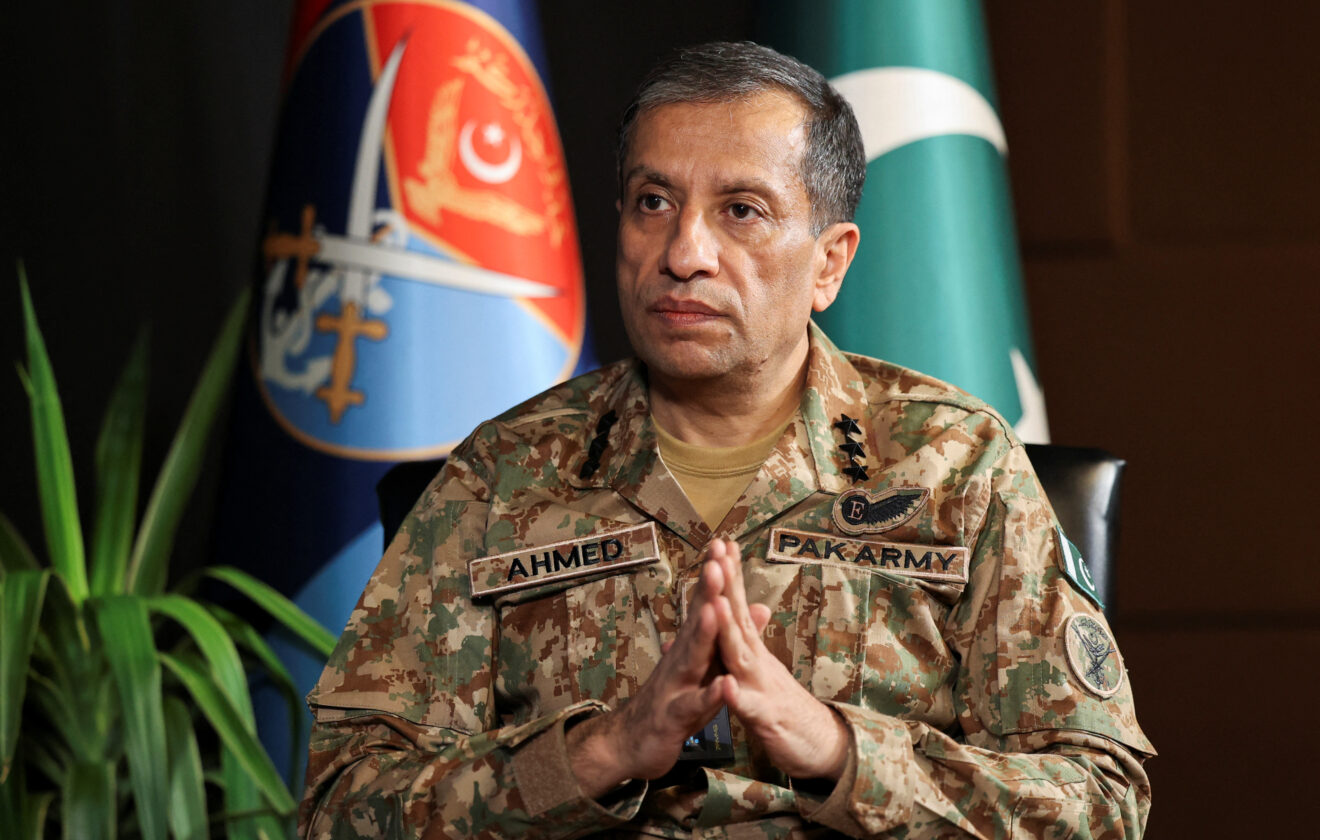
RAWALPINDI, Oct 30 – Pakistan’s military is “cautiously optimistic” about its efforts to mediate between Iran and the United States, its spokesman said on Friday.
It was the spokesman’s first interview since a high-level delegation visited Tehran earlier this week.
Field Marshal Asim Munir, Pakistan’s army chief, is the country’s lead mediator in efforts to ease the war involving Iran, which is now in its eighth month. Asim Munir has visited Tehran twice this month. The most recent trip was on Monday, when he traveled with senior officials from Saudi Arabia and Turkey.
Lieutenant General Ahmed Sharif Chaudhry heads Inter-Services Public Relations, the media wing of Pakistan’s armed forces. Asked whether the trips were a good sign, Ahmed Sharif Chaudhry said the army chief would not have gone twice if there was nothing positive to work with.
“The word that we would use is always cautiously optimistic,” Ahmed Sharif Chaudhry said in an interview with Reuters. But he warned that powerful spoilers and critics who believe conflict serves their interests remain. He did not identify them.
Ahmed Sharif Chaudhry spoke in Rawalpindi, the garrison city that houses the headquarters of Pakistan’s armed forces. He declined to disclose what was discussed in Tehran or whether the United States had supported the trip.
On Monday, Asim Munir was joined in Tehran by Saudi Defence Minister Prince Khalid bin Salman and Turkish intelligence chief Ibrahim Kalin. The group met Iranian President Masoud Pezeshkian and other senior officials. Asim Munir proposed the meeting during an earlier visit to Tehran.
Saudi Arabia, Turkey and Pakistan signed a joint defense pact on August 7. Under the deal, an attack on any one of the three is treated as an attack on all of them.
Saudi Arabia, Turkey and Pakistan signed a joint defence pact on August 7. Under the agreement, an attack on any one of the three countries is treated as an attack on all of them.
The agreement, popularly known as the Mecca Joint Defence Agreement, has taken on added significance amid the Iran dispute, which has reshaped regional alliances and heightened fears of a wider war in the Middle East.
The three countries describe it as a framework for shared deterrence and regional security. Analysts, however, say its future will depend largely on how regional powers manage the fallout from the standoff between Iran and the United States.
After Monday’s talks, Mohsen Rezaei, secretary of Iran’s Supreme National Security Council, said regional security should be ensured by the states that lie in the respective region.
So could Iran join the pact? Ahmed Sharif Chaudhry said nothing in its wording prevents new members from joining.
Ahmed Sharif Chaudhry said any country that shares the goals of collective deterrence and regional peace would be welcome. But he added that the decision belongs to the political leaders of the three main members.
He was also asked whether more Pakistani troops are being sent to Saudi Arabia under the agreement. That would depend on the situation and on decisions by the political leaders of both countries, he said.
Ahmed Sharif Chaudhry said Pakistan is committed to defending Saudi Arabia and the holy cities of Mecca and Medina. But he made clear that Pakistan is staying out of the fighting in Yemen, which he described as an internal Yemeni conflict.
Fighting between Saudi Arabia and Yemen’s Houthi movement, which is aligned with Iran, has flared again because of the Iran war. That has added to fears of a broader war.
At home, Pakistan faces its own political crisis.
On October 11, the federal government suspended the provincial government of Khyber Pakhtunkhwa and placed the province under governor’s rule.
The province was under the control of Pakistan Tehreek-e-Insaf, the party of jailed former Prime Minister Imran Khan. Chief Minister Sohail Afridi and several members of his cabinet were placed in what officials described as preventive custody.
The federal government accused the provincial administration of failing to address militancy, a charge that Pakistan Tehreek-e-Insaf rejected. The party said its government had participated in counter-terrorism efforts, and its leaders described the move as an excuse to suppress protests.
Asked whether the army would now launch larger military campaigns in the province, Ahmed Sharif Chaudhry said that is not how it fights terrorism. He said its operations are based on intelligence, and that the pace and freedom of those operations will increase.
Independent candidates backed by Pakistan Tehreek-e-Insaf won the most directly elected seats in the February 2024 general election, but fell short of a majority. Khyber Pakhtunkhwa was the only province the party controlled.