Gaza Storm Leaves Thousands Without Shelter In Lethal Cold While 150,000 Tents Wait At The Border
Rain and wind tore through tent camps at the weekend, killing at least four children and a woman. Charities say more could die as winter sets in.
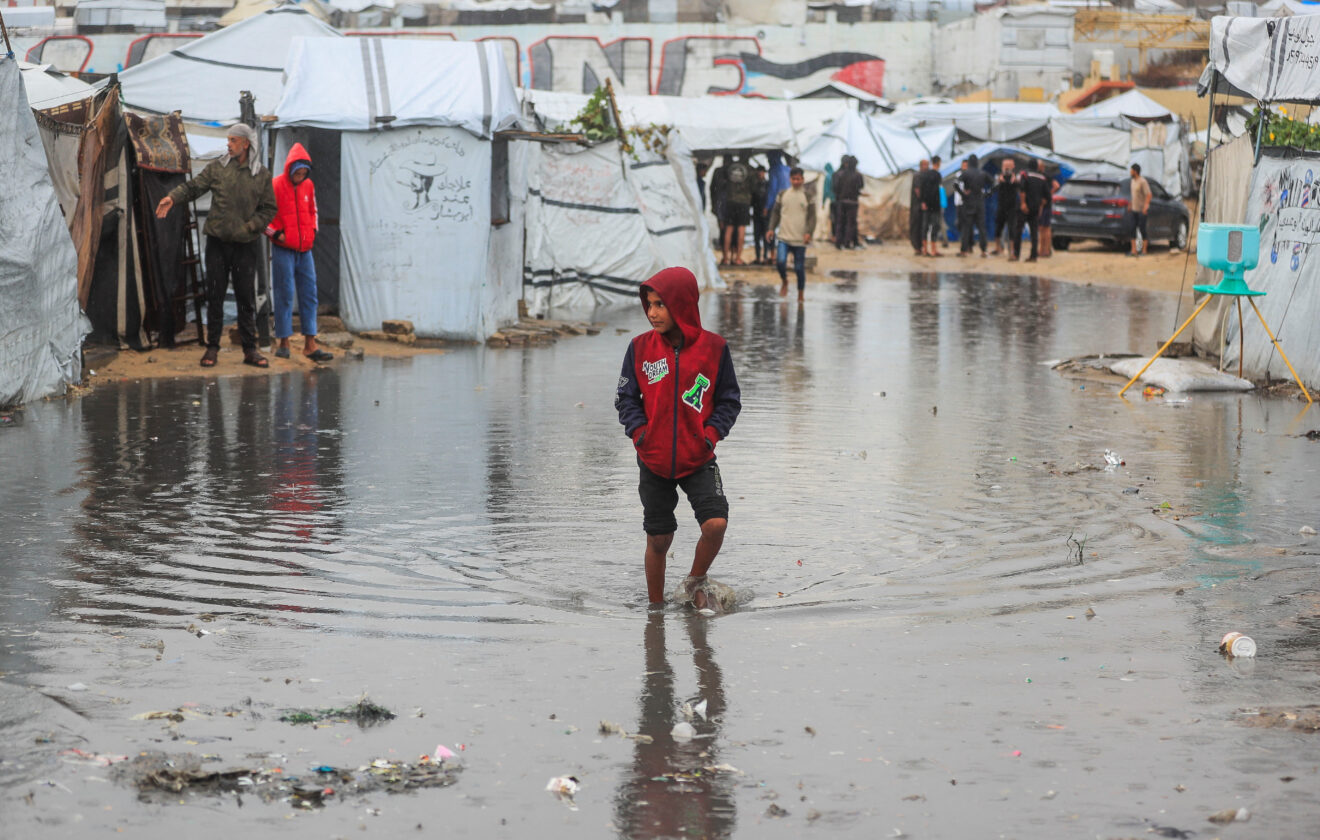
GAZA, Nov 11 – Tens of thousands of Palestinians are living in soaked and broken tents after a deadly Gaza storm at the weekend, aid groups said. At the same time, 150,000 new tents are being held outside Gaza while they wait for Israel to let them in.
At least four children and a woman were killed. Heavy rain and strong wind battered thin, leaky tents. Thousands of people lost their shelter, and toilets and drains were wrecked, with sewage flowing into tents.
A child drowned in the flood water, the Palestinian health ministry said. Three other children and their mother died when a sand dune fell on their tent in Deir al-Balah, in central Gaza.
Raed Jamal is one of the people living through it. He sent the Guardian videos of his tent shaking in the wind as rain poured in through holes in the roof.
“All our clothes were soaked,” he said.
He said his children are all sick, and he cannot afford to buy them new clothes. He spent the entire night using pots to catch the rain falling on his family.
The United Nations says 26,000 households have requested its assistance since the rains began. At least 3,900 households are now left without any shelter.
About 940,000 people in Gaza live in tents in areas at risk of flooding, according to the United Nations. The risk is greater now because the pumps that clear stormwater are not working due to a lack of power.
Aid workers warn that disease will spread quickly unless families receive new shelters and ways to stay warm.
Medical Aid for Palestinians, a British charity, said it expects an increase in chest illnesses and other health problems linked to the cold, damp and crowded camps.
“We fear more children could die from hypothermia,” said Mai Elawawda, the charity’s communications officer in Gaza.
This is the second winter since a ceasefire was agreed more than a year ago. But aid workers say things are no better than last year. They blame Israeli limits on what they call “dual-use items,” along with backlogs at the crossings.
Shelterbox, a charity that works in disaster zones, said the tents it usually sends have been waiting outside Gaza for almost two years. Instead, it has had to build rough shelters from tarpaulins and wooden pallets. But it said even those materials are being held back.
A Shelterbox spokesperson said the latest floods show why stronger shelters are badly needed before winter. The spokesperson said the rules seem to change from day to day.
“One day toolkits will be allowed in, another day toolkits will not,” the spokesperson said.
Israel said last week that it had allowed 10,000 tents into Gaza. But the United Nations says that is far short of what is needed. It says about 94% of people in Gaza need help with shelter.
Gisha, an Israeli group that pushes for goods and people to move more freely in and out of Gaza, says Israel has set tighter limits on goods than in past ceasefires.
Israel says an average of 600 trucks enter Gaza each day. But Gisha says Israel counts 12 pallets of goods as one truck, though a truck usually carries about 20. That could mean about 40% less aid than the figure suggests, the group says. It also accused Israel of not being open about what is let in.
The Council for Arab-British Understanding has called on the British government to press Israel to let supplies in. It also wants Israel to lift limits on aid workers, including restoring the licenses of dozens of groups such as Doctors Without Borders, Oxfam and the Norwegian Refugee Council.
Joseph Willits, who leads the group’s work with parliament, said the rains and floods had been predicted. He said the shortage of tents was man-made and political.
Some families have found other options, at a high cost. Nour al-Batsh, who has a seven-month-old baby, said her tent fell. Now she rents part of a damaged flat that she shares with others, for $500 a month, using money sent from abroad.
She can still see her old tent by the sea from where she lives now: “The cold is lethal,” she said.
She said it is still autumn, and winter has not really begun. She said she prays she will not have to go back to the tent.