Cargo Ships Sink Near Strait of Hormuz as Attacks on Shipping Intensify
Two Cargo Ships Sink Near Strait of Hormuz as Attacks Surge Before U.S. Midterms. Here’s what we know about the blockade, oil and risks. A...
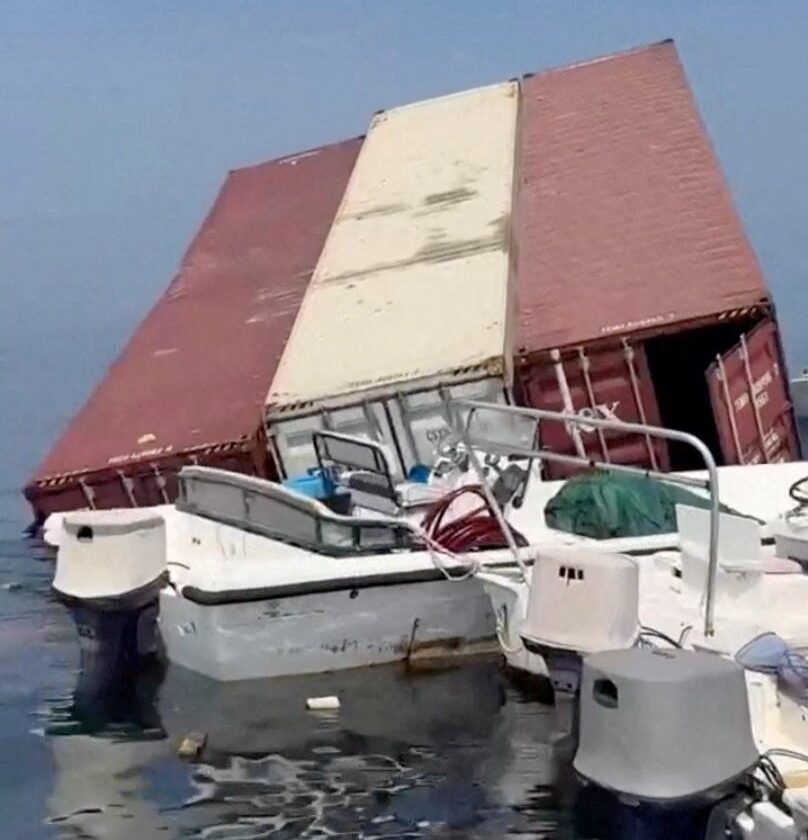
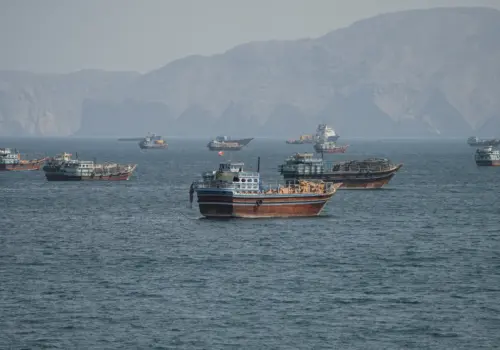
Two Cargo Ships Sink Near Strait of Hormuz as Attacks Surge Before U.S. Midterms. Here’s what we know about the blockade, oil and risks. A container ship and a bulk carrier went down near the Strait of Hormuz, maritime officials said on Wednesday, the latest losses in a widening wave of attacks on commercial vessels that leave sailors dead and global trade routes exposed.
It is not immediately clear who is responsible for either strike. Attacks around the waterway have climbed sharply over the past 10 days. Iran says it steps up strikes in response to a U.S. blockade of its ports and sanctions imposed last month. The midterm claim already appears later and is correctly attributed to two Iranian officials.
The Singapore-flagged GFS Pride, a container ship with a capacity of 2,824 twenty-foot containers, sank while transiting the strait. The Maritime and Port Authority of Singapore reported that the vessel was damaged and caught fire on Tuesday, and that all 21 crew members were evacuated safely. No injuries were reported.
The second vessel, the Antigua and Barbuda-flagged bulk carrier Cape Dao, sank near the strait weeks after it was struck by a projectile on Sept. 23, according to data from the International Maritime Organization, the United Nations shipping agency. Oman’s Maritime Security Center said at the time that the ship was hit about 2.5 nautical miles off the Musandam Governorate, igniting a fire in the engine room, and that a Royal Navy of Oman vessel rescued 27 surviving crew members. An Indian seafarer was killed. India’s Forward Seamen’s Union said the ship carried 28 crew, 20 of whom were Indian nationals.
An analysis of IMO casualty data shows the two vessels are the second and third to sink since the war between the United States and Iran began on Feb. 28. The first, the Maltese-flagged container ship Safeen Prestige, was struck in March and later went down north of the strait.
Singapore’s maritime authority said it was deeply concerned by the continuing attacks and described them as a breach of international law. MARISKS, a maritime risk consultancy, said the threat is no longer confined to tankers, noting that container ships and bulk carriers also sustain serious damage.
Escalation on both sides
Tankers are the main targets for both Iran and the United States, though cargo and container ships get hit too, and some end up crippled or sunk. The stakes are high. Before the war, roughly a fifth of the world’s oil and liquefied natural gas moved through this strait. Iran restricts passage and uses the waterway as leverage against Washington, a stance it took after U.S. and Israeli strikes on Feb. 28.
Two senior Iranian officials said Tehran is trying new tactics against ships, both in the strait and beyond it, to keep oil prices high before the U.S. midterm elections in November. One compared the effort to a game of chess. The other said a full closure could come soon. Their accounts could not be independently confirmed, and they speak to Iran’s strategy, not to who struck any particular ship.
Attack numbers in recent days are close to those of Oct. 3-5, according to International Maritime Organization data, a sign the pressure is building. A U.S. official said Iran tracks vessels with spotters but cannot stop oil exports from climbing, because it does not want to risk its few remaining fast boats after U.S. strikes wrecked its navy.
Pressure from Washington
Washington maintains a naval blockade of Iranian ports and extends sanctions as it presses Tehran to agree to a deal ending the conflict. President Donald Trump weighs next steps but says he will not order another attack before the election. Iran says it reviews U.S. proposals for talks, and indirect messages between the two sides continue.
The U.S. Navy-led Joint Maritime Information Center rates the threat to merchant shipping in the strait as severe, the second-highest level, and reports continued harassment activity attributed to Iran’s Revolutionary Guard, including drone overflights and surveillance of commercial vessels.
Mounting costs for seafarers and markets
The standoff leaves global energy markets exposed to further disruption, with the threat of attacks and elevated shipping and insurance costs complicating efforts to restore normal traffic. The IMO’s incident tracker recorded 83 confirmed incidents and 23 seafarer deaths in and around the strait as of Sept. 23.
The toll on crews generates pressure on governments whose citizens work aboard the vessels. After the Cape Dao attack, India’s Forward Seamen’s Union urged New Delhi to arrange naval escorts and safe-passage protocols for Indian crews operating near Hormuz.
Iranian officials said in late September that the strait could reopen within a week if Washington eased military pressure and lifted its blockade. The blockade remains in place.