Canada China Trade Deals Extended After Carney Meets Xi
China will cut tariffs on more Canadian pork and seafood after Mark Carney met Xi Jinping. Canada will extend tariff relief on some Chinese steel and aluminum.
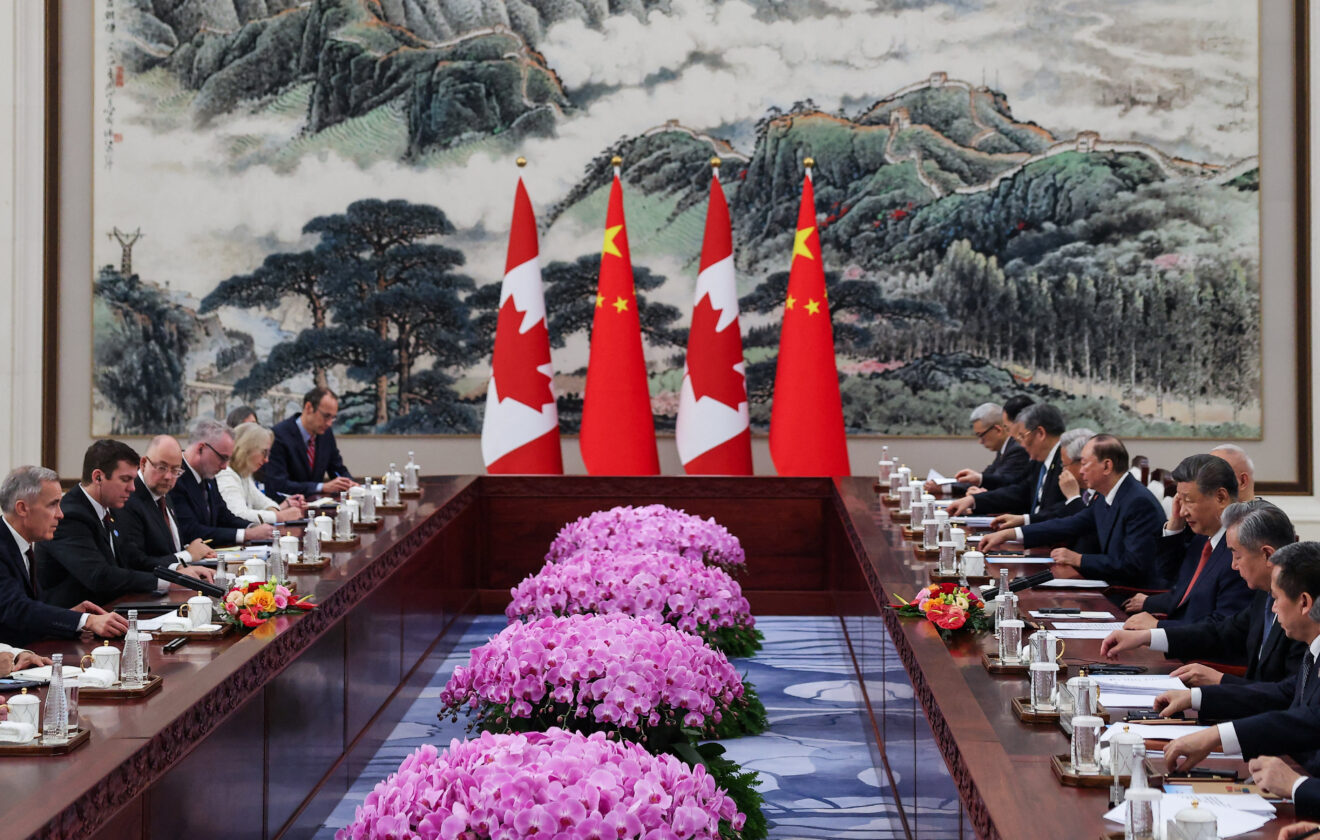
SHENZHEN, Nov 17 – China will cut tariffs on more Canadian goods, including pork and seafood, following Prime Minister Mark Carney’s meeting with Chinese President Xi Jinping on Tuesday, a move that deepens Canada-China trade ties just ahead of the Asia-Pacific Economic Cooperation summit.
Carney’s office said the two leaders agreed to extend and widen an early deal that gives Canadian farmers and seafood harvesters better access to China’s market.
Under the agreement, China will offer additional tariff relief on Canadian exports worth about 400 million Canadian dollars, or roughly $280 million. The relief will apply to frozen pork cuts, fish and seafood.
In return, Canada will extend its existing tariff relief on certain Chinese steel and aluminum products for two years. Those measures had been scheduled to expire at the end of 2026.
Carney said the talks reflected “greater predictability and stability” in relations with China.
He also said Canada is well ahead of schedule on its goal of raising exports to China by 50% by the end of the decade.
That goal is part of a wider plan. Carney wants Canada to rely less on the United States, which has put heavy tariffs on many Canadian products.
Xi said cooperation between the two countries has fully resumed since they agreed in January to move forward with a strategic partnership.
He set out four proposals to build on that, according to China’s official Xinhua news agency. They are a more accurate understanding of each other’s paths, deeper cooperation in trade, energy, farming and finance, more contact between people, and support for the global trading system.
Xi also called for new work in areas such as green energy, the digital economy and online trade.
“Stronger communication and cooperation between China and Canada will benefit not only our two countries,” Xi told Carney. He said the region and the world would gain too.
It was the third meeting between the two leaders since Carney took office. They also met at last year’s Asia-Pacific summit in South Korea.
China’s Finance Ministry said on Tuesday that both sides welcomed steps by their central banks to implement a local currency swap agreement. It also said qualified Canadian firms would be welcome to issue Panda bonds, which are Chinese yuan-denominated bonds sold in China.
Trade between the two countries has already picked up this year.
Ottawa has allowed up to 49,000 cars a year from China at a tariff rate of 6.1%. That quota is set to rise to 70,000 cars over five years. Chinese automakers BYD, Geely and Chery have since taken steps to enter the Canadian market.
China lowered tariffs on Canadian canola seed following Carney’s visit in January. It has also recently extended tariff relief on Canadian canola meal, lobsters, crabs and peas for two more years.
Shipments of Canadian crude oil to China have risen about 37% this year, according to a Reuters calculation based on market data.
Still, the closer ties have raised concerns.
Security analysts and human rights groups have warned that warmer relations with Beijing could put Canada’s security and values at risk.
Critics point to the imprisonment of Hong Kong pro-democracy media figure Jimmy Lai. They also cite China’s secret execution of four Canadians last year, as well as findings by Canadian intelligence that Beijing interfered in at least two federal elections.
Last week, Carney said he would raise the issue of foreign interference with Xi. China has said it has no interest in interfering in Canada’s internal affairs.
The Asia-Pacific Economic Cooperation summit opens in Shenzhen on Wednesday, bringing together leaders from across the region of growing economic uncertainty and geopolitical tension. For Canada, the meeting offers an opportunity to deepen ties with Asian partners while navigating its complicated relationship with China.
Carney’s visit comes as Ottawa seeks to reduce its reliance on the United States, its largest trading partner, by expanding exports to markets beyond North America. Strengthening economic links with China and other Asia-Pacific economies is a central part of that strategy.
But balancing commercial opportunities with concerns over security, human rights and political interference remains a major challenge. As trade flows increase and diplomatic contacts grow, Canadian officials will face pressure to ensure that closer engagement with Beijing does not come at the expense of the country’s core interests and values.