Midterm Elections Explained: What Is at Stake for Congress and Trump
On November 3, voters decide who controls Congress for the next two years, with consequences for President Donald Trump's agenda, state governments and the 2028 race.
The 2026 midterm elections explained in one line: on November 3, voters decide what is at stake in Congress, meaning which party controls the House of Representatives and the Senate for the next two years. President Donald Trump is not on the ballot, but the result will shape the rest of his second term.
What the midterm elections are
Midterm elections take place halfway through a president’s four-year term, which is where the name comes from. They happen every two years, and they give voters their first nationwide chance to react to how the president is doing. The results decide three things:
- who writes the laws
- who investigates the administration
- who confirms the president’s appointments
How Congress works
Congress is the lawmaking body of the federal government, and it has two chambers. Both must agree on a bill before it can become law. The president can then sign it or veto it, and Congress can override a veto only with a two-thirds majority in both chambers.
The House of Representatives has 435 voting members, who serve two-year terms. Every seat is on the ballot in 2026, so control of the chamber can swing quickly with the national mood. A party needs 218 seats for a majority.
The Senate has 100 members, two from each state, who serve six-year terms. About one-third of the seats are contested each cycle. This year, the 35 Senate seats on the ballot include 33 regular elections and two special elections in Ohio and Florida, which are being held to fill terms left vacant by appointments.
Republicans currently control both chambers of Congress, though by narrow margins. In the Senate, they hold 53 seats, compared with 45 for Democrats and two held by independents. In the House, Republicans maintain a slim 218-seat majority, supported by one independent lawmaker.
The Senate map favours Republicans because they are defending 22 of the 35 seats up for election, while Democrats are defending 13.
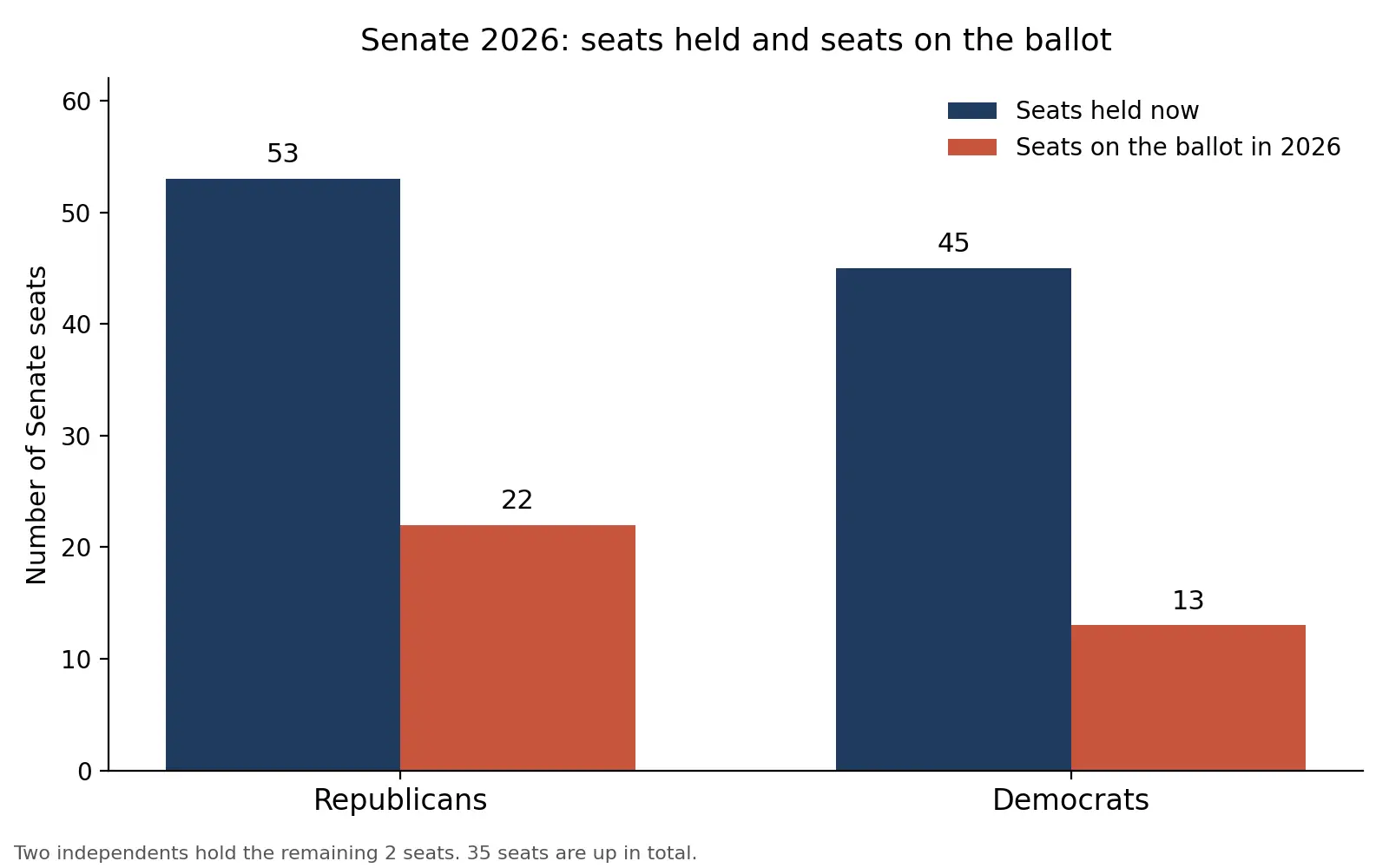
The chart shows that Republicans hold more Senate seats and also defend more of them. Democrats need a net gain of four seats to reach a 51-seat majority. A gain of three would leave the Senate split 50-50, giving Republicans the advantage through the vice president’s tie-breaking vote.
What else is on the ballot
More than 30 governorships are being decided. The races for governor in California, Florida, Georgia and Michigan are among the most closely watched. Governors shape education, healthcare, policing, voting rules and economic policy in their states. Voters will also choose many state legislators and local officials, who often affect daily life more than people expect.
Why the midterm elections matter
The party that holds Congress decides which bills reach a vote. A president whose party controls both chambers passes his agenda far more easily than one who faces an opposition majority. The majority also controls the congressional committees, so it can investigate the administration or protect it from scrutiny, and also confirms judges, cabinet members, and other senior officials in the Senate.
The elections also work as a test of public opinion. Voters use midterms to reward or punish the party in power, so the results are an early signal of the national mood.
Redistricting adds another layer. Both parties have fought over the boundaries of House districts this cycle. Republicans redrew maps in some states, and Democrats answered in kind. The outcome of those fights could decide which party wins the House. The results will also affect who leads each party into the 2028 presidential race.
The issues driving the vote
The economy is expected to dominate. Voters worry about the cost of fuel, groceries, housing and healthcare. Inflation remains above the Federal Reserve’s target, and Democrats argue that Trump’s tariffs have made everyday goods more expensive. Gasoline prices have also climbed since the war involving the United States, Israel and Iran began.
Immigration is the other big subject. Republicans say Trump kept a central promise by tightening border controls and cracking down on illegal immigration, while critics call some of those policies harsh. Artificial intelligence has also moved up the agenda. Politicians in both parties have called for stronger regulation, and Trump has opposed new laws to control the technology. Crime, abortion, education and foreign policy also weigh on voters, including the direction of the war with Iran.
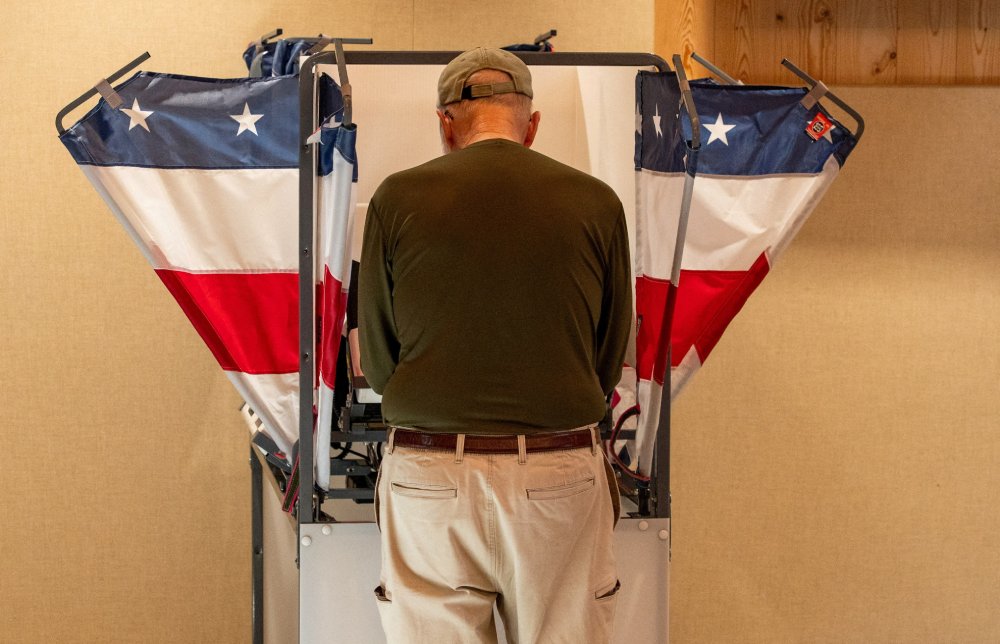
A person casts their vote at the polling station inside the Community Foundation of Middle Tennessee in Davidson County during early voting in Nashville, Tennessee, US, October 22, 2026. REUTERS.
Who could win
History favors the opposition, because the party of the sitting president usually loses seats in elections. Trump’s approval has fallen along with that pattern. It was close to 50 percent when his second term began. A Reuters/Ipsos poll in early October put it at 32 percent, the lowest of his political career, and the latest reading reported is 31 percent. Other polling averages sit in the high 30s, with around 61 percent disapproving.
The Senate looks harder for Democrats than the House. The most competitive Republican-held races are in Alaska, Iowa, Maine, Ohio and Texas, and two open Democratic seats, in Michigan and New Hampshire, are also toss-ups. Democrats would have to win several of those while holding what they have.
The House is more competitive. The nonpartisan Cook Political Report identifies 22 toss-up races, and Democrats would need to win about 10 of them to reach the 218 seats required for a majority. Historical trends suggest Republicans could lose around 28 seats, enough to hand control of the chamber to Democrats. About 60 House members are retiring, including 36 Republicans. Even so, many seats remain safely held by one party, as voter geography and district boundaries make most races uncompetitive.
What happens if Democrats win
The effect depends on how much they win. Democrats need 218 seats to take the House and a net gain of four to take the Senate. Winning one chamber would give them a real check on the president, and winning both would give them far more.
A Democratic majority in the House alone would have the biggest immediate impact. Because every bill must pass both chambers, Democrats could block Republican legislation in the House and stall much of Trump’s remaining domestic agenda.
However, they would not be able to turn their own bills into law. The Senate would remain under Republican control, and Trump could veto any legislation he opposed. Congress can override a veto only with a two-thirds majority in both chambers, a threshold Democrats would not meet. The most likely outcome would be legislative gridlock, with fewer new laws and more conflict over the bills that do move forward.

Attendees cheer during a campaign rally for Democratic US Senate candidate James Talarico at Safari Texas Ranch in Richmond, Texas, US, October 21 via Reuters.
The pressure would first appear in government spending. Federal funding bills must pass Congress, giving a Democratic House leverage to demand changes to Trump’s priorities. If the two sides cannot reach an agreement, it can affect the government status, as has happened during previous periods of divided government.
The second major change is oversight. The majority party chairs the congressional committees, and committee chairs can open investigations, hold hearings, and subpoena witnesses and documents. Democrats have pointed to several areas they would examine:
- corruption allegations involving the administration
- the new White House ballroom
- the tactics used by Immigration and Customs Enforcement
None of that requires new laws, which is why oversight is often the first thing a new majority does.
A Democratic Senate would add a further power. The Senate confirms judges, cabinet members and other senior officials, so a Democratic majority could block or delay Trump’s appointments. That matters most for federal judges, who serve for life.
Impeachment is the most dramatic option, and Democrats are divided over it. It is a political process, not a criminal trial. The House can impeach a president by a simple majority vote, which means formally bringing charges. The Senate then holds a trial, and removing the president from office requires a two-thirds vote. With 100 senators, that means 67 votes, so removal would need many Republicans to join Democrats. That is very hard to achieve, and it is the main reason some Democrats question whether the effort is worth the political cost.
The party is also debating whether to pursue impeachment, a political process in which Congress brings charges against a president. Removal would require a two-thirds vote in the Senate, which is very hard to reach.
What happens if Republicans win
If Republicans keep both chambers, Trump would continue to govern with a friendly Congress. That means far fewer obstacles for his remaining domestic agenda, and the lack of an opposition majority would remove the main institutional check on him before 2028.
Even then, having a majority is not the same as passing anything. Most bills in the Senate require 60 votes to overcome a filibuster, a procedure that allows a minority of senators to block legislation from reaching a final vote. Republicans hold 53 seats, so they would still need Democratic support for most ordinary legislation. Budget bills that go through a special process called reconciliation can pass with a simple majority, which is why that route is often used for major tax and spending changes. A narrow House majority also leaves little room for defections within the party.
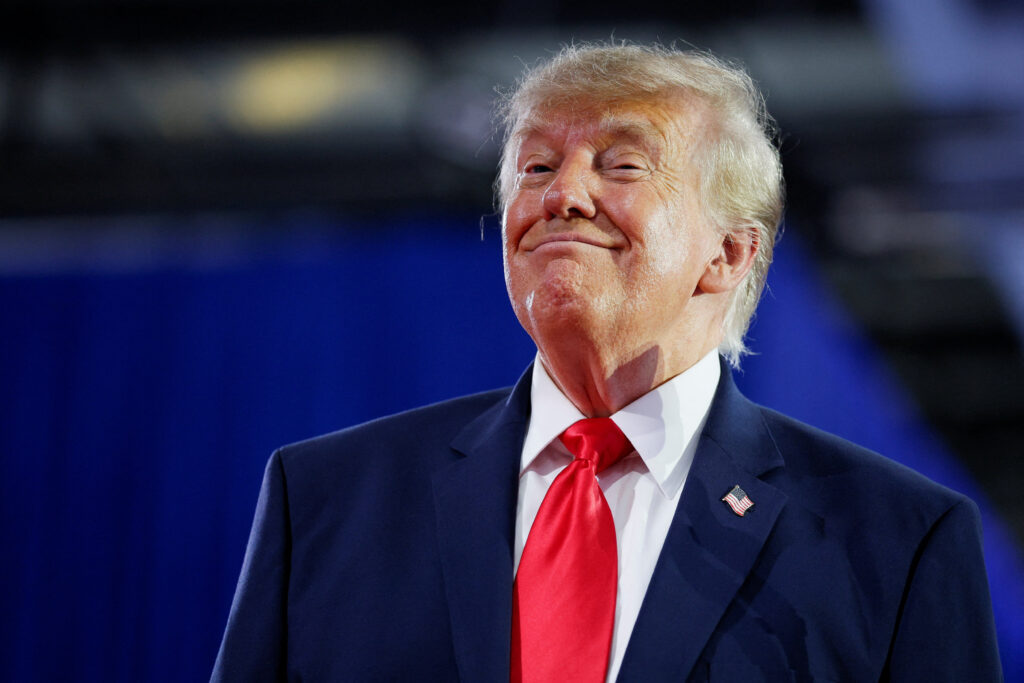
US President Donald Trump reacts during a Republican campaign rally in Sioux City, Iowa, US, October 22, 2026. REUTERS
Appointments would be the clearest gain. A Republican Senate can confirm judges, cabinet members and other officials without Democratic votes; that will help Trump keep reshaping the federal courts and the executive branch.
Republicans would also control the committees, so they would decide which investigations go ahead. That means the administration would face much less scrutiny. It also means that questions about the ballroom, immigration enforcement, or corruption would be far less likely to be heard or subpoenas.
Finally, a strong result would help Republicans set the terms of the debate heading into the 2028 presidential election. It would strengthen Trump’s influence over the party and over who becomes its next nominee. A weak result would send the opposite signal, and rivals in the party might feel freer to challenge his legacy.
Republicans would also be better placed to shape the debate before the 2028 presidential election.
What it means for 2028
Trump cannot run again because presidents are limited to two terms, so the midterms also begin the race to succeed him. A strong Republican result would strengthen his influence over the party and its next nominee. A weak one could embolden rivals within the party to challenge his legacy. For Democrats, a strong showing would suggest that opposition to Trump can be turned into votes, while a poor one would deepen arguments over leadership and strategy.
Key numbers at a glance
| Item | Figure |
|---|---|
| Election day | November 3, 2026 |
| House seats on the ballot | 435 |
| House seats needed for a majority | 218 |
| Senate seats on the ballot | 35 |
| Republican Senate seats held now | 53 |
| Democratic Senate seats held now | 45 |
| Republican seats being defended | 22 |
| Democratic seats being defended | 13 |
| Net gain Democrats need for a Senate majority | 4 |
The 2026 midterm elections come down to a simple question: who controls Congress for the next two years? What is at stake reaches well beyond one night. The answer shapes which laws pass, how far the president can go and which party enters the 2028 race with momentum. That is the midterm elections explained at their simplest.