Myanmar Leader Ban Extended By ASEAN Over Peace Plan Failure
Southeast Asian leaders have kept Myanmar’s leader out of their summits. They say the country’s military and armed groups are still attacking civilians.
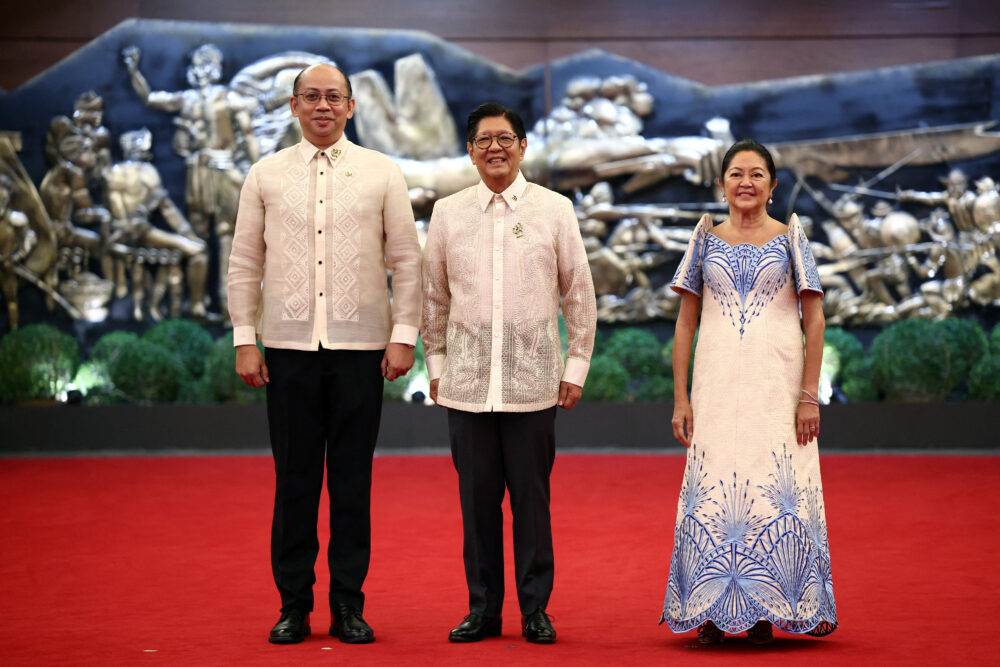
MANILA, Nov 16 – Southeast Asian leaders have extended a ban on Myanmar’s leader from their annual summits, saying the country has failed to implement a 2021 peace plan and that its military and other armed groups continue to attack civilians.
The leaders of the Association of Southeast Asian Nations decided on Sunday, as they opened their summit in Manila. It followed a review of how far Myanmar’s military-backed government has come in carrying out the five-point plan.
Their answer was blunt. Not far enough.
The leaders voiced deep concern over the lack of progress. They urged everyone in Myanmar, and in particular the armed forces, security forces and armed groups, to scale back the violence and stop targeting civilians and civilian sites.
The bloc agreed on the peace plan in April 2021. It was meant to ease the violence that broke out after the army seized power from the elected government of Aung San Suu Kyi in February that year.
The army’s takeover sparked mass protests in support of democracy. After those protests were crushed, armed resistance emerged and a civil war spread across much of the country.
The peace plan calls for an immediate end to the fighting and for talks among all parties, with the bloc’s special envoy serving as a mediator.
Under the ban, Myanmar’s leader and foreign minister are barred from attending the bloc’s summits. The country may send only lower-level career diplomats, including to the meetings currently taking place in Manila.
The leaders said the ban will stay in place “until there is meaningful progress in the implementation” of the plan.
Myanmar was meant to chair the bloc this year and host its meetings. But because of the conflict, the role passed to the Philippines.
Philippine Foreign Secretary Theresa Lazaro, the bloc’s current special envoy to Myanmar, said bombings and the displacement of people in Myanmar are still going on. She told a news conference that the bloc will let Myanmar tackle the problem step by step and that it will keep watching.
Last month, a United Nations rights investigator said Myanmar’s military-backed government was attacking civilians on purpose to scare them into giving in.
More than 8,600 people have been killed by Myanmar’s security forces, according to the Assistance Association for Political Prisoners. The independent group, which keeps close count of arrests and deaths linked to the war, says 32,406 people have been arrested.
Min Aung Hlaing led the coup in 2021 as the head of the army. He was sworn in as president in April, after an election held in stages in December and January.
Critics called the vote a sham. They said it was meant to tighten the military’s hold on power while looking for a return to civilian rule.
Since taking office, Min Aung Hlaing has visited five of the bloc’s member states, including Thailand, Malaysia and Vietnam. The visits are part of an effort to win acceptance from Asian neighbors and the wider world.
Still, he remains largely isolated.
The bloc has not tried to stop those visits. However, its leaders said the peace plan remains the main framework for addressing Myanmar’s political crisis.
They also left the door open, saying the bloc may consider gradually restoring Myanmar’s full political role if the country makes steady and genuine progress under the plan. They did not provide further details.
On Sunday, activists and students held a protest against Min Aung Hlaing in Quezon City, part of the Manila metropolitan area.
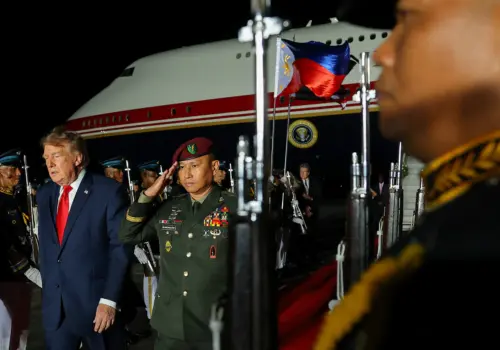
Myanmar is one of the 11 members of the bloc. The three-day summit, which includes talks with world leaders led by President Donald Trump, is set to end on Tuesday.