ASEAN Summit Opens In Manila With Global Conflicts In Focus
Leaders of the Association of Southeast Asian Nations are meeting in Manila with global conflicts high on the agenda. Donald Trump is expected to join the last day of talks.
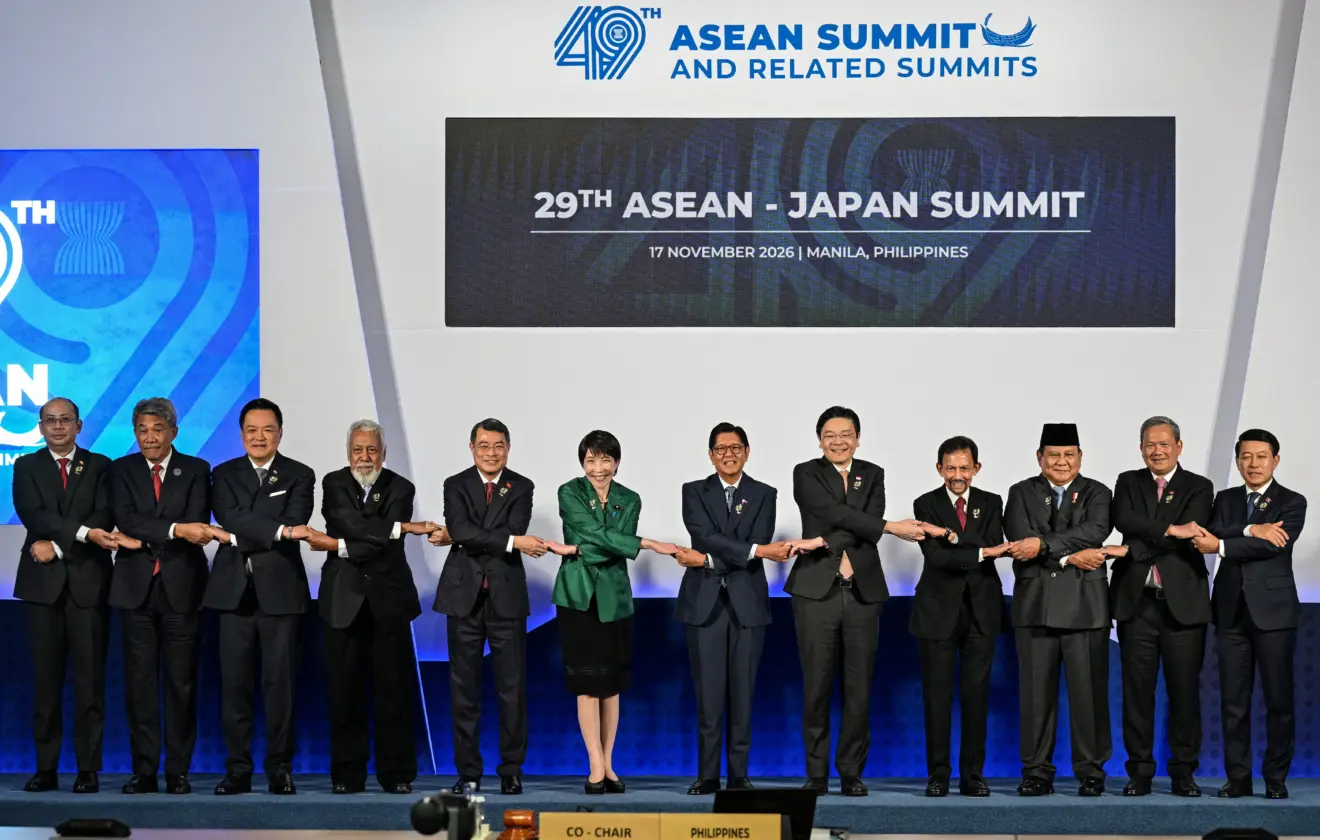
MANILA, Nov 15 – The ASEAN summit, the annual meeting of the Association of Southeast Asian Nations, is underway in Manila, with the war in the Middle East, disputes in the South China Sea and the civil war in Myanmar among the main highlights of the three-day talks.
The 49th summit of the Association of Southeast Asian Nations opened on Sunday at the Philippine International Convention Center, a heavily guarded venue by Manila Bay. Philippine President Ferdinand Marcos Jr., who chairs the bloc this year, led the opening ceremony.
The theme is “Navigating Our Future, Together.”
In his opening remarks, Marcos said the 11-member bloc has stayed committed to unity despite its differences. He said problems around the world “are reshaping our region faster than any one country can respond to alone.”
But unity has often been hard to reach. The bloc is a mix of democracies, monarchies and authoritarian states, and many of its members lean toward either the United States or China.
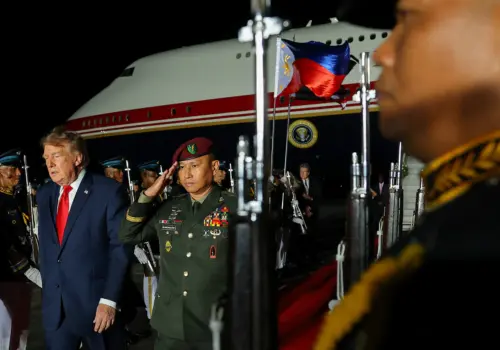
The leaders will hold separate talks with major powers over the course of the summit. President Donald Trump is expected to land in Manila on Tuesday afternoon with Secretary of State Marco Rubio, Philippine officials said.
By then, most of the main meetings will be over, and Marcos will have handed the bloc’s rotating chair to Singapore.
China is represented by Premier Li Qiang, who was set to meet the bloc’s leaders on Monday but will leave before Trump arrives, with no meeting between the two planned, officials said.
Russia sent Foreign Minister Sergey Lavrov in place of President Vladimir Putin. Lavrov also isn’t expected to meet Trump.
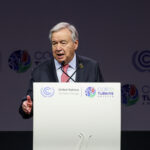
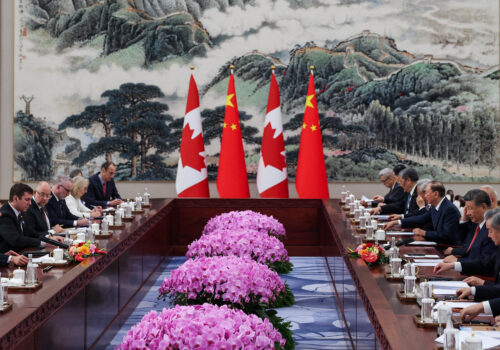
Other guests include Canadian Prime Minister Mark Carney, Brazilian President Luiz Inacio Lula da Silva, United Nations Secretary-General Antonio Guterres and International Monetary Fund chief Kristalina Georgieva.
The war involving the United States, Israel and Iran is expected to dominate much of the discussion, having disrupted energy supplies, driven up prices worldwide and threatened shipping through the Strait of Hormuz. The conflict is especially significant for the Philippines, where more than 2.4 million Filipinos live and work across the Middle East.
According to draft statements, the leaders will reaffirm their commitment to international law, including the United Nations Charter. They’re also expected to stress the peaceful settlement of disputes and freedom of navigation, including the right of ships to pass through international straits.
The South China Sea is another key issue. Talks between the bloc and China on a code of conduct for the disputed waters have made progress, with about 80% of the text provisionally agreed.
Still, the two sides will miss their goal of finishing the deal this year, according to Southeast Asian diplomats. Talks will resume in 2027 under Singapore’s chairmanship.
The diplomats said the hardest parts remain open. Those include the area the code would cover, whether it would be legally binding and how certain sensitive terms are defined.
Myanmar also remains a challenge for the bloc, with its political leaders still barred from top-level meetings because the military-backed government has not implemented the peace plan agreed after the 2021 coup, and the country being represented by a senior foreign ministry official.
On Saturday, Philippine Foreign Secretary Theresa Lazaro, the bloc’s special envoy to Myanmar, ruled out easing the peace plan. She said several proposals on Myanmar are still being negotiated and will go to the leaders for review.
Some member states have begun to push for renewed engagement with Myanmar’s military government after five years of failed efforts.
The leaders are also expected to raise concerns about trade tensions, online scam operations and child exploitation driven by artificial intelligence.
Trump is set to attend three events on Tuesday evening. They include a special summit with the bloc’s leaders and a meeting of the Quadrilateral Security Dialogue, which groups the United States, Japan, India and Australia. He’ll also attend a dinner hosted by Marcos.
On Wednesday, Marcos will welcome Trump for a short state visit at the presidential palace. The two are expected to renew their countries’ treaty alliance before flying separately to Shenzhen, China, for the Asia-Pacific Economic Cooperation summit.
Greg Poling, a geopolitical analyst based in the United States, said the Manila stop will “help reassure allies and partners that they aren’t being forgotten.” He said Republican losses in the midterm elections will follow Trump in Asia.
Lupita Wijaya, a research fellow at La Trobe University’s Centre for Global Security in Australia, said Trump is likely to push for wider market access for American products, including chips and software.
The ASEAN summit ends on Tuesday.