Delhi Most Polluted City in the World, Overtaking Lahore
Smog wrapped India’s capital on Friday, pushing its air quality to hazardous levels. Lahore, which topped the ranking earlier this month, dropped to second place.
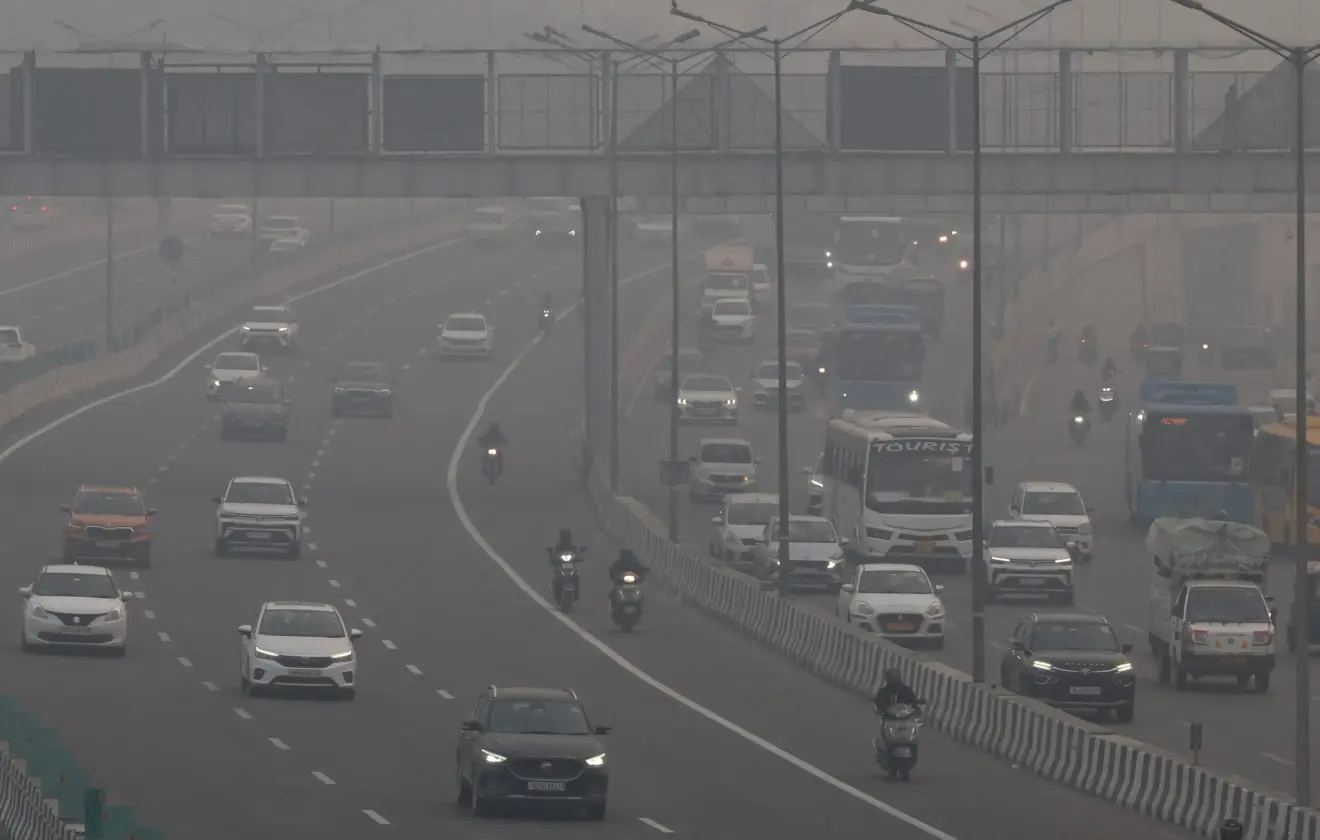
NEW DELHI, Nov 13 – India’s capital became the world’s most polluted major city again on Friday, overtaking Lahore in neighboring Pakistan. Delhi, the most polluted city on the global list that morning, was wrapped in thick smog that cut visibility and pushed air quality to hazardous levels.
The Swiss group IQAir, which ranks cities by the amount of harmful particles in the air, put Delhi’s air quality index at 334. It rated it “hazardous.” A reading of up to 50 is considered good, with little or no risk to health.
India’s Central Pollution Control Board recorded an even higher reading of 403 and described the air quality as “severe.” The two figures differ because the Swiss group and the Indian board use different scales and approaches to assess and rank pollution.
In the city of about 20 million people, cars and motorbikes moved slowly through the thick smog on Friday. Videos from the news agency ANI showed the haze reducing visibility on major roads. Mist-spraying machines were placed between lanes on some roads to help settle dust.
The smog has been building for days. The Commission for Air Quality Management, which oversees pollution rules in the capital region, imposed stricter restrictions earlier this month. It activated GRAP Stage III on November 6, when Delhi’s daily average air quality index stood at 382, reflecting worsening conditions even before Diwali. The measures, part of the city’s emergency action plan, include restrictions on construction work and some older vehicles.
On the same day, the government ordered schools in Delhi to move classes online. The festival of Diwali, when many people set off fireworks, followed a few days later and added to the pollution.
Authorities have repeatedly urged residents to limit outdoor activity and avoid burning waste as air pollution levels remain dangerously high and toxic.
Lahore had held the top spot earlier this month. Early on November 3, the air quality index in Lahore stood at 447, according to IQAir. Authorities said a sharp drop in temperatures and weak winds had worsened air quality in the city.
Conditions in Lahore later improved for a time. Officials said the air quality index fell to 149 on Friday, down from 312 the previous day on November 6.
Poor air quality is caused by dust from construction sites and farmers burning crop residue after the harvest, along with vehicle emissions.
The pollution got worse due to industrial emissions and the use of solid fuels for heating and cooking. Weak winds and temperature inversions prevent pollutants from dispersing, causing hazardous air to linger over cities for days.
The problem usually worsens in November and December, when cooler temperatures and weak winds make it harder for pollution to disperse. Delhi is regularly ranked the world’s most polluted city by the Swiss group IQAir several times each winter. The combination of vehicle emissions, construction dust, industrial activity and crop burning often pushes air quality to hazardous levels across the region.
The polluted air poses serious health risks. Doctors warn that prolonged exposure can damage the lungs and heart, with children, older people and those with respiratory conditions facing the greatest danger. Health officials in both countries often advise people to stay indoors and wear masks on the worst days.
Experts say lasting improvement will require stronger action on vehicle emissions, construction dust, industrial pollution and crop burning, along with better enforcement of existing rules. They say governments will also need to expand public transport, promote cleaner fuels and improve coordination between cities and provinces. Without such measures, residents across the region are likely to face similar hazardous air every winter.