Spain General Strike Over Housing Halts Ports and Car Plants
Spain’s two biggest unions backed the walkout together for the first time since 2012. Storms, police clashes and an election race set the scene.
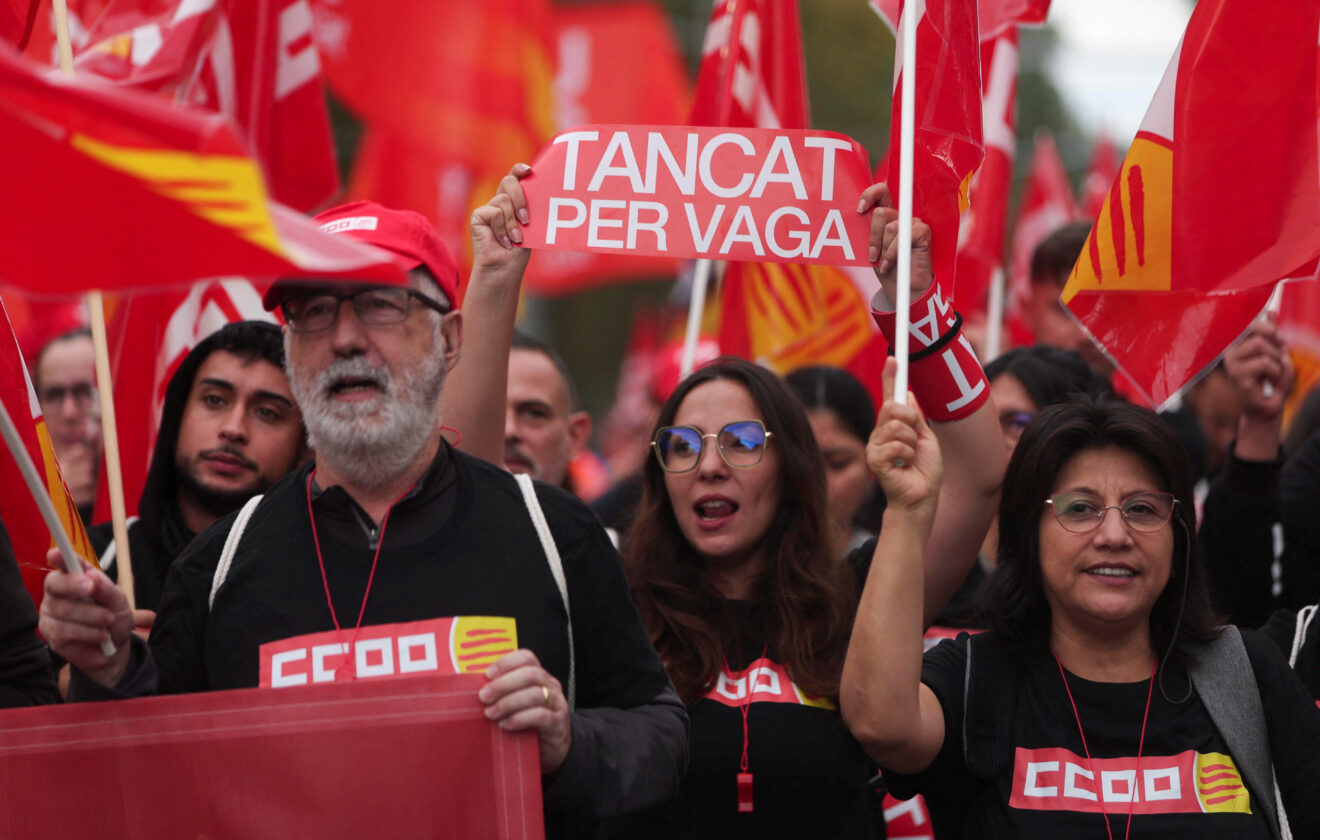
MADRID, Nov 11 – Workers across the country walked off the job on Wednesday in the first general strike in Spain in 14 years, braving storms to set up picket lines in protest at the soaring cost of housing.
The strike comes less than three weeks before a snap general election on November 29.
It is the first general strike since 2012 to be backed by both of Spain’s biggest unions, the General Union of Workers and the Workers’ Commissions. Smaller unions and tenants’ groups angry about rising rents and evictions joined them.
Early turnout was strongest at ports and car plants, the two big unions said. They put participation at 90% in both sectors, with full stoppages at Volkswagen’s factory in Navarre and SEAT’s plant in Barcelona.
They said turnout was 85% in the meat industry and 82% in waste collection. It was lower in health care and social services, at 38%.
Electricity demand fell by about 10%, the unions said. They took that as a sign that heavy industry had largely stopped, apart from work covered by minimum service rules.
Support was uneven across the country. It was strongest along the coast, in Catalonia, Andalusia, the Cantabrian coast and parts of the Mediterranean, where housing is under the most strain.
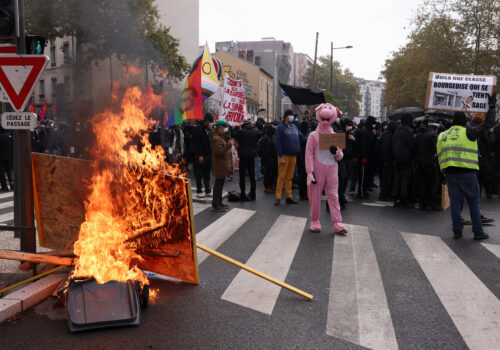
Tempers flared early in Madrid. About 1,000 protesters gathered at the Mercamadrid wholesale market. The Madrid branch of the Workers’ Commissions said police fired pepper spray at pickets and arrested one of them. It said 13 people needed medical care.
A police spokesman confirmed the arrest. He did not confirm that pepper spray was used at the market, but said it was used to break up another picket line in the Carabanchel district.
At Madrid’s city bus depot, dozens of protesters tried to stop buses from leaving early in the morning. They waved flags and chanted slogans. One was “while you work, they are stealing from you.”
In Andalusia, the regional broadcaster Canal Sur joined in by cutting to black during a morning news bulletin.
Big marches were planned for the afternoon. But two storms, named Charles and Bruna, threatened to get in the way. The state weather agency put 14 regions on alert for strong winds, rough seas and heavy rain.
Housing has become one of the biggest worries in Spain.
The country is short of about 750,000 homes, the Bank of Spain says. It expects the gap to grow to more than a million by 2028. With fewer people able to buy, more are renting, and rents have jumped. The average rent of 1,176 euros a month is equivalent to about 98.7% of a young person’s average monthly pay.
Jesus Gonzalez, who works in a hospital IT department in Madrid, said he still lives at home.
“I’m 36 years old, and I still can’t move out on my own; rents and house prices just keep going up”.
Business leaders oppose the strike. Angela de Miguel, a vice president of Spain’s main business group, said it would do more harm than good, and small firms also suffer from the housing crisis, because a lack of homes makes it harder to hire workers.
Speaking on state television, she said the answer is to build more homes and cut taxes on building and buying them because those taxes had helped push up the price of a new home by 40% over the past decade.
The strike follows weeks of protests and street camps. They began after the eviction and later death of an 87-year-old woman in Madrid, Maricarmen Abascal.
Those protests and parliament’s rejection last month of government decrees to curb evictions and ease rents led Prime Minister Pedro Sanchez to call the early election.
Sanchez hopes anger over housing will help his Socialist Party. He also hopes it will shift attention away from corruption cases involving people close to him, and from a deadly train crash last month. So far, his party still trails in the polls.
His government has largely blamed the right-wing opposition, which governs many regions and towns, for high rents and housing shortages. But union leaders and many protesters say they also hold the central government responsible. Some also blame it for Spain’s second fatal train crash this year.
The official election campaign begins on Friday.