Pakistan’s leaders brace for Democratic scrutiny while its households hope for relief
On the streets of Karachi, people hope the vote in the United States will bring down the price of fuel. In Islamabad, the people in power are worried about something else.
ISLAMABAD, Nov 6 – In Karachi, Sajjad Ali does not think much will change while Donald Trump has a free hand. He wants that to end. And after this week’s vote in the United States, he thinks it might.
“We want peace, economic improvement and a reduction in the rising oil prices,” he said.
He is not alone. In Pakistan, many people hope that the Democrats’ victory in Congress will soon be felt at home. Many have been hit hard by the war with Iran, which pushed up oil prices. Pakistan, with a population of more than 240 million, imports most of its oil.
Asim Zafar, who also lives in Karachi, said he hopes the election results will rein in Trump. He believes the outcome could change major policies and perhaps help end what he sees as injustices committed against Muslim countries.
But in Islamabad, the mood is different. For the government and for the army, which holds enormous power in Pakistan, the result is a source of concern, analysts say.
That is because Pakistan placed a major bet on Trump. And it bet on him alone.
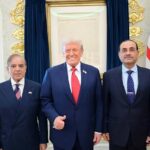
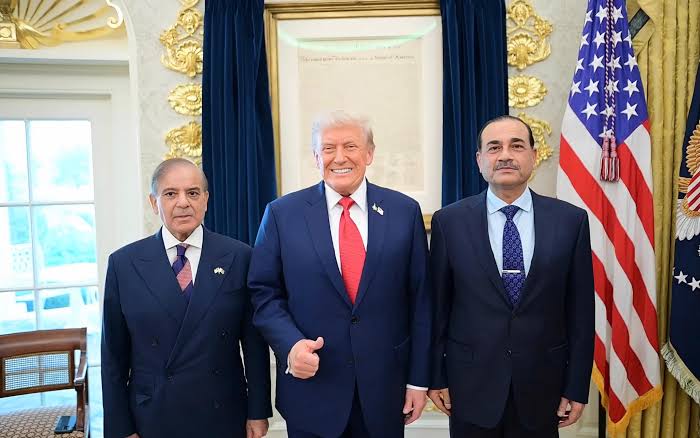
It began early in his second term. Army Chief Asim Munir became the main link between Pakistan and the White House. Trump likes him and has more than once called him his “favorite field marshal.”
In June 2025, the two men had lunch at the White House. The meeting was unusual because no one from Pakistan’s civilian government was present, placing the army at the center of the new friendship. The army said the two leaders discussed mining, energy, cryptocurrency, and security.
Pakistan then joined Trump’s Board of Peace, nominated him for the Nobel Peace Prize, and said he had helped end its conflict with India in May 2025. India disputes that claim.
This year, Pakistan went further. It carried messages between the United States and Iran, and in April it hosted talks between the two countries in Islamabad. Those talks produced an agreement, but it soon collapsed.
So what has Pakistan gained from all of this? So far, not much.
In December, a US export-financing bank agreed to lend $1.25 billion for a major copper and gold mine in Pakistan. However, Pakistan’s main request, a $10 billion facility from the US Treasury, has received no response.
Now, some of the agreements Pakistan has made could attract scrutiny because they involve Trump’s family members or close associates.
In January, Pakistan signed an agreement to explore the use of USD1, a dollar-backed digital currency developed by World Liberty Financial, a crypto firm with ties to the Trump family. The person who signed on behalf of the firm was Zach Witkoff, whose father, Steve Witkoff, serves as Trump’s special envoy.
Pakistan has also signed an agreement to explore the redevelopment of the Roosevelt Hotel in New York, a project in which Steve Witkoff helped broker a deal. In addition, it has ordered a small number of drones from a company called Powerus, in which Trump’s sons, Donald Trump Jr. and Eric Trump, are investors.
The White House has defended the arrangements. A spokeswoman told Reuters in September that there were “no conflicts of interest.”
Not everyone is convinced the relationships will hold up. Husain Haqqani, Pakistan’s former ambassador to Washington, said Pakistani leaders had built a reciprocal relationship with Trump’s team, but warned that some of the deals involving his friends and family may not endure.
“Pakistan seems totally unprepared for that scrutiny,” he said.
Another expert in Washington said that if the agreements broadly appeared to have been made for private gain, an investigation could damage relations between the two countries.
Still, the outcome may not be entirely negative for Pakistan. Michael Kugelman, a South Asia expert at the Atlantic Council, noted that both parties in Washington value Pakistan’s cooperation against terrorist groups and its role in the Iran talks. He also believes Democrats are more likely to blame any questionable deals on Trump than on Pakistan.
But he warned that there is a real risk. Pakistan, he said, has “put so many of its diplomatic eggs in the White House basket” that it may have little goodwill left with Democrats if power shifts in Washington.
Pakistan’s government has not publicly commented on the result of the US vote.