Tesla To Wind Down Cybertruck Production In Texas, Musk Says
Musk called it the end of an era. The steel pickup never won the wide appeal he promised, and its factory space will now go to the driverless Cybercab.
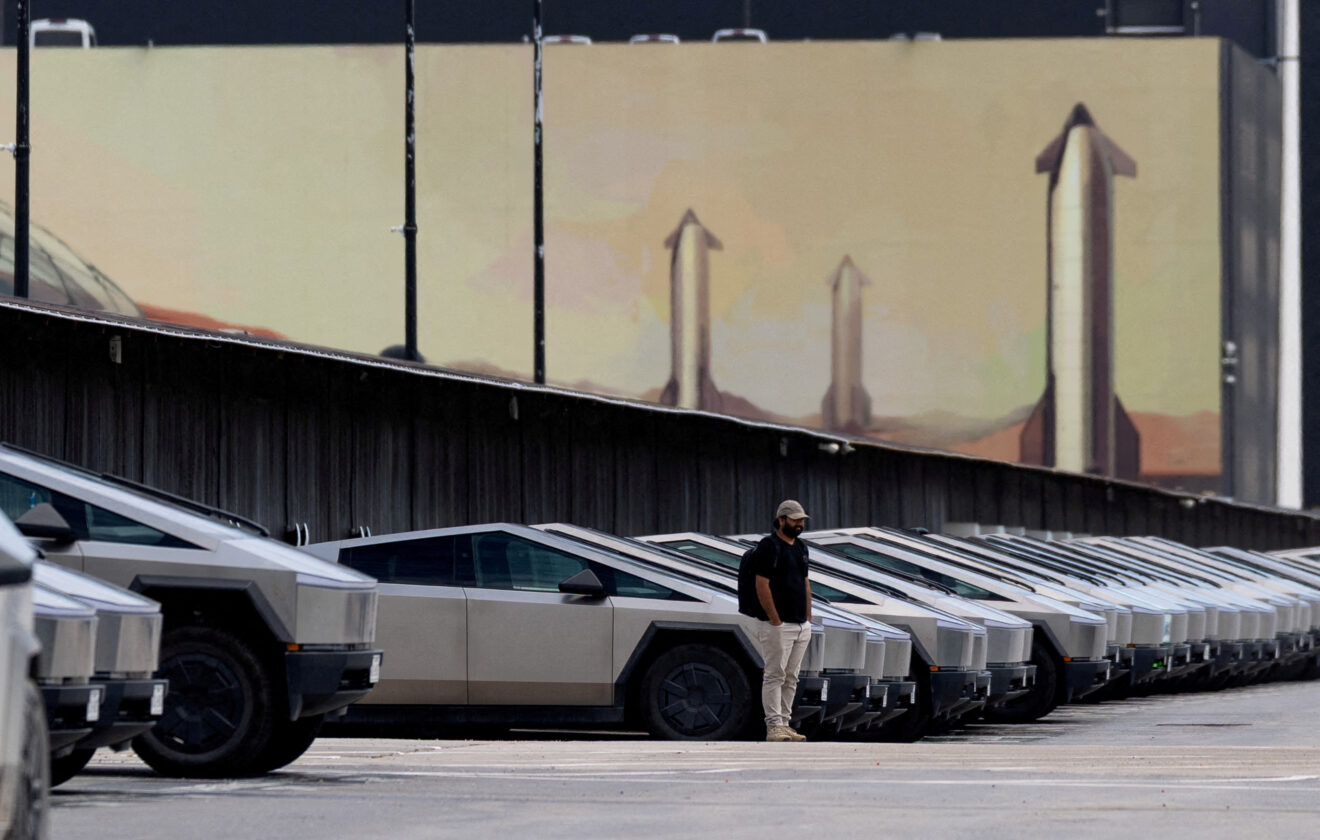
AUSTIN, Nov 6 – Tesla plans to wind down Cybertruck production at its Texas factory around the middle of next year, Chief Executive Elon Musk said on Friday. The pickup, once sold as a rival to the big trucks from Ford and General Motors, never caught on with most buyers.
Musk said in a post on X that ending production would free up room at the plant to build more of the Cybercab, Tesla’s new driverless car. He has made the Cybercab the center of his plans for a robotaxi business.
It is not yet clear whether the Cybertruck will be built somewhere else or dropped for good. But the Austin plant is the only Tesla factory known to have the special equipment needed to make its parts.
Tesla did not reply right away to a request for comment.
Musk still spoke warmly of the truck. In a reply to a user on X, he called it the best vehicle Tesla has ever made, and said the end of production marked the end of an era.
“Cybertruck fleet will be around for a long time,” Musk said.
When the truck went on sale in 2023, Musk said it would take on pickups from General Motors and Ford. But it has fallen well short of that goal.
Its look is a big part of the story. The truck has sharp edges and a body made of bare stainless steel, and people tend to either love it or hate it. That design also made it hard to get approval in parts of Europe, so Tesla lost out on big markets that could have helped it sell in larger numbers.
The Cybertruck has also faced a series of recalls and quality-control problems, and Tesla has repeatedly changed its price.
Tesla does not disclose how many Cybertrucks it sells, grouping the vehicle under “other models.” That category accounted for just 8,295 deliveries in the third quarter, down from 12,364 in the previous quarter.
Wes Morrill, the engineer who led development of the truck, said its lessons would carry forward into Tesla’s next vehicle.
“Cybertruck was an incredible technology development platform and lives on through Cybercab,” Morrill wrote on X.
The Cybercab is now the car Musk has pinned his hopes on. It features upward-opening, wing-like doors and has no steering wheel, pedals, or mirrors. It is designed to drive itself.
Musk wants to transform Tesla into a company centered on artificial intelligence and robotics rather than cars alone. He has said the Cybercab will be the primary vehicle in a vast global network of driverless taxis, and that one day Tesla will produce more of them than any other model.
After years of missed deadlines for self-driving technology, Tesla began offering paid rides in a small fleet of Cybercabs in Austin in September.
However, the company still faces questions from the US auto safety regulator, which wants to know whether Tesla properly self-certified that the Cybercab complies with federal safety rules, as automakers are required to do.
The move marks the latest step in Tesla’s shift away from some of its older models. Earlier this year, Tesla stopped producing its Model S sedan and Model X SUV at its Fremont, California, factory and is converting the space to manufacture its Optimus humanoid robot.
That leaves Tesla relying more heavily on its two best-selling vehicles, the Model 3 and Model Y, while it works to expand its robotaxi and robotics businesses.