Roy Cooper flips North Carolina Senate seat, beating Trump pick Michael Whatley
The former governor beat the man President Donald Trump chose for the race. He takes over from Thom Tillis and gives Democrats one of the seats they need.
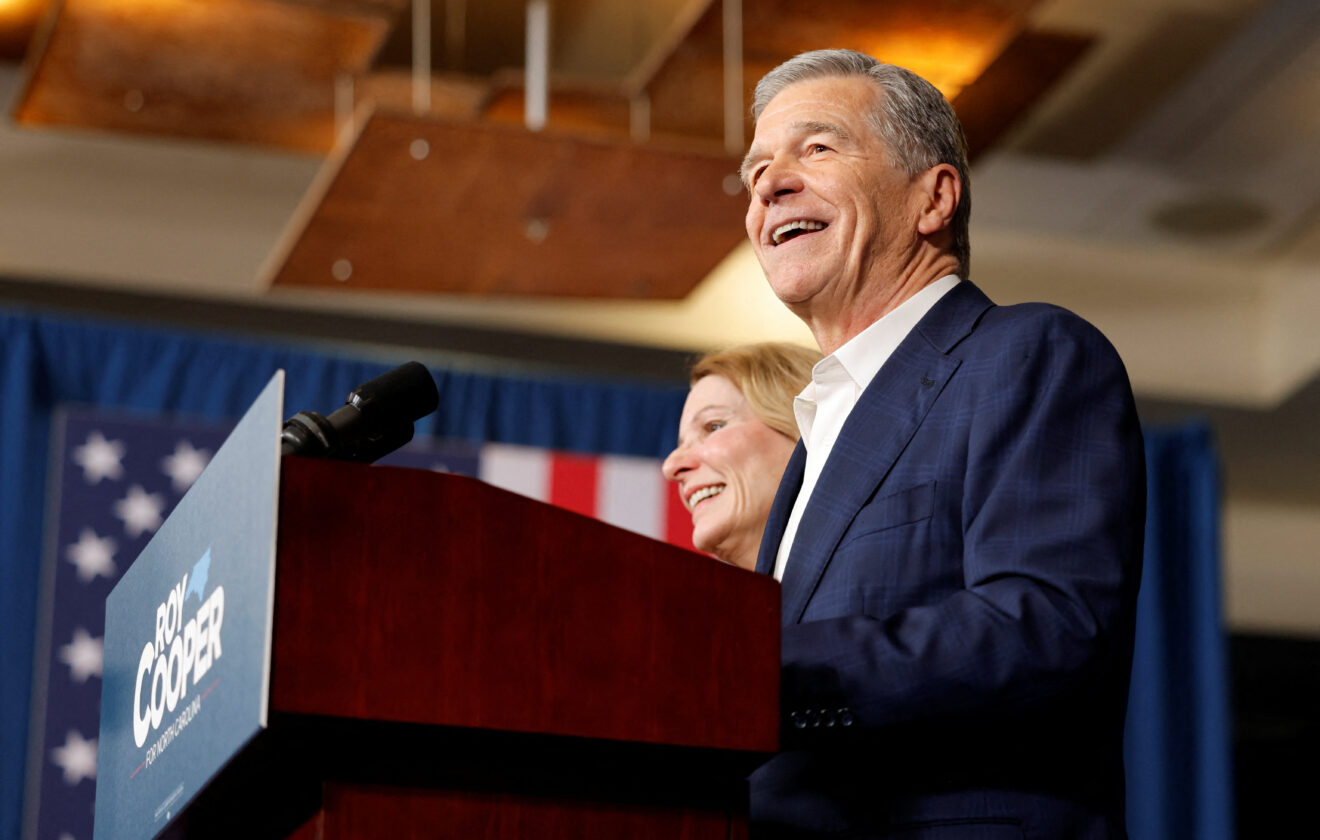
RALEIGH, North Carolina, Nov 4 – Roy Cooper is on his way to the Senate. The Democrat beat Republican Michael Whatley in North Carolina on Tuesday, and in doing so he took a seat that has been in Republican hands.
They needed it. Republicans had 53 seats in the Senate going into the election, while Democrats had 47. That meant Democrats needed a net gain of four seats to take control of the chamber in January, and North Carolina was one of the places where they saw their strongest opportunity.
Cooper, who is 69, was a familiar figure to voters across the state. He served two terms as governor and, before that, spent 16 years as North Carolina’s attorney general. His long record in state government gave him name recognition and a reputation for steady, practical leadership.
He ran to replace Thom Tillis, a Republican who chose not to seek another term. Tillis made that decision after breaking with President Donald Trump over cuts to Medicaid in the president’s major tax and spending law. His departure opened a rare opportunity for Democrats in a state that has often leaned Republican in federal races.
Trump then chose Whatley as the Republican candidate and traveled to North Carolina to campaign with him. But Whatley had never run for elected office before. He was best known as the former head of the Republican National Committee, a role Trump backed him for in 2024 after Ronna McDaniel was pushed out.
At the RNC, Whatley worked closely with Lara Trump, the president’s daughter-in-law, who served as co-chair. Together, they led what they called an election integrity effort, recruiting 100,000 Republican volunteers and lawyers in swing states to monitor voting during the 2024 election.
Cooper ran on a much simpler message: lowering food prices, reducing energy costs, and making life more affordable for ordinary families.
Those issues had become central to voters across the country, and they were especially important in North Carolina, where many households were struggling with higher prices.
Energy costs rose throughout the year. Gasoline became more expensive after the United States and Israel went to war with Iran in February, and the increase affected the cost of transportation, food, and other everyday goods. Cooper argued that the state needed leadership focused on easing those burdens rather than engaging in political fights.
His name recognition also worked in his favor. Cooper took a lead in the polls over the summer and maintained it into the fall. He performed strongly among independents, who make up a large share of North Carolina’s electorate and often decide close statewide races.
In June, a poll by The New York Times and Siena College showed Cooper ahead by 7 points. Some later surveys put his lead even wider. By the final weeks of the campaign, Republicans had largely shifted their attention and resources away from the seat, according to The New York Times. At that point, it was the only Senate race where they had done so.
Trump did not make things easier for Whatley. The president’s approval rating had fallen during the year, and in September a Reuters/Ipsos poll put it at 32 percent, the lowest of his career. That weakened the usual advantage a Trump endorsement can provide and made it harder for Republicans to energize their base.
North Carolina is often one of the closest states in the country. Trump won it all three times he ran for president, but never by much. And the state has picked Democrats for governor, Cooper among them.
His win was the first of several important gains for Democrats on Tuesday night.
In Texas, James Talarico defeated Ken Paxton, while in Kansas, Adam Hamilton beat Senator Roger Marshall to become the first Democrat from the state elected to the Senate in 94 years. In Ohio, Sherrod Brown won back his former seat by defeating Senator Jon Husted.
In South Carolina, NBC News and CBS News projected that Democrat Annie Andrews had defeated Senator Darline Graham. Democrats also held on to their seats in Georgia and New Hampshire, while votes were still being counted in Alaska, Maine, and Michigan.
Voters were in a sour mood. Exit polls found that half saw the election as a way to send a message to the president, and about 70 percent said they wanted Congress to keep a closer check on him.
The last Democrat to hold a Senate seat from North Carolina was Kay Hagan, who served from 2009 to 2015.
Cooper will be sworn in to the Senate in January.