Keisha Lance Bottoms wins Georgia governor’s race, first Black woman elected to lead a US state
The former Atlanta mayor beat Republican billionaire Rick Jackson, ending more than two decades of Republican control of Georgia’s governor’s office.
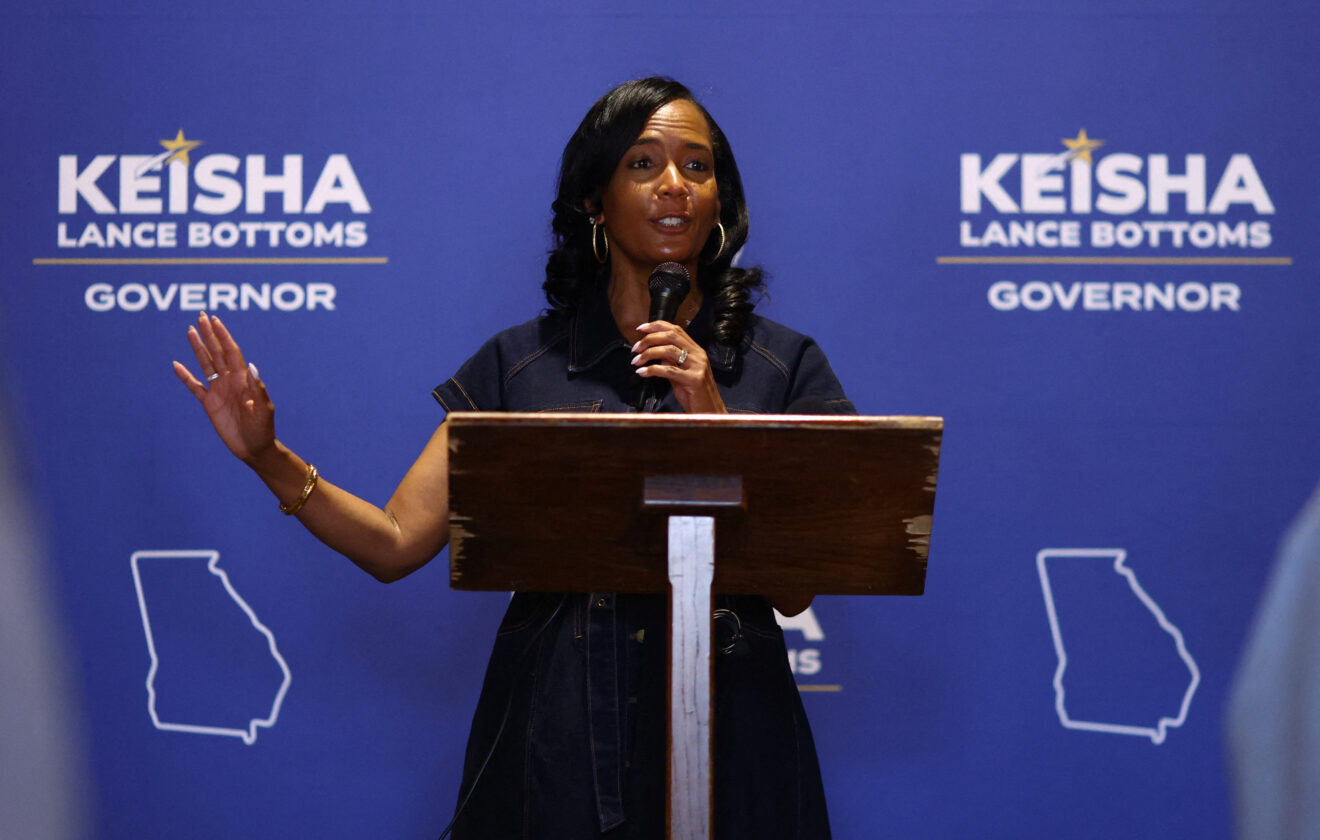
ATLANTA, Nov 4 – Democrat Keisha Lance Bottoms won the Georgia governor’s race on Tuesday, making history as the first Black woman elected governor of any U.S. state.
The Associated Press projected that Bottoms, a former mayor of Atlanta, had defeated Republican businessman Rick Jackson, though votes were still being counted at the time of the call.
Keisha will also become the first woman to serve as governor of Georgia. She is set to take office in January as the state’s 84th governor.
Her victory represents a major win for Democrats in one of the country’s most closely divided states. It also ends more than two decades of Republican control of the governor’s office in Georgia.
The last Democrat elected governor of Georgia was Roy Barnes, who lost his reelection bid to Republican Sonny Perdue in 2002.
Bottoms, 56, will succeed Republican Governor Brian Kemp, who is leaving office after serving two consecutive terms, the maximum allowed under state law.
The two have clashed in the past. During Bottoms’s time as mayor, she and Kemp disagreed over business closures and mask requirements during the COVID-19 pandemic.
Bottoms served on the Atlanta City Council from 2010 to 2017 before being elected mayor of Atlanta, a position she held from 2018 to 2022. She chose not to run for a second term.
Following her tenure as mayor, Keisha moved to Washington, where she served as a senior adviser to former President Joe Biden. She also led the White House Office of Public Engagement during that period. Her campaign for governor focused on health care, housing and schools. She called full expansion of Medicaid, the government health program for people on low incomes, a priority for her first day in office.
She also promised to repeal Georgia’s abortion restrictions and to push for a $15 minimum wage. Her plans included lowering the state’s gas tax, building a fund for affordable housing and making community and technical colleges free.
Jackson, a billionaire, founded the medical staffing company Jackson Healthcare. He ran as a political outsider and spoke often about growing up in public housing in Atlanta and spending time in foster care.
Jackson campaigned on tax cuts, public safety, and reduced government regulation. He proposed cutting the state income tax in half within four years and eliminating it within eight.
Jackson entered the Republican primary in February and spent more than $100 million of his own money on the campaign. He defeated Lieutenant Governor Burt Jones in a runoff in June.
Keisha won her party’s primary outright, avoiding a runoff.
Her victory marks a major milestone for Black women in American politics. Black women have long been among the Democratic Party’s most loyal groups of voters, yet they remain underrepresented in the country’s highest elected offices.
It was also a night of historic firsts elsewhere. In the U.S. Virgin Islands, a U.S. territory, Stacey Plaskett was elected governor, becoming the first Black woman governor of any American jurisdiction.
Black voters have been central to the Democratic coalition that transformed Georgia from a reliably Republican state into a national battleground. Their organizing and turnout have played a decisive role in shaping the state’s political direction over the past decade.
Keisha’s win comes eight years after Democrat Stacey Abrams became the first Black woman nominated for governor by a major party in the United States. Abrams’s campaigns helped lay the groundwork for the coalition that ultimately made Keisha’s historic victory possible.
Abrams lost her gubernatorial races in Georgia in 2018 and 2022. However, her campaigns helped build a broad coalition of voters across different races and age groups, significantly increasing Democratic turnout in the state.
That turnout helped Democrats win both of Georgia’s Senate seats, marking a major shift in the state’s political landscape. It also helped a Democratic presidential candidate carry Georgia in 2020 for the first time in nearly three decades, signaling the state’s growing importance as a national battleground.