Spain Train Crash Near Toledo Kills at Least 68, Three Days of Mourning Declared
A state-run high-speed train slammed into a stopped private train south of Madrid. The transport minister has called the order that let it move “inexplicable.”
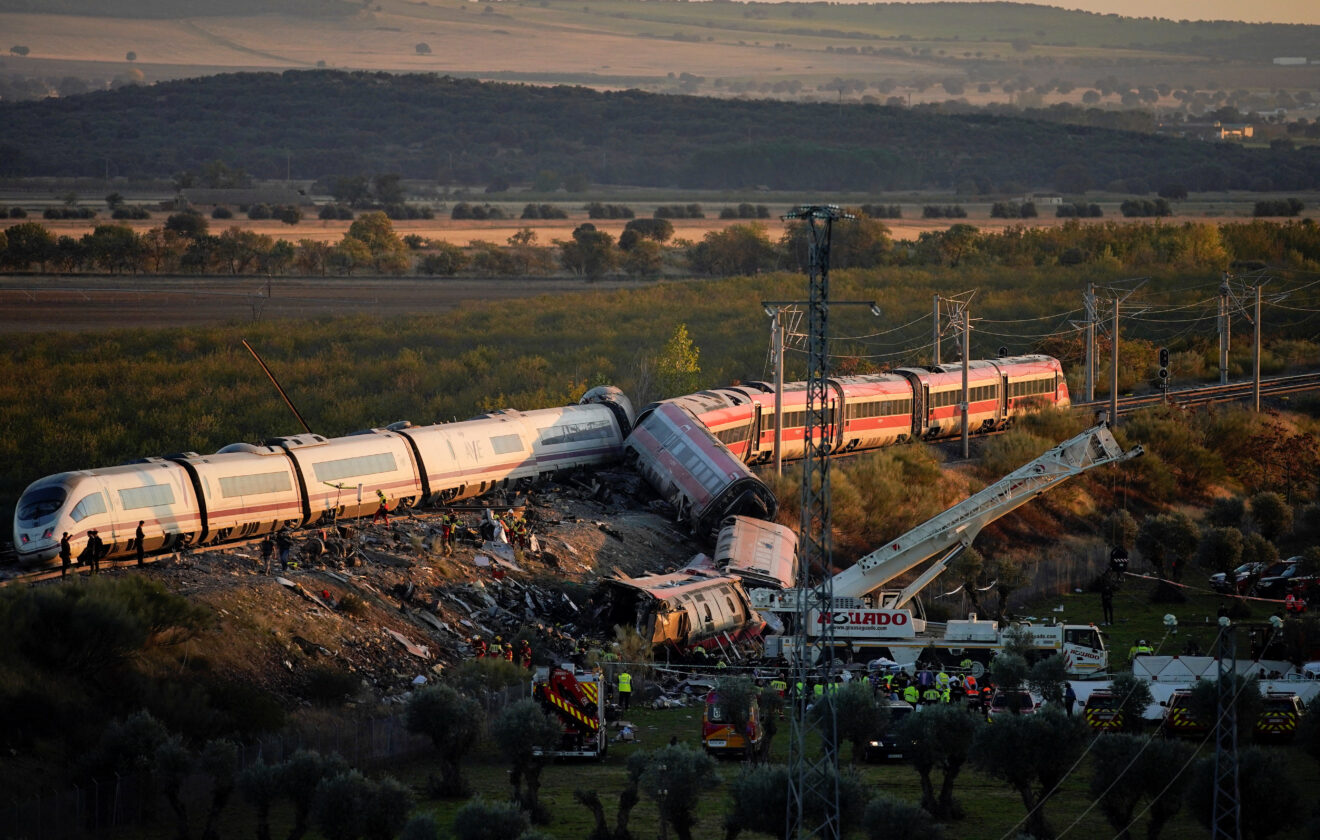
MADRID, Oct 29 – Spain began three days of national mourning on Thursday after a high-speed train crash near Toledo killed at least 68 people and injured dozens more, in one of the worst rail disasters in Europe in recent decades.
Rescue teams worked through the night under bright floodlights. They cut open twisted carriages to search for victims, and many of the dead have still not been named.
The crash took place shortly before 9 a.m. on Wednesday near the town of Urda, in the province of Toledo, about 150 kilometers south of Madrid. Both trains were on the high-speed line from Madrid to Seville and were heading in the same direction.
According to Transport Minister Óscar Puente, a train operated by the private rail company Iryo stopped on the tracks after a computer malfunction. The train was carrying approximately 147 passengers at the time of the incident. The unexpected stoppage left the train stationary on the line, creating a dangerous situation that ultimately contributed to the collision.
When such a failure happens, a control center in Madrid that runs around the clock is meant to take charge. But Puente said the center told the trains to move again with no speed limits in place, a decision he called “inexplicable.” Audio recordings between the controllers and the drivers appear to show that a high-speed train was cleared to go even though another train ahead of it had stalled, according to reports.
That train belonged to the state-owned rail company Renfe and had 397 people on board. It struck the Iryo train from behind, and Iryo has confirmed that its train was hit from the rear. Two of the Iryo carriages were thrown off the track and fell down an embankment.
Passengers described scenes of panic inside the carriages. Some were trapped in their seats, many were bleeding, and smoke filled the air. One carriage reportedly caught fire after the impact.
Civil protection officials said more than 100 people were taken to hospital. The number of injured has changed several times since Wednesday, and officials say the death toll could still rise.
Prime Minister Pedro Sánchez visited the crash area and declared three days of national mourning from October 29 to October 31. He said that the country was mourning for those who lost their lives due to this catastrophe,” he declared.
“Spain is in mourning,” Sánchez said, describing the pain felt across the nation following one of the deadliest rail disasters in its recent history.
The prime minister also expressed frustration and anger that Spain had suffered two serious rail disasters within the same year. In January, a high-speed train crash near Adamuz, in the province of Córdoba, killed 46 people. Sánchez noted that while the two incidents occurred on the same rail line, the causes of the crashes did not appear to be linked.
Hundreds of rescue workers are at the crash site. The Interior Ministry said drones and helicopters are being used to find victims and clear wreckage.
Most political parties stopped campaigning for upcoming elections after the crash. But the far-right Vox party kept going. Its leader, Santiago Abascal, accused rivals of using the mourning period to silence criticism of the country’s rail network.
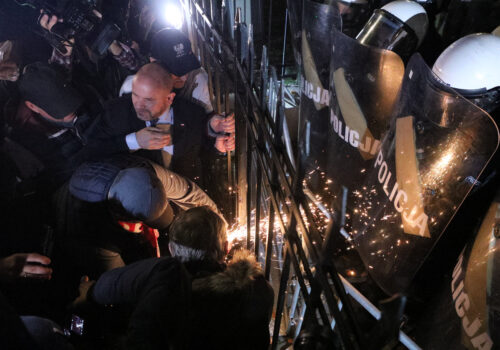
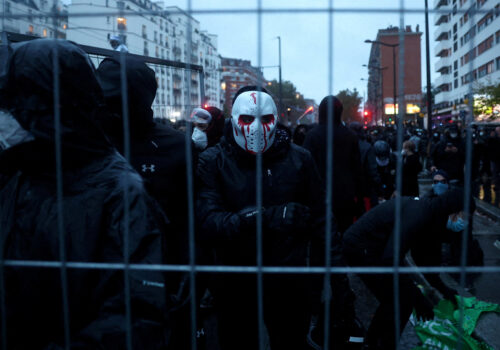
Anger also spilled into the streets. About 1,500 people gathered outside the Transport Ministry in Madrid overnight, according to the state broadcaster TVE. Many called for Sánchez and Puente to resign. Police fired tear gas to break up the crowd after some protesters threw bottles and flares, but no one was hurt or arrested, according to reports.
Employees in rail transport have said there will be a planned strike on Thursday. According to the Spanish Union of Railway Drivers (Semaf), the industrial unrest is being held to ensure railway safety.
The leader of Spain’s main opposition party, the People’s Party, Alberto Núñez Feijóo, called on the government to provide clearer answers about the cause of the crash. “Spain has the right to know what is happening with its infrastructure,” Feijóo said.
Meanwhile, relatives of passengers spent the night desperately trying to find information about their loved ones. The Civil Guard has set up reporting centers in Madrid, Toledo, Seville, and Córdoba to register reports of missing persons. In a post on X, the Civil Guard said its main priority is to identify missing people and collect DNA samples to help locate their relatives.
In Toledo, close to the site of the crash, residents gathered for a vigil to honor the victims, standing together in a minute of silence as the community mourned the lives lost. Similar scenes of grief and solidarity were seen across the country as people came to terms with the scale of the tragedy.
In Brussels, flags at the European Commission were lowered to half-mast as a sign of respect and European solidarity with Spain during its period of national mourning.
Wednesday’s crash is now the deadliest rail disaster Spain has experienced since 2013, when 80 people were killed near Santiago de Compostela in the country’s northwest. That earlier tragedy also prompted widespread criticism of Spain’s rail safety standards, and the latest crash has once again raised serious questions about the systems and safeguards in place to protect passengers.