Tariff On Indian Goods Set At 25% But May Fall Below Rivals With A Trade Deal
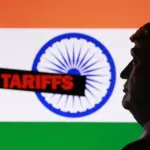
Washington's new plan would tax Indian imports at 25 percent without a deal and 17 percent with one. That lower rate would sit just under those planned for many of India's competitors
NEW DELHI, Nov 26 – The United States has proposed a 25 percent tariff on Indian goods to counter what it calls excess industrial capacity, but said the rate could fall to 17 percent with a trade deal.
The proposal is part of a wider plan, announced on Wednesday by the United States Trade Representative’s office, that sets new rates for 14 trading partners. The office said the rates would be capped at levels agreed under trade deals that are complete or still being negotiated.
If India gets a deal, its rate would be a little lower than those planned for many of the countries it competes with. That could give Indian exporters a small edge over rivals in the American market.
Washington has proposed a rate of 18 percent for Bangladesh, Cambodia and Indonesia. Vietnam would face 20 percent, provided it reaches a trade deal, and 35 percent if talks fail.
China follows suit by maintaining a 20 percent limit, consistent with an agreement between the United States and China that expires on January 10. But if the truce falls apart, China’s rate would rise to 40 percent. The 20 percent would also be added to duties of about 25 percent imposed during Trump’s first term.
The possible 17 percent rate for India is also a notch lower than the 18 percent the two countries agreed in a framework for a trade deal in February.
That framework came before the Supreme Court struck down Trump’s use of emergency powers to impose sweeping global tariffs, a ruling that led to the current baseline tariff of 10 percent.
Washington has accused India of unfair trade practices, citing weak labor protections, what it called financial repression, barriers to market access and a failure to address global excess capacity.
India’s trade ministry said late on Wednesday it was studying the notice from the trade office. It said India had told Washington during the investigation that it has no structural excess capacity in any sector.
India also said it remains committed to an early trade deal.
But the talks have dragged on. India began negotiating with the United States in February 2025, and unlike many other countries, it has not yet reached an agreement.
One problem is a new law in the United States that opens the way for tariffs of up to 100 percent on Indian goods over New Delhi’s purchases of Russian oil. Purchases of crude oil have been falling recently due to the devaluation of international prices and higher supply from Saudi Arabia.
Relations between the two countries have also been rocky over the past year.
A United States military strike on a ship off Oman killed three Indian seafarers, and India has rejected Trump’s repeated claim that he brokered a ceasefire between India and Pakistan.
The stakes for India are high. The United States is its largest export market, and so far Indian exports have held up well despite the tariffs.
India’s goods exports to the United States rose 14.5 percent to $59.5 billion between April and October.
India says many of its biggest exports to the United States, including generic medicines and smartphones, are not subject to the current 10 percent levy.
Still, analysts say that failing to reach a deal could hurt businesses and weigh on market confidence. They say it could also put more pressure on the rupee, which fell close to record lows in October.
India wants to keep dairy, poultry, rice, wheat and other farm products out of any commitments to open its market. Farming supports a large share of the country’s workforce.
The new rates are not final. The trade office will take comments from industry and hold a public hearing on January 25 before the duties take effect.
Other countries pushed back too. Vietnam said the rate did not match the reality of its trade ties with the United States, while Japan called the plan regrettable and Singapore said it was very disappointed.
Mexico and Norway were left out of the plan because investigations into their trade practices are still under way, according to Jamieson Greer, the United States Trade Representative.
Under the proposal, the tariff on Indian goods would stand at 17 percent with a deal and 25 percent without one.