Iraqi Forces Deploy In Jurf Al-Sakhar Under Deal To Curb Iran-Backed Kataib Hezbollah
Iraqi troops have moved into a town long controlled by Kataib Hezbollah, under a deal for the militia to pull out. The government accuses the group of running an oil smuggling network.
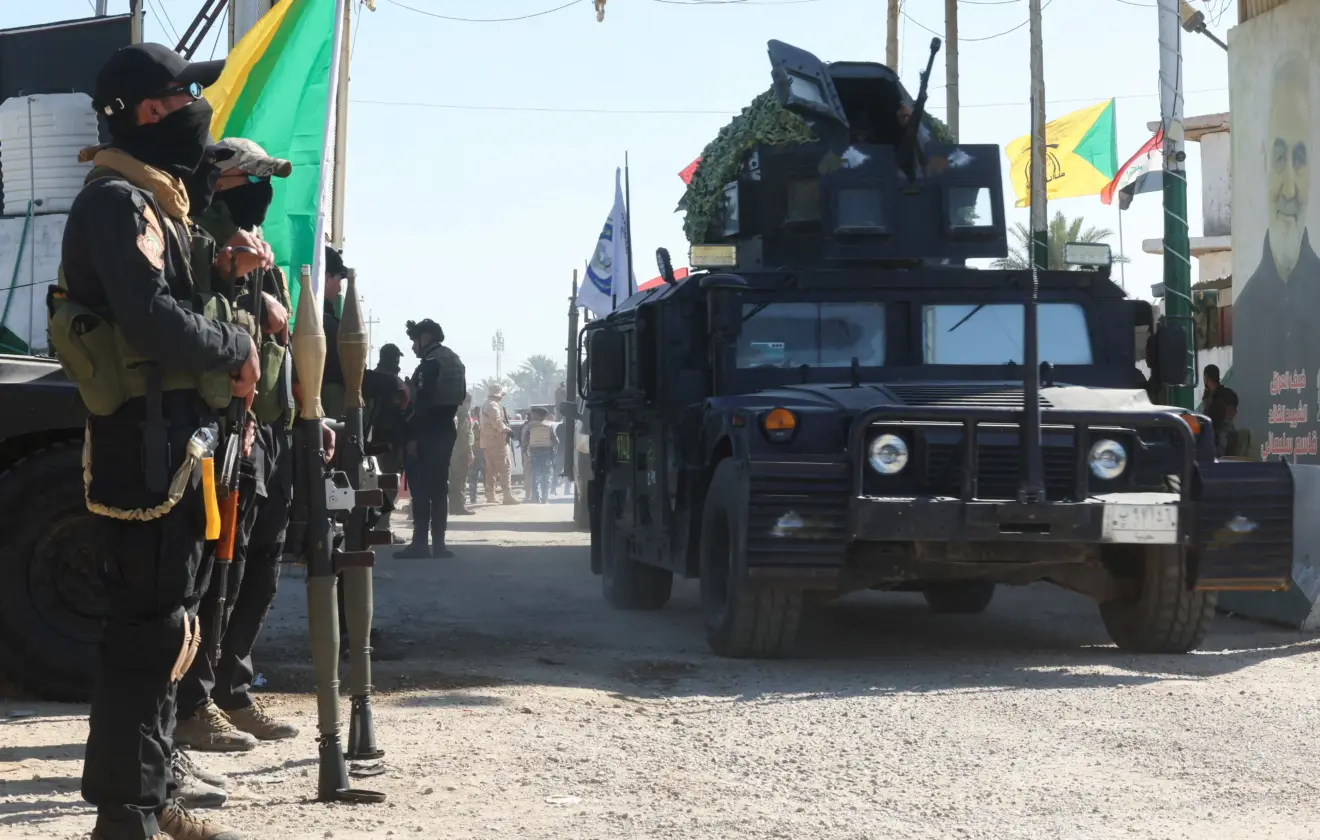
JURF AL-SAKHAR, Iraq, Nov 20 – Iraqi security forces moved into Jurf al-Sakhar on Friday, a stronghold of the armed group Kataib Hezbollah, under a deal meant to limit the reach of Iran’s most powerful militia ally in Iraq without setting off a clash.
A convoy of vehicles flying Iraqi flags headed toward the town, and soldiers took up positions in its center. Members of Kataib Hezbollah stood nearby, beside their own flags.
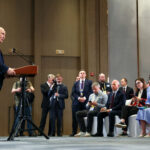
The move came after senior security officials told a press conference that government forces would protect the town.
“Today is a historic moment,” said Sabah al-Numan, spokesperson for the commander-in-chief of Iraq’s armed forces. He said the armed forces were proving they are the nation’s shield and the guardian of its security.
Prime Minister Ali al-Zaidi ordered security forces this week to move against Kataib Hezbollah. Officials accuse the group of running an oil smuggling network in Jurf al-Sakhar that siphoned off state-owned oil worth hundreds of millions of dollars.
The group, whose name means Battalions of the Party of God, has rejected the accusations. Arrests linked to the case have raised fears of an armed response.
Under the deal, brokered by Shiite politicians, Kataib members are expected to withdraw to other parts of Iraq.
A security headquarters is due to open in Jurf al-Sakhar on Saturday to oversee the handover. Iraq’s energy police have started guarding an oil pipeline in the town, according to the state news agency.
So far, nine senior security and oil officials have been dismissed after an investigation into Jurf al-Sakhar, which lies in Babil province, about 50 kilometers south of Baghdad.
The stakes are high. Shiite political figures said Esmail Qaani, commander of the Quds Force of Iran’s Revolutionary Guards, arrived in Baghdad on Monday to help ease tensions with Kataib Hezbollah.
Any direct clash with Iran’s heavily armed allies in Iraq could be dangerous. Five years ago, after one of Zaidi’s predecessors ordered a similar crackdown, the prime minister’s home in Baghdad was hit in a drone strike. Authorities called it an assassination attempt.
President Donald Trump has pressed Zaidi to disarm the militias. Some of them have attacked American troops and facilities in Saudi Arabia and the United Arab Emirates in support of Tehran, since the United States and Israel attacked Iran at the end of February.
Kataib Hezbollah is among the groups that have claimed attacks on American forces in Gulf states. The United States lists it as a terrorist group.
Kataib Hezbollah and other militias, which all answer directly to Iran’s Revolutionary Guards, have refused to give up their weapons to the state.
The group was formed after the 2003 invasion of Iraq led by the United States. It is one of the most powerful members of the Islamic Resistance in Iraq, an umbrella group of hardline Shiite armed groups backed by Iran.
During the fighting of the 2000s, it became known for deadly attacks on military and diplomatic targets, using snipers, rockets, mortars and roadside bombs.
The 2003 invasion toppled Saddam Hussein, Iran’s longtime enemy. Since then, Tehran has built strong ties with dozens of armed Shiite groups and politicians in Iraq.
Iraqi security officials say the militias’ weapons include rifles, machine guns, anti-tank missiles, mortars, guided rockets, armed drones and some short-range ballistic and cruise missiles.
Kataib has its own political party, called Huquq, or Rights, which holds five seats in parliament. An official Iraqi report said the group also makes money from businesses in construction, housing, trade, tourism and currency exchange. Kataib denies this and says it is focused on security.
Pro-Iranian militias, including Kataib, have a semi-official status in Iraq. Critics say that lets them act without fear of punishment. Kataib Hezbollah has no publicly known leadership and thousands of experienced fighters.
It makes up several battalions in Iraq’s Popular Mobilization Forces, a group of armed factions formed in 2014 to fight the Islamic State group and later recognized as an official security force. Its fighters get state salaries, and some members listed as terrorists by Washington hold senior posts in the force.
On paper, the group answers to the prime minister. But it often acts outside the chain of command, and has defied government calls to stop attacks on American forces.
Zaidi’s government has taken other steps against the militias this year. In August, special forces reporting directly to him arrested the intelligence chief of another Iran-aligned group, Harakat al-Nujaba, over alleged drone attacks on American targets.
He was held for 48 hours. The arrest led to threats of revenge and forced senior Shiite politicians to step in. A week later, special forces arrested four militia members accused of helping with attacks on American interests.