Trump Rejects Iran Deal Terms, Araqchi Still Seeks Diplomacy
Donald Trump says Iran wants an agreement, but not on terms he will accept. Iran's foreign minister says Tehran still hopes diplomacy can end the war, but wants guarantees first.
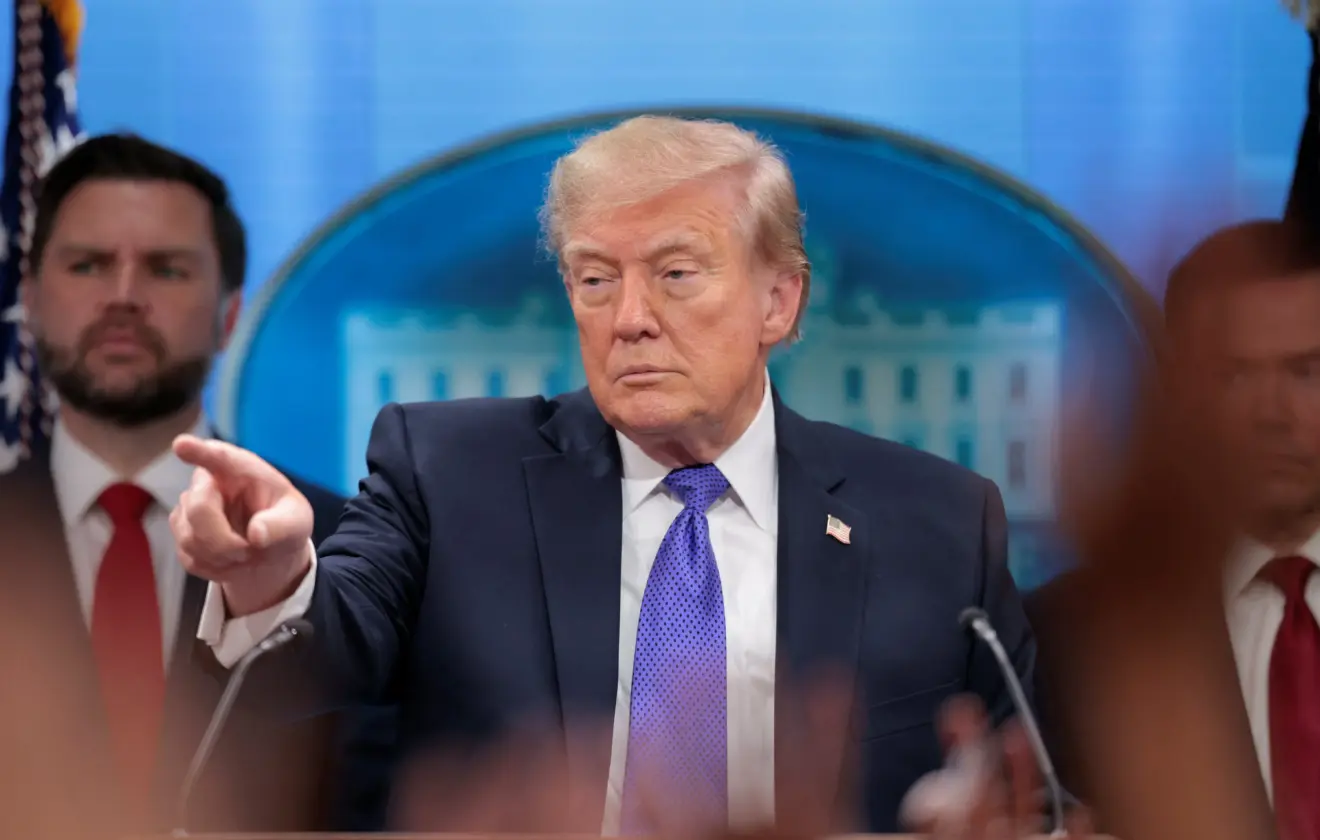
WASHINGTON, Nov 21 – President Donald Trump said on Friday that Iran wants a deal to end the war but not one that is acceptable to him, as fears grow of a return to all-out fighting between the two countries.
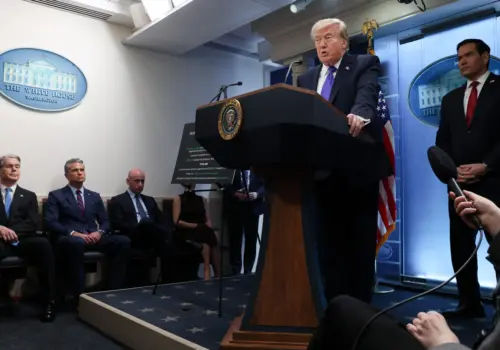
“We want to make a real deal, not a fake deal,” Trump told a news conference at the White House.
He accused Iran’s government of misleading people for 51 years, using an expletive. He also repeated his long-standing vow that Iran will never have a nuclear weapon.
Trump has moved back and forth between backing a deal to end the fighting and saying the United States does not need one at all. Diplomats and analysts say that uncertainty, along with the latest exchange of attacks, shows how stuck both sides are nearly nine months into the war.
In Tehran, Iran’s foreign minister struck a more hopeful tone.
Abbas Araqchi told the state-owned Iran newspaper that Tehran still hopes diplomacy can end the war. He said messages are still being passed between Iran and Washington through mediators.
He said Iran is seeking “an agreement that would ensure there was no further war.”
But Araqchi said Iran wants guarantees that Washington is serious about talks before moving further. He said Iran has discussed with mediators what kind of steps could build trust between the two sides.
He said one of Iran’s red lines is keeping its highly enriched uranium inside the country. Still, he said a fair solution on the nuclear material is possible, one that serves Iran’s interests and meets its needs.
Iranian officials have already mentioned workable options before, including diluting the stockpile under the supervision of the International Atomic Energy Agency.
The agency estimates that Iran had about 441 kilograms of uranium enriched to 60% when Israel and the United States attacked Iranian nuclear sites in June 2025. It is not clear how much of that survived.
Gulf states are worried about a return to full-scale war, according to a Middle Eastern diplomat. The diplomat said they are using existing channels to look for a lasting, if partial, solution.
Such a deal could lift all limits on shipping through the Strait of Hormuz, a key route for the world’s energy supplies. In return, Iran would get limited relief from sanctions, and broader talks, including on its nuclear program, could resume, the diplomat said.
The diplomat, who spoke on condition of anonymity, said the countries trying to mediate put little faith in what either side says in public, and take seriously only what is said behind closed doors.
Qatari and Iranian officials met on Tuesday. A spokesperson for Qatar’s foreign ministry said the talks aimed to bring the two sides’ views closer and narrow the gap between their proposals.
Israeli Prime Minister Benjamin Netanyahu has pushed for the United States to restart the war, or to let Israel strike Iran’s nuclear sites and missile forces, the Associated Press has reported.
Iran has widened its attacks on its Gulf neighbors this week. It targeted an American air base in Kuwait and launched several attacks on Bahrain, after an American jet struck a missile launch site of the Revolutionary Guards on Qeshm Island on Tuesday.
Iran had not ordered such attacks on American sites in neighboring countries for about two months. It said they were a response to American drone surveillance and an attack on Iranian communications towers.
Still, analysts say neither side seems eager to return to the height of the war.
“This is an incredibly volatile moment,” said Mona Yacoubian, director of the Middle East program at the Center for Strategic and International Studies. But she said neither side appears ready to jump back into all-out conflict.
She noted that Iran has struck Bahrain and Kuwait, two of the weakest Gulf states, rather than the United Arab Emirates, Saudi Arabia or Qatar.
Michael Singh, managing director of the Washington Institute for Near East Policy, said the risks of escalation are significant and the gains uncertain.
“Strategic patience really looks like the most attractive approach,” Singh said.
The United States has kept up its naval blockade to stop Iranian oil reaching world markets, and continues to squeeze Iran’s remaining financial ties.
Ali Vaez, Iran director at the International Crisis Group, said Tehran wants to show that “Washington cannot declare victory while keeping Iran under economic siege.”
The United States and Israel attacked Iran on February 28, prompting Iran to strike Israel and Gulf states that host American bases.