Cyclone Arnab Kills Three and Forces 180,000 From Their Homes in Eastern India
A powerful cyclone struck India’s eastern coast on Wednesday, killing at least three people in Andhra Pradesh and damaging homes and crops. More than 180,000 people had been moved to safety.
NEW DELHI, October 28- Cyclone Arnab killed at least three people in India on Wednesday. The storm hit the eastern coast from the Bay of Bengal, bringing heavy rain and strong winds, and it damaged dozens of houses and destroyed crops, authorities said.
The India Meteorological Department classed Arnab as a very severe cyclonic storm. That’s the third-highest category on its scale. The storm crossed the coast of Andhra Pradesh state early on Wednesday, and its center then moved fully inland. After it moved further inland, it was downgraded to a severe cyclonic storm.
Andhra Pradesh took the worst of it. “Andhra Pradesh has been most affected,” said Narendra Singh Bundela, a senior official at the National Disaster Response Force. Three people had lost their lives, he told reporters. Two of the deaths were caused by a falling tree and by electrocution, according to officials in the office of the state’s chief minister. The report did not say how the third person died.
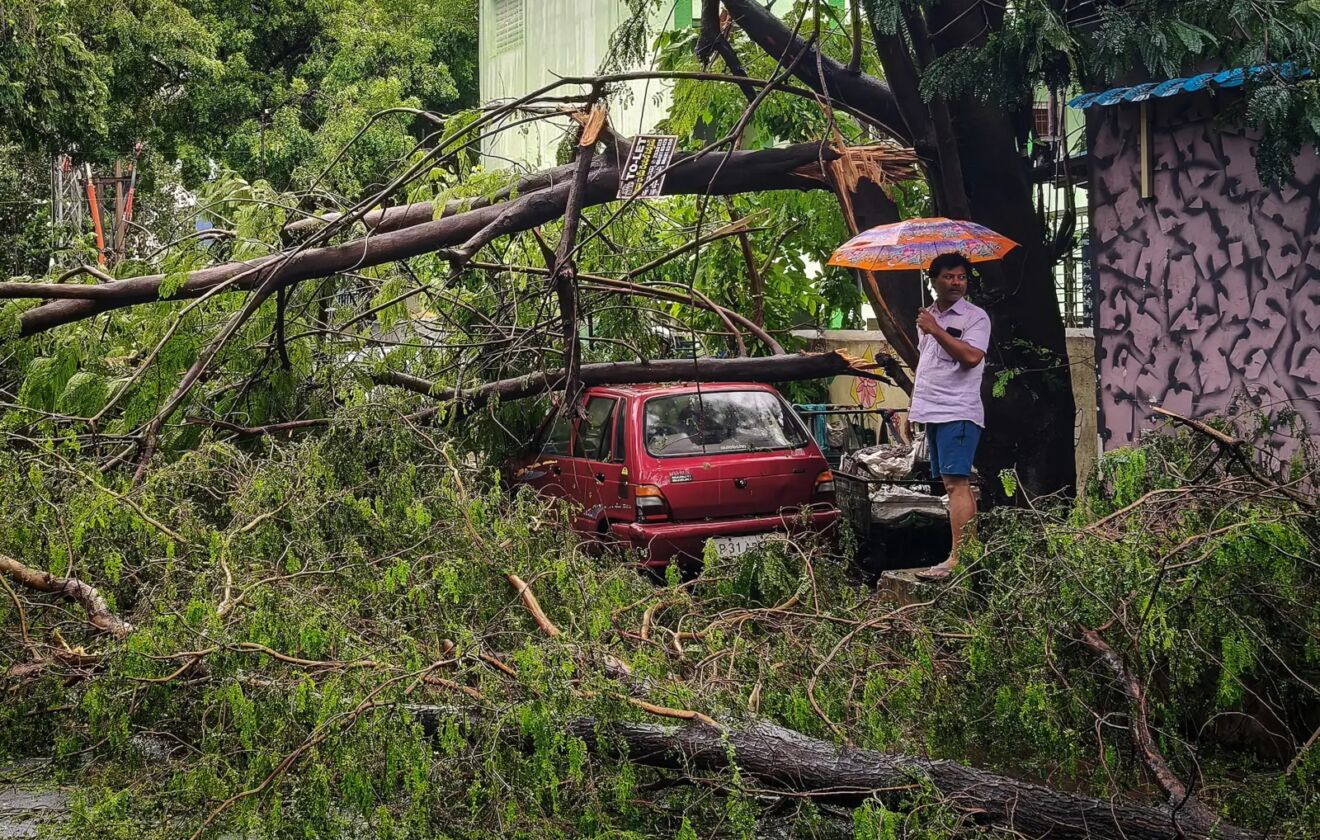
The damage is large. Heavy rain and high winds destroyed at least 180 houses and brought down 220 trees, Andhra Pradesh Chief Minister N. Chandrababu Naidu said in a letter to federal Home Minister Amit Shah. Power supply was cut in several areas. Television images showed trees across highways, and workers in rain gear were clearing branches and leaves from the roads.
The neighboring state of Odisha was not hit as badly, Bundela said. He expected wind speeds to weaken as the cyclone moved inland, though some other nearby states could still experience heavy rain. Teams from the National Disaster Response Force and from the affected states are working in the impacted areas.
Before the storm arrived, more than 180,000 people were evacuated in Andhra Pradesh and Odisha. Authorities said more than 12 million people live in the cyclone’s expected path. Some schools were closed. Some train and flight services along the eastern coast were canceled, and operations at three airports in Andhra Pradesh were suspended, according to India’s civil aviation ministry. Fishermen along the coast were told not to go out to sea.
The weather department forecast winds of 125 to 135 kilometers an hour, or about 78 to 84 miles an hour, with gusts reaching up to 150 kilometers an hour. It also warned of a storm surge of one to 1.5 meters above normal tide levels, which could flood low-lying areas of Andhra Pradesh. Officials expected crop damage, as well as damage to thatched houses and communication lines.
For people in the path of the storm, the night was frightening. Nagi, a resident of Kakinada district, said no one knew whose house the water would rush into next, or whose home would be submerged. He gave only one name. Trees fell, houses were damaged, and all their belongings, including books, were destroyed, he said.
The storm’s effects are also being felt beyond India. In neighboring Nepal, officials suspended the issuance of trekking permits for high-mountain areas for three days. They fear rain and blizzards because of the cyclone. On Tuesday, Nepal warned tourists to stay away from high-altitude areas. Officials said Arnab could bring heavy downpours, snowstorms and avalanches to the Himalayan region from Thursday night through Saturday. This is the busiest trekking season in Nepal, and about 750 hikers receive permits each day, said Gita Ghimire, an information officer at the country’s Department of Immigration.
The Bay of Bengal is a major region for tropical cyclones, and several deadly storms have struck India’s east coast from it. The worst in recent memory was a super cyclone in October 1999. It killed nearly 10,000 people when it hit Odisha, and it remains one of the country’s deadliest natural disasters. Over the years, India has built up early-warning systems and other preventive measures to reduce the loss of life.
Rescue and relief teams remain at work in Andhra Pradesh. Officials haven’t said how long power cuts and road closures will last, and the final toll of the damage isn’t yet known.