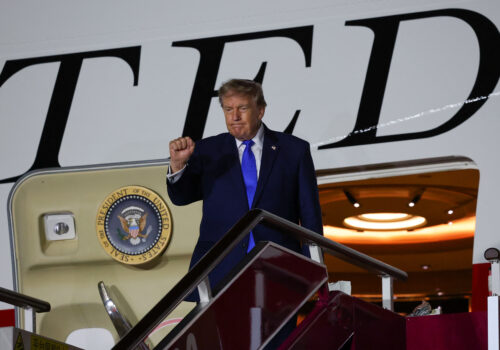
Xi and Putin criticize Western protectionism and sanctions before meeting Trump
Xi Jinping pledged to fight protectionism and Vladimir Putin said Western sanctions had backfired. The two leaders also met in Shenzhen, a day before talks with Donald Trump.
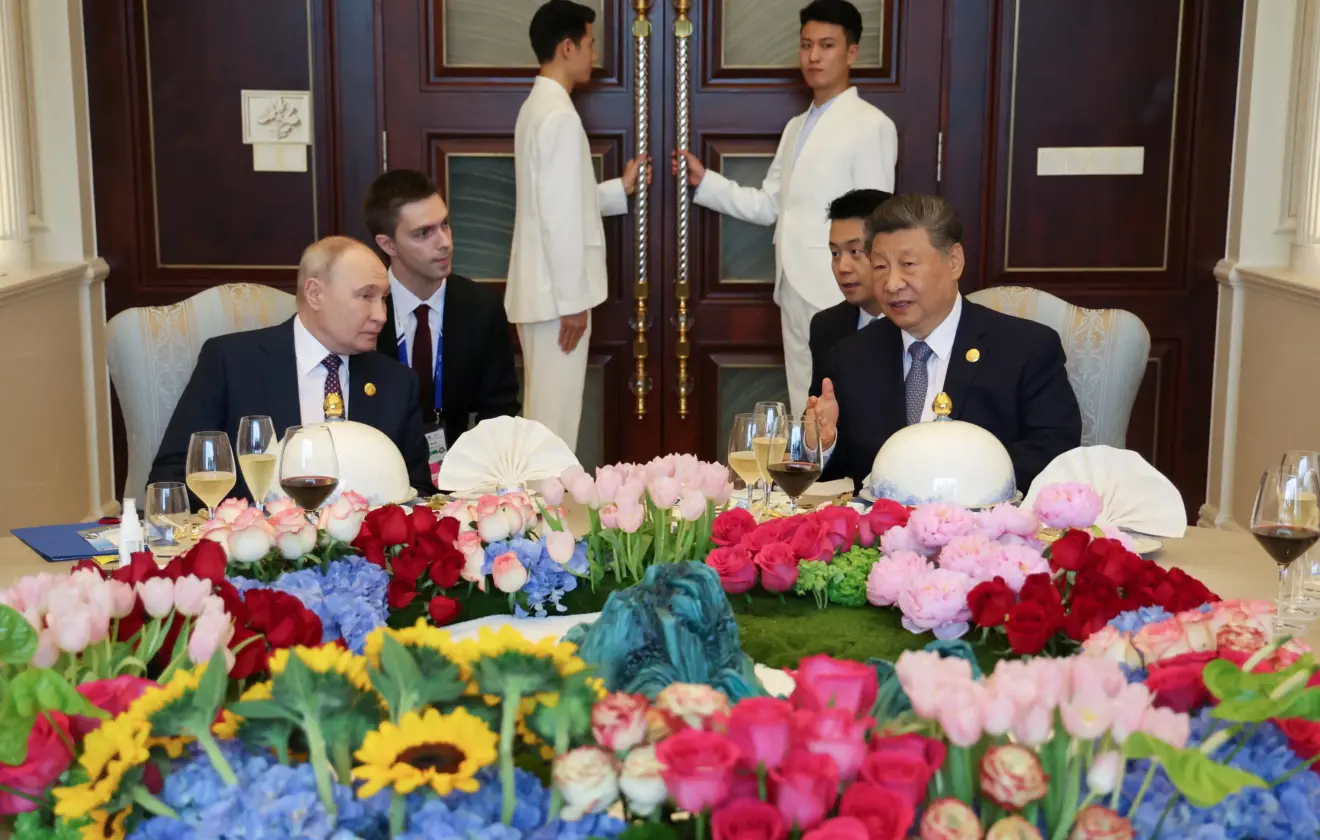
SHENZHEN, Nov 18 – Xi and Putin used their speeches at an Asia-Pacific summit on Wednesday to criticize trade protectionism and Western sanctions, setting the stage for a closely watched three-way meeting with President Donald Trump.
Chinese President Xi Jinping and Russian President Vladimir Putin both spoke to business leaders at the Asia-Pacific Economic Cooperation summit in Shenzhen. Trump was still in Manila at the time, meeting key allies in the region.
The two leaders later held talks of their own on the sidelines of the summit.
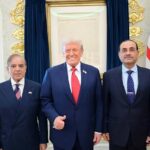
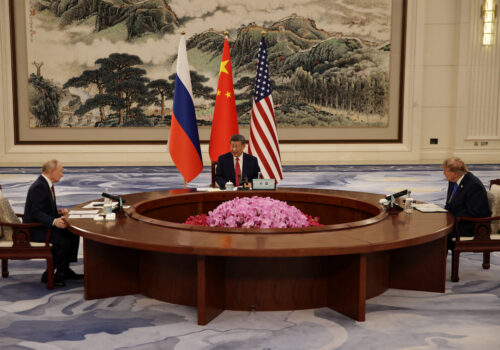
On Thursday, the three men are due to meet. The talks could cover Russia’s war in Ukraine and the war with Iran, as well as trade, artificial intelligence and nuclear weapons.
Xi spoke first. He pledged to stand up to protectionism and called for “free and open trade.”
He said countries must uphold the global trading system, with the World Trade Organization at its center, and maintain stable supply chains. He said China would lower tariffs and open its markets further, while opposing protectionism and unilateralism.
Xi sought to present China as a stable partner. That stood in contrast to the United States, which has raised tariffs and taken a tougher line on foreign policy under Trump.
He did not name the United States. But his speech came days after Washington announced new limits on China’s access to advanced artificial intelligence chips from companies such as Nvidia. China has vowed to hit back.
George Chen, a partner at the consulting firm The Asia Group, said Xi’s “message is likely to resonate with many Global South countries.” He said it also helps Beijing draw a line between its technology strategy and Washington’s.
China, though, faces its own critics. Western partners say it runs trade surpluses of more than $1 trillion a year by backing its factories at the expense of its consumers. Washington and Brussels worry that China’s grip on supply chains gives it political leverage.
Beijing says its growth model suits an economy that is still catching up with the richest nations.
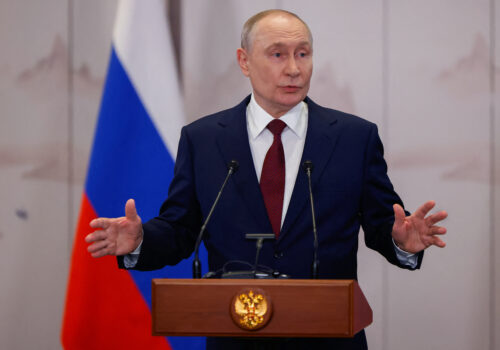
Putin followed Xi on stage. His tone was sharper.
He described Western powers as “former hegemons.” He said Europe was in a state of humiliating decline and claimed that the sanctions imposed after Russia’s invasion of Ukraine had backfired, ultimately making Russia stronger.
Putin said the old tools of economic pressure had largely run their course and lost much of their ability to intimidate. While sanctions, tariffs and export restrictions may still slow some countries, he argued, they cannot halt growth or crush rival economies.
His comments came a day after Ukraine struck the Kerch road bridge linking Crimea to Russia, dealing a significant blow to Moscow’s war effort.
Putin also spoke about the meeting with Trump and Xi. He said the world is turbulent, its economy is splitting apart and military risks are rising. But he said disagreements can be dealt with by sitting at the table.
So he said he expects big benefits from the three-way talks.
The meeting has been compared to the 1945 Yalta Conference, where the United States, Britain and the Soviet Union set spheres of influence after World War Two. The phrase has since become shorthand for big-power deals forced on smaller countries.
The Kremlin this week brushed off the comparison as “Games of political scientists.” It said the meeting would still have a major effect on world affairs. Beijing has said the talks are of groundbreaking importance and will promote peace.
But leaders of smaller countries, especially in Europe and Asia, fear the three powers could ignore their interests.
On Tuesday, Taiwan and Japan reported incursions by Russian aircraft into their airspace.
Trump has also raised the idea of meeting North Korean leader Kim Jong Un. That has not been confirmed.
This is Trump’s first trip to Asia since his Republican Party’s defeat in the midterm elections. The allegations involving former Nvidia chief Jensen Huang and a suspected Chinese spy have added to the tension.
Still, most analysts expect Washington and Beijing to keep relations fairly steady. After Thursday, Trump and Xi are set to meet again at the Group of 20 summit in Miami in December, their fourth meeting this year.