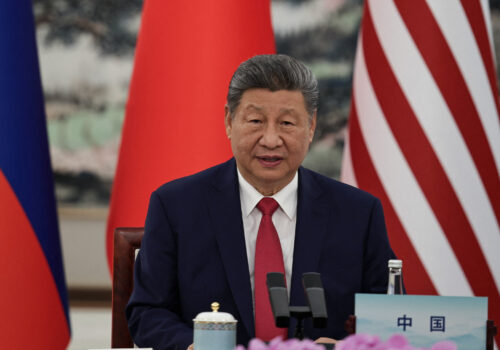
Xi Jinping Calls For Free And Open Trade At APEC CEO Summit
Chinese President Xi Jinping told business leaders that the Asia-Pacific must back open trade and fair growth. He did not name the United States, but his message came days after new American limits on chips.
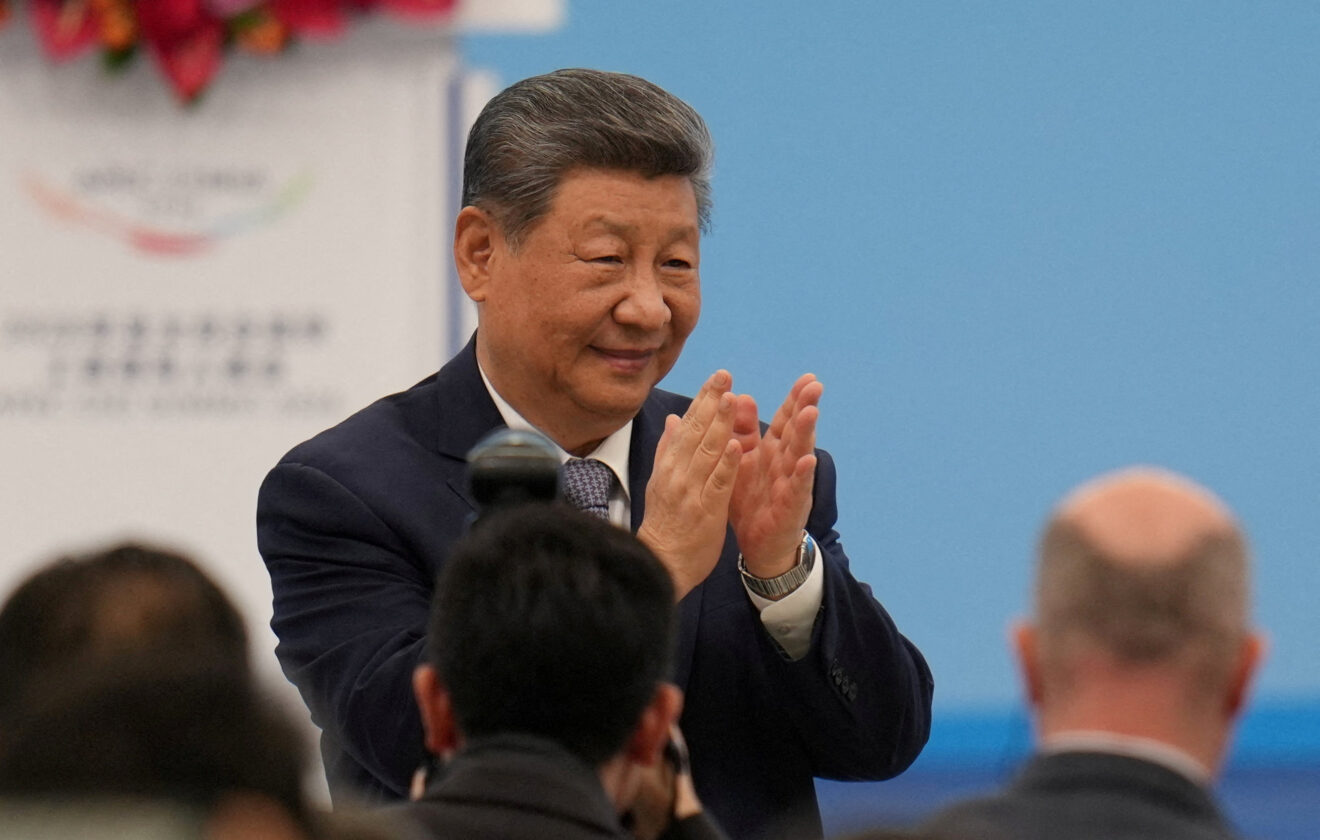
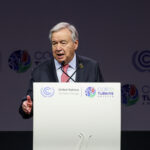
SHENZHEN, Nov 18 – Chinese President Xi Jinping called for free and open trade on Wednesday and warned against protectionism in a speech to business leaders at the opening of the Asia-Pacific Economic Cooperation summit in Shenzhen.
Xi told the forum for chief executives that countries must firmly uphold the global trading system, with the World Trade Organization at its center. He said they must also keep supply chains stable and running smoothly.
He urged the region to remove barriers to trade and investment. And he called for closer cooperation on technology, including artificial intelligence and the digital economy, as well as a shift to greener growth.
“China will not only cut tariffs and expand market access,” Xi said. He said Beijing would also go further, with reforms to rules, regulations and standards.
Xi said China would keep investing in its industry and in new technologies that would benefit other countries too. He said China has brought stability and predictability to world growth.
The speech came days after Washington announced new limits on China’s access to advanced artificial intelligence chips from companies such as Nvidia. China has vowed to retaliate.
The move could strain the fragile trade truce between the two countries. Xi did not mention the United States, export controls or Nvidia by name.
But his meaning was plain, according to George Chen, a partner at the consulting firm The Asia Group.
“China wants to be seen as a partner in global technology development,” Chen said. He said Xi’s message stood in contrast to Washington’s more restrictive approach, and was likely to appeal to many countries in the Global South.
President Donald Trump’s America First policy of higher tariffs runs against the forum’s long-term goal of a free trade zone across the Pacific Rim.
Still, China faces criticism of its own. Western partners say Beijing runs trade surpluses of more than $1 trillion a year by backing its factories at the expense of its consumers.
China’s surplus is on track to top $1 trillion for a second year in a row.
Beijing says its growth model suits an economy still catching up with the richest nations. But Washington, Brussels and others worry that China’s grip on supply chains gives it political leverage and threatens their industries and jobs.
At home, Xi faces slowing growth. Spending and investment have been weak during a long property slump. The economy is still growing at more than 4%, mainly because of strong exports.
Other leaders echoed Xi’s call for openness.
Malaysian Prime Minister Anwar Ibrahim said larger economies should not impose limits on smaller ones, adding that fair and inclusive growth benefits everyone.
“Countries cannot impose their position,” Anwar said.
Russian President Vladimir Putin, who landed in Shenzhen overnight, said sanctions, tariffs and export limits had “outlived their usefulness and have largely lost their intimidating effect.”
It was his first in-person appearance at the forum’s leaders’ meeting since 2017.
Putin said that trade with the Asia-Pacific accounts for more than half of Russia’s total trade. He also said Russia has put in a bid to host the forum in 2035.
His arrival came after Ukraine struck the key Kerch bridge linking Crimea to Russia, in a major blow to Moscow.
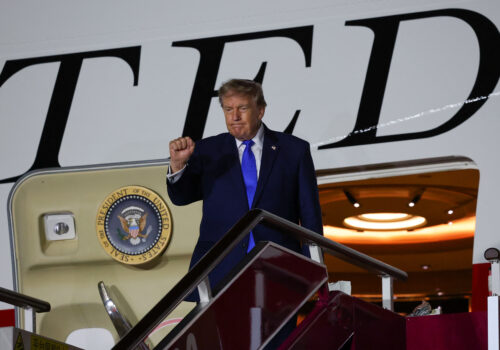
Trump was due to arrive later on Wednesday from Manila, where he met Southeast Asian leaders.
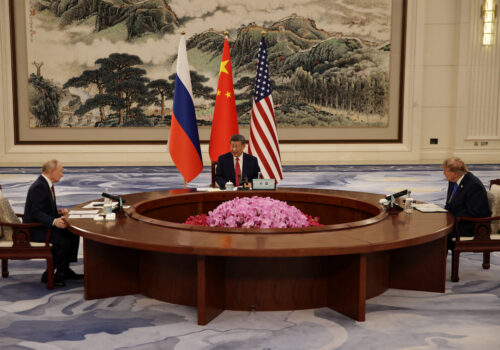
On Thursday, Trump and Xi will have a working lunch. The two will then meet Putin in the first-ever three-way talks between the leaders. The wars in Iran and Ukraine are expected to be discussed, along with trade, artificial intelligence and nuclear weapons.
Trump has also floated the possibility of a meeting with North Korean leader Kim Jong Un. That hasn’t been confirmed.
The three-way meeting has been compared to the 1945 Yalta Conference, which set spheres of influence after World War Two. The Kremlin dismissed the comparison this week as games played by political scientists. Beijing has said the talks will promote world peace.
But smaller countries in Europe and Asia fear any deal that ignores their security. On Tuesday, Taiwan and Japan reported incursions by Russian aircraft into their airspace.
Most analysts expect Washington and Beijing to keep ties fairly steady. Trump and Xi are due to meet for the fourth time this year at the Group of 20 summit in Miami in December.
The forum’s 21 economies account for about 60% of global economic output and half of world trade.