Dublin summit brings European leaders together on Ukraine and security threats
Leaders from across Europe gathered in Ireland’s capital as a new push to end the war in Ukraine gathers pace. Ireland says it is the biggest gathering of world leaders it has ever hosted.
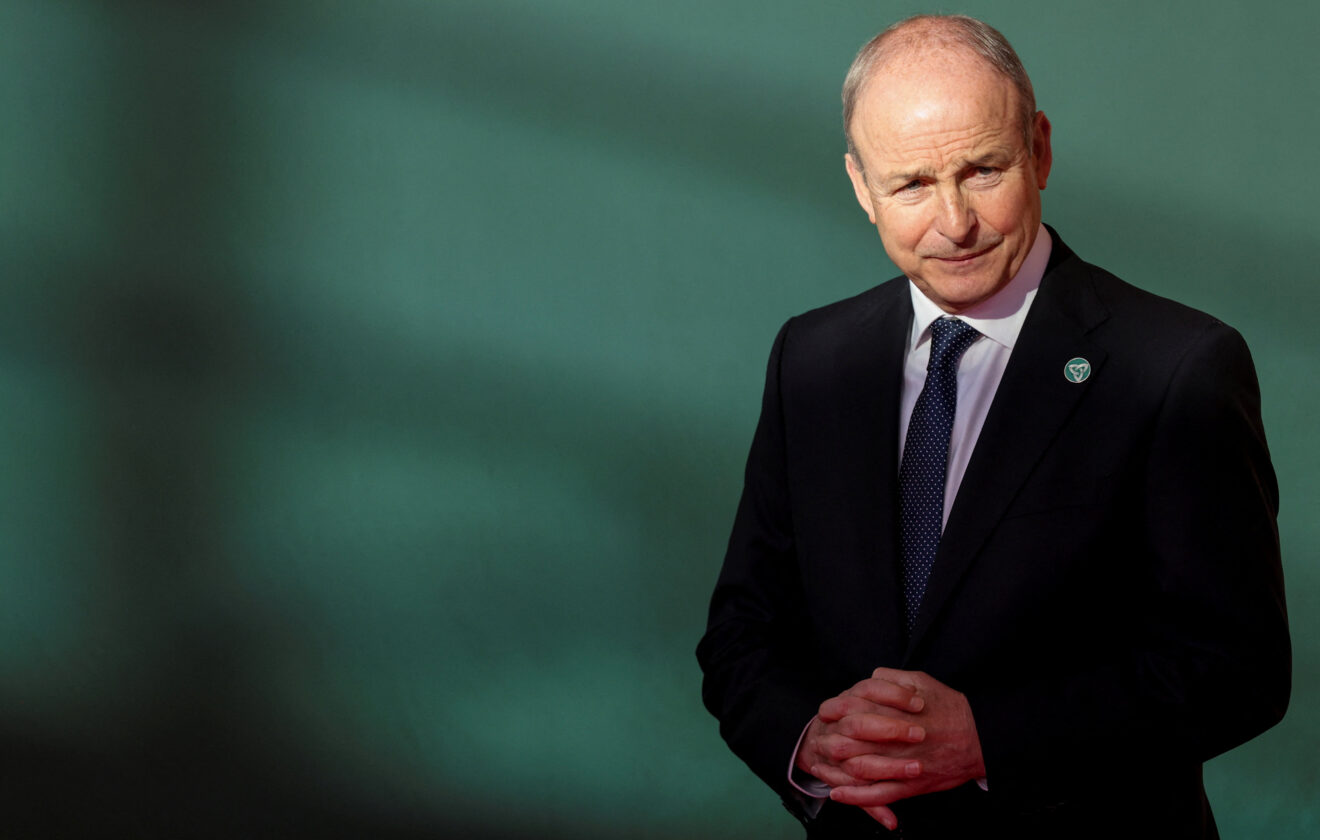
DUBLIN, Nov 12 – Leaders from across Europe gathered in Ireland’s capital on Thursday for a Dublin summit focused on the continent’s security, as a new U.S.-backed effort to end the war in Ukraine gathered pace.
About 50 leaders were expected to attend the meeting of the European Political Community, held at the Convention Centre Dublin beside the River Liffey.
They include heads of state and government from the European Union and other European countries, as well as Ukrainian President Volodymyr Zelenskiy, Canadian Prime Minister Mark Carney and Mark Rutte, the head of the North Atlantic Treaty Organization.
British Prime Minister Andy Burnham is also attending, as part of his push for closer ties with Europe almost six years after Britain left the bloc.
The summit’s theme is “Europe – strong, secure, and connected.” Leaders are due to discuss economic security, Ukraine, hybrid threats and the health of democracy.
Ukraine was set to dominate.
The meeting gives Zelenskiy and his European allies a chance to weigh this week’s talks in Abu Dhabi, which ended on Wednesday with a deal on a prisoner swap but no breakthrough on ending the war. United States envoys Steve Witkoff and Jared Kushner met Russian President Vladimir Putin in Moscow on Thursday, and were then due to fly to Dublin to brief Zelenskiy.
Irish Prime Minister Micheal Martin said talks on a single European voice to represent the bloc in talks with Russia would take place on the sidelines of the summit.
He said Europe is united and appalled by Russia’s invasion of Ukraine.
He told reporters that many member states feel an existential threat, and fear more aggression on the continent if Ukraine were to fall. He said he hoped the talks with Russia would make progress.
Martin and Zelenskiy, who met in Dublin on Wednesday, have also said they may work together on making drones.
A meeting of a Friends of Ukraine group, hosted by Britain and Ukraine, was also planned on the sidelines. Zelenskiy was expected to brief leaders there.
Security at home is also on the agenda.
Leaders are due to discuss hybrid attacks, a term for methods short of open war, such as cyberattacks, sabotage and false information, used to put pressure on a rival. Russia has been accused of such attacks on key sites across Europe. Moscow denies it.
In the days before the summit, airlines and media outlets in several countries got hoax bomb threats. Targets included the Irish airline Ryanair and the national broadcaster RTE. Schools in Ireland and Italy were also sent threats. European governments have not formally blamed anyone.
The European Political Community was set up in 2022 by French President Emmanuel Macron and then German Chancellor Olaf Scholz, after Russia’s full-scale invasion of Ukraine.
It brings together almost 50 countries, but not Russia or Belarus. It meets twice a year. The next meeting is due in April in Zurich, Switzerland.
Critics say it is little more than a talking shop. It makes no binding decisions and issues no formal statements. Some also say it was set up to slow the bloc’s expansion by giving countries a seat at the table without membership.
Martin pushed back on that view as he greeted his guests. He said informal meetings like this one often lead to more than people expect.
“A lot can emerge,” Martin said.
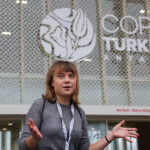
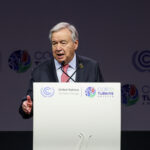
A handful of leaders are not attending, including Turkey’s, as Turkey is hosting the COP31 climate summit this week.
Leaders were due to dine at the National Gallery of Ireland on Thursday evening. On Friday, the bloc’s leaders will hold an informal meeting of the European Council at the same venue.
Artificial intelligence and Ukraine are expected to top that agenda. It will be the first time the bloc’s leaders discuss artificial intelligence together, and the scientist Geoffrey Hinton is among the speakers.
Ireland holds the rotating presidency of the European Union until the end of the year.
The Irish government says it is the largest gathering of world leaders ever held in the country. It is also the biggest policing operation in the 100-year history of Ireland’s national police force, the Garda Siochana.
Parts of central Dublin have been closed, with police supported by officers from Northern Ireland, Latvia and Portugal.