Turkish Opposition Expects Voters to Turn Against Government Coercion
Izmir’s mayor has switched to the ruling party and the opposition’s top challenger remains in jail. Opposition leaders say voters will answer at the ballot box.
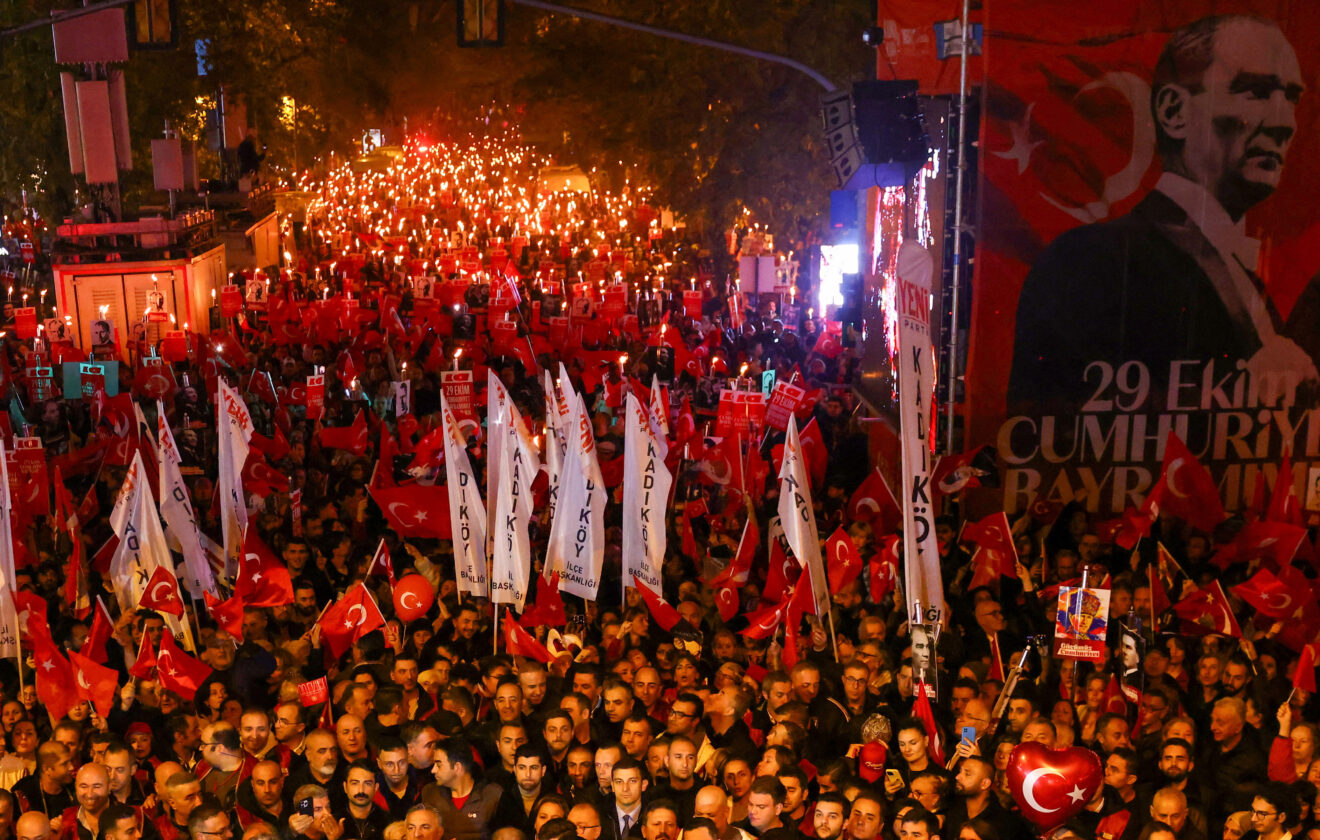
IZMIR, Turkey, Oct 30 -When the Turkish opposition won big in local elections in March 2024, its leaders thought they had finally found a way to beat President Tayyip Erdogan. More than two years on, things look very different.
The leading opposition presidential candidate is currently in prison, while the country’s largest opposition party has been divided following a court ruling. In addition, several mayors who were elected on opposition tickets have since defected to President Erdogan’s Justice and Development Party, known as the AK Party, further weakening the opposition’s position.
Despite these setbacks, opposition leaders insist they have not given up. They say they still have faith in the electoral process and believe that voters will push back at the ballot box against what they describe as a politically motivated legal crackdown. The next national elections are scheduled for 2028, giving the opposition time to regroup and rebuild its support base.
The hard part, analysts say, is keeping that anger alive until then. Erdogan has been in power for 23 years, first as prime minister and then as president.
Seren Selvin Korkmaz, co-director of the IstanPol Institute, a think tank in Istanbul, said she doesn’t think the anger has gone away. But she said it will fade unless the opposition turns it into political and organizational energy, and it could turn into disappointment or apathy.
The government denies that the cases against its opponents are political. It says the courts in Turkey are independent.
Few places show the opposition’s problems as clearly as Izmir, on the Aegean coast in western Turkey.
The AK Party has never won Izmir in an election. It’s the country’s third-largest city, with about 4.5 million people, and has long been seen as the heart of Turkey’s secular, social democratic opposition. But on October 7, Mayor Cemil Tugay joined Erdogan’s party.
Tugay won the city for the Republican People’s Party in 2024 with about 49% of the vote, against 37% for the AK Party candidate. He left that party in June, after a court shake-up of its leadership, and sat as an independent until his switch.
Tugay says he made the move because it was best for Izmir. Erdogan has dismissed opposition claims that Tugay was pressured into switching parties, calling the accusations slander.
The opposition doesn’t see it that way. Cagatay Guc, who heads the New Party in Izmir, said the government thinks it can steer events through coercion. “It will realize that it has made a grave miscalculation in the election,” he said.
The New Party, led by Ozgur Ozel, had organized protests in the city before Tugay decided to switch parties. The party believes that many local voters strongly oppose the move and see it as a betrayal of the mandate they gave him.
Many residents of Izmir who spoke to reporters criticised the decision. A 50-year-old man who gave only his first name, Koray, said it was Tugay who had joined the AK Party, not the people of Izmir, suggesting the mayor had acted against the will of those who elected him. A 67-year-old woman named Halide said she had never voted for the ruling party and would now throw her support behind Ozel instead.
Others, however, were more open to the change. Some residents argued that Izmir, a major hub of industry and trade, could benefit from stronger ties to the central government and receive improved city services under a mayor aligned with the ruling party. A 46-year-old resident named Isa expressed hope that the city would be rebuilt with increased support and government funding.
One resident, 53-year-old Alpay, said he thought Tugay had little choice. In his view, the mayor would have either switched parties or ended up in Silivri, a prison west of Istanbul where many opposition figures are held.
Silivri is where Istanbul Mayor Ekrem Imamoglu is being held. He’s widely seen as Erdogan’s main rival. Imamoglu won a second term in Istanbul in 2024, when the Republican People’s Party took 37.8% of the national vote and kept Ankara, Izmir and many other big cities.
Those wins led the opposition to Turkey’s big cities as a base from which to take on Erdogan nationally. Now dozens of mayors and hundreds of city officials are in jail along with Imamoglu, who is awaiting trial on corruption charges. He denies them.
The party itself has also broken apart. In May, an appeals court annulled the 2023 congress that had elected Ozel as leader, returning his predecessor, Kemal Kilicdaroglu, to the position. Ozel, a close ally of Imamoglu, then left with about 90 lawmakers and set up the New Party.
Tanju Tosun, a political science professor at Ege University in Izmir, said turnout in the next general election may drop a little, especially among opposition voters. If they lose faith that change is possible, he said, they may not bother to vote.
Turkey’s next presidential and parliamentary elections are scheduled for May 2028. However, a presidential adviser said this month that the vote would likely be held slightly earlier. Moving the elections forward could allow Erdogan to circumvent constitutional limits and run for office again.