Serbia Election Explained as Vucic Faces the Students Win List
A railway station disaster in 2024 set off two years of student-led protests. Now the movement is on the ballot against the leader who has dominated Serbia for more than a decade.
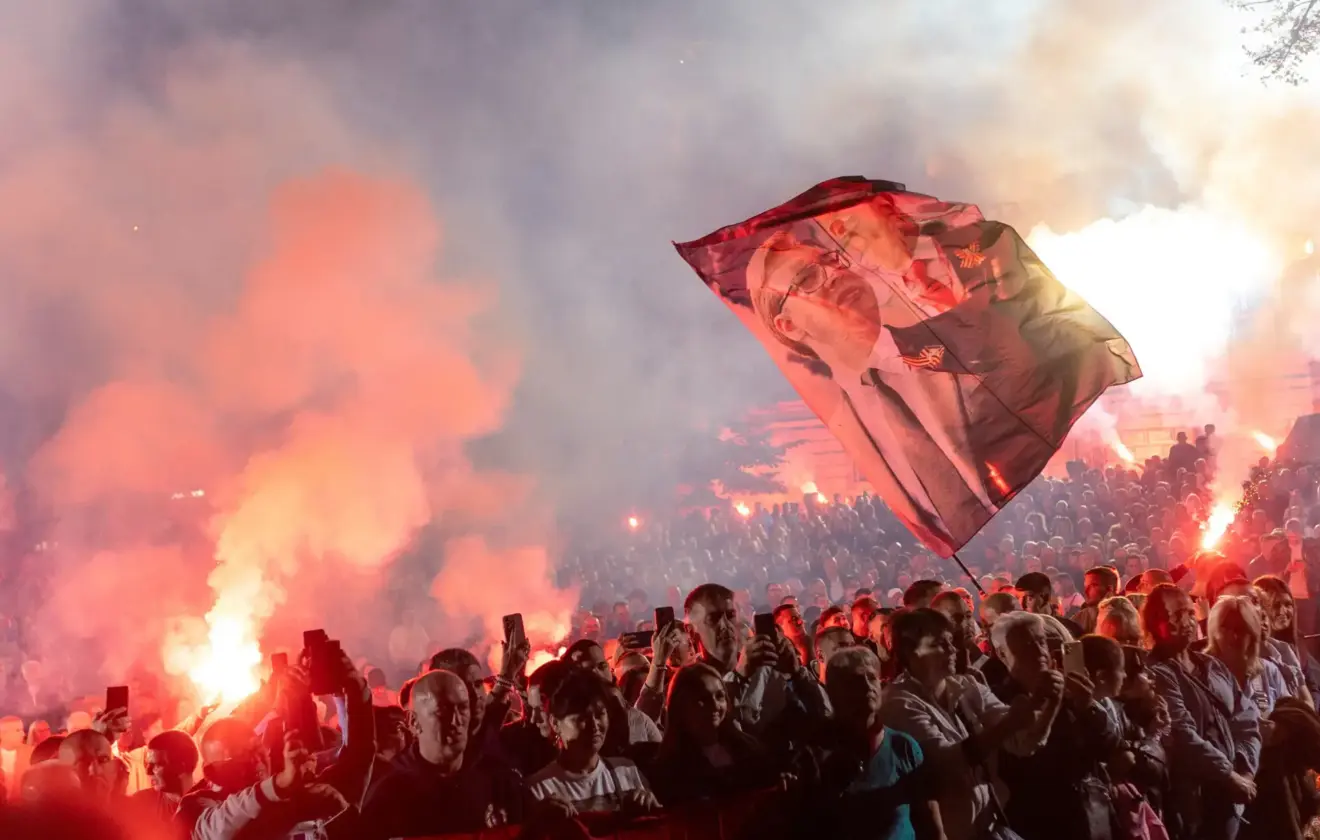
The Serbian election on October 25 is the biggest challenge yet to Aleksandar Vucic, who has led the country for more than a decade. The student movement that emerged in protest against his government is now seeking to take power, running under the name “Students Win.”
The movement was born out of tragedy. On November 1, 2024, a concrete canopy collapsed at the railway station in Novi Sad, killing 16 people. The station had undergone repeated renovations, and many Serbians blamed corruption, poor workmanship and weak oversight.
For many citizens, the disaster came to represent problems in Serbian public life, including questionable contracts, lack of accountability and failures in public institutions. More than a year later, protesters say no one has been properly held responsible for the deaths.
Students took to the streets within days. They blocked traffic in Novi Sad and Belgrade for one minute for every person killed. The blockades spread to other cities. By late January 2025, tens of thousands of people had shut a big junction in Belgrade, and farmers drove their tractors in to join them. The next day, Prime Minister Milos Vucevic, a Vucic ally, quit. In March, more than 100,000 people marched through Belgrade, the largest anti-government rally in a generation.
The movement has no leaders. Decisions are made through open meetings held at university faculties. The students also regularly rotate their public spokespersons, making it harder for the government to target or discredit any single individual.
Their symbol is a red handprint, representing what protesters describe as the blood on the government’s hands. Ordinary citizens have supported the movement by bringing food, mattresses and bedding to students occupying university buildings.
Vucic is 56. On September 27, he stepped down as president to run for prime minister, because the constitution does not let him seek a third term as president. Parliament had been dissolved on September 9. His party, the Serbian Progressive Party, is running under the banner “Aleksandar Vucic – United Serbia.”
Critics say he is copying Vladimir Putin’s trick of swapping one top job for another. Ana Brnabic, the speaker of parliament, is acting president.
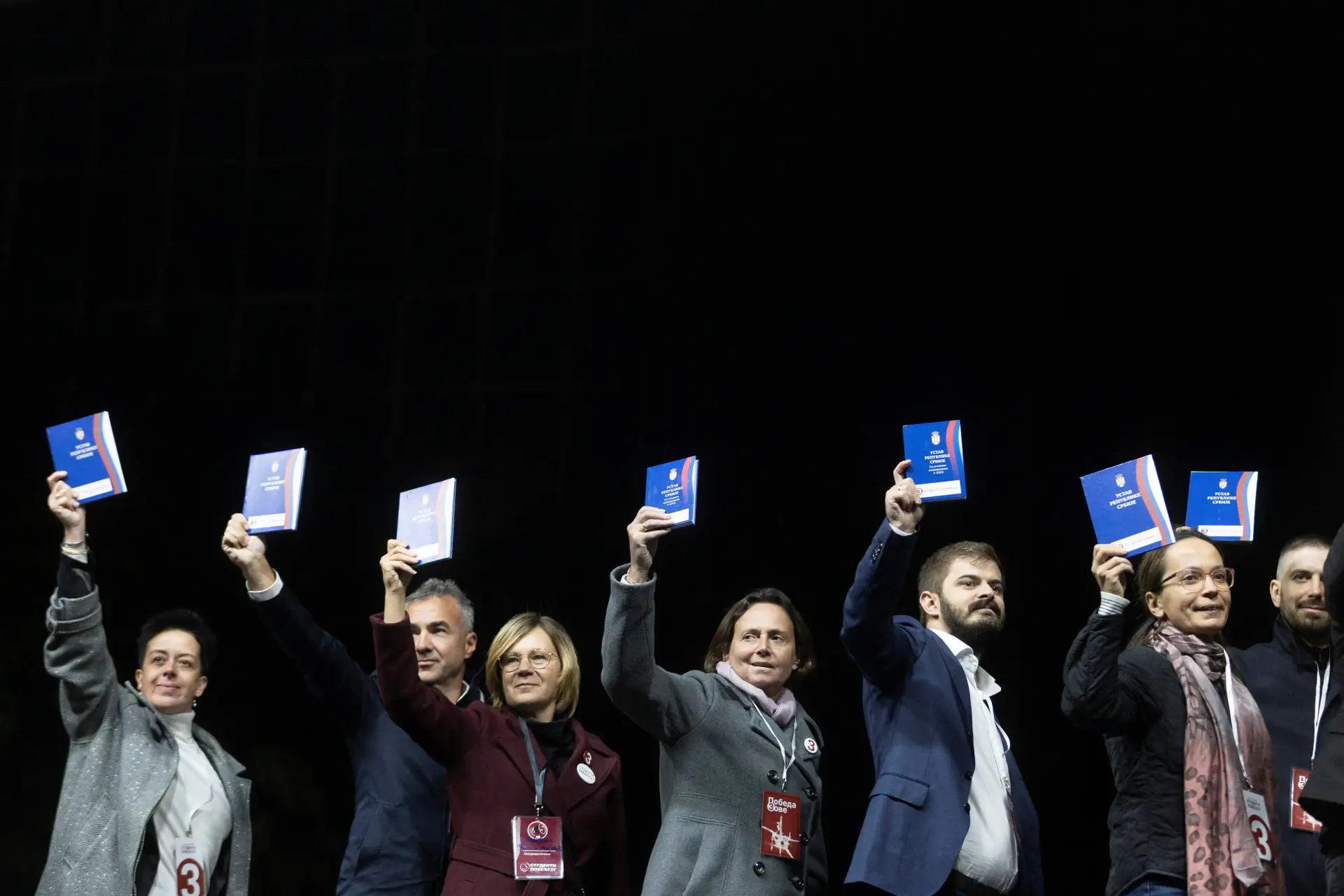
Parliamentary candidates on the “Student List – Students Win” student list attend a final campaign rally in Belgrade, Serbia, October 22, 2026. REUTERS
The student list has 250 candidates. They include professors, doctors, actors, farmers and a well-known rapper, and most have no party. At the top is Ilija Srdanovic, a heart doctor from Novi Sad. The students say that does not make him their pick for prime minister. Their slogan is “Serbia or Mafia.” They gathered nearly 400,000 signatures to get on the ballot.
Nobody knows who is ahead. Polls in Serbia lean heavily toward one side or the other. One survey of 1,050 people, published on October 20, put the students at 44.5 percent and the ruling list at 42.7 percent among decided voters. The pollster called it a snapshot, not a forecast. Voters pick lists, not people, so talks to build a coalition could settle a close result.
Critics say Vucic has weakened democracy and the free press, and that corruption has grown. They also say the road to the European Union has stalled for lack of reform. His supporters point to growth, falling unemployment and new investment. But many Serbians are angry about prices, the lack of jobs and weak schools. They also believe that people with the right connections win the state contracts.
Vučić says the movement wants to wreck Serbia. He claims, with no proof the students accept, that groups in Croatia and Montenegro pay for the protests. The students say they are on their own. He and his party reject charges of corruption, pressure on the media and police violence. Just before the vote, police arrested six people they said were planning attacks on officers and political opponents.
The press is a big issue. Reporters Without Borders ranks Serbia 104th out of 180 countries, the worst place the country has held. The Slavko Curuvija Foundation counted at least 182 verbal attacks by Vucic on reporters and outlets in the first nine months of this year. He says he does not threaten the press. A digital rights group says 14 people were hit with advanced spyware. The state security agency calls claims of state involvement “trivial sensationalism.”
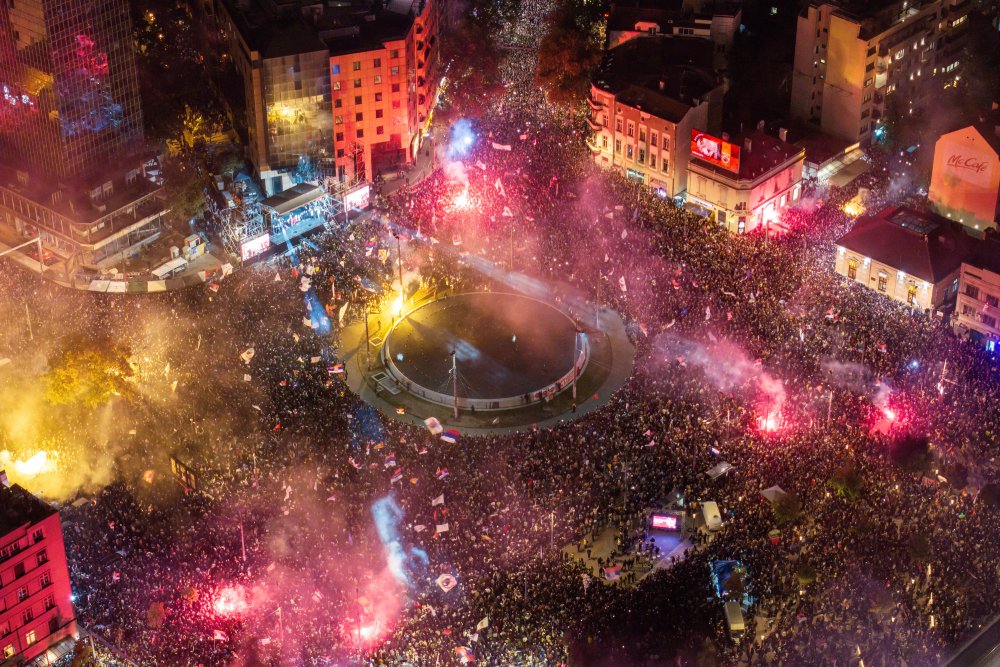
Supporters of the electoral list “Student List – Students Win” attend a final campaign rally at Slavija Square in Belgrade, Serbia, October 22, 2026. REUTERS
Protesters also talk of police beatings. A video that spread widely shows officers hitting Dusan Radovic, a 26-year-old architect, at a protest in Valjevo in August 2025. An independent forensic report on the injuries of 25 people that night found a pattern of organized brutality. The Interior Ministry did not answer questions about it.
Fraud is another major concern in Serbia’s election. After the 2023 vote, election observers reported irregularities, including allegations that voters were brought in from Bosnia and that some people faced pressure or intimidation at polling stations.
Student groups have said they are preparing for possible fraud. The students have received training in election monitoring and plan to station teams at polling sites across Serbia to oversee both voting and ballot counting.
In foreign policy, Vucic has tried to balance Serbia’s ties with rival global powers. China is a major investor in Serbian infrastructure and industry, while Russia remains a key political ally and Serbia’s main source of natural gas. Vucic has also said he wants Serbia to join the European Union, but accession talks have moved slowly due to delayed reforms and concerns about the country’s democratic standards.
The student movement has been less clear on foreign policy. It has said little about European Union membership or about Kosovo, the former Serbian province that declared independence in 2008. Some pro-European voters are also unhappy that the students have said they would not impose sanctions on Russia over its war in Ukraine.
If Vucic wins, Serbia is likely to see continued tight control from the top, limited political competition and a slow path toward EU membership. His government would probably maintain close ties with China and Russia while continuing to present EU membership as a long-term goal.
If the student-backed list wins, a new government would likely focus on fighting corruption, reforming public institutions and giving independent media more freedom. It could also try to restore public trust in the justice system and reduce the influence of political patronage networks.
However, the students would face a major challenge: proving that they can govern. They would need to turn a protest movement into a functioning administration, manage a complex economy and handle difficult foreign-policy questions involving the European Union, Russia, China and Kosovo.