Iran Prolongs Talks to Weaken Trump Before Midterms
Senior Iranian officials say Tehran is keeping negotiations with Washington stalled to hurt President Donald Trump politically before the November 3 elections, while it prepares for possible new strikes.
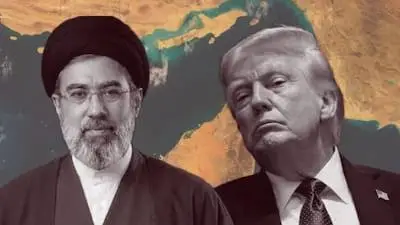
Iran is keeping its negotiations with the United States stalled on purpose, in an effort to weaken President Donald Trump politically ahead of the November 3 midterm elections, senior Iranian officials said. They added that Tehran does not expect a quick agreement and is preparing for the possibility of renewed attacks.
Three senior officials and an Iranian insider, who spoke on condition of anonymity, said Tehran is convinced that Trump could order new strikes to end the deadlock in the eight-month-old war. According to one of the officials, Iran is getting ready for further Israeli and American attacks and not for a deal, and the clerical establishment does not intend to give Trump a political victory.
Saeed Leylaz, an analyst in Tehran, said that by extending the talks, Iran affects the American election “without taking any unlawful action.” Iran’s Foreign Ministry and the White House did not respond to requests for comment.
Trump said the United States will not bomb Iran again before November 3. He also spoke of “productive discussions” with Tehran and said the naval blockade of Iranian ports will remain in place. The Iranian officials said they still expect strikes to resume at some stage. On Monday, Defense Secretary Pete Hegseth discussed Iran with Israeli Prime Minister Benjamin Netanyahu during an unannounced visit to Israel, according to three Israeli officials.
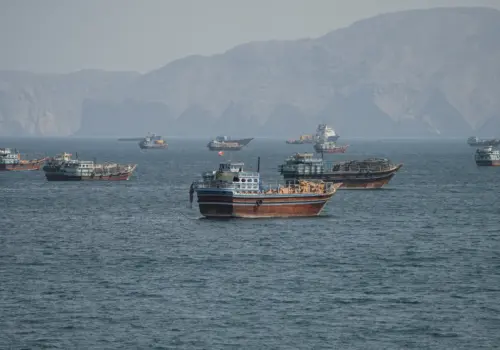
The war began in February, when American and Israeli forces struck Iran. Iranian attacks, and the threat of more, sharply reduced traffic through the Strait of Hormuz, a major route for global energy supplies that Iran effectively closed. Washington’s naval blockade and trade sanctions then cut Iran’s oil export revenue and worsened its economic troubles.
The conflict also affects Trump at home. In the latest Reuters/Ipsos poll, his approval rating fell to a record low of 31 percent, with the cost of living, including gasoline prices, among their main concerns. As of late August, gasoline cost more than a dollar a gallon above its prewar level. Trump has said he expects oil prices to decline after the elections, but he has not outlined a detailed plan to end the war or reopen the Strait of Hormuz. The Iranian officials said a breakthrough before the vote is unlikely, since Tehran refuses concessions that it believes could help him.
Washington, under pressure from Israel, wants Iran’s nuclear program discussed from the beginning. Iran describes its nuclear activities as peaceful, while Western powers allege that the program has a military dimension. Tehran says the conditions in its “seven-day plan” must be met before any nuclear negotiations start.
Foreign Minister Abbas Araqchi said in late September that Iran had passed the plan to the United States through Qatar, and that the strait could reopen within seven days if the necessary conditions were met. Those conditions include an end to hostilities, the release of frozen Iranian assets valued at no less than $12 billion, the lifting of sanctions on Iranian oil, and an end to the American blockade of Iranian ports. According to the officials, Iran would reopen the strait under its own control.
Araqchi said on Sunday that the offer remains on the table and that messages continue to move through mediators. President Masoud Pezeshkian said Qatar and Pakistan carry Tehran’s messages to Washington. An official briefed on the talks said earlier that the dispute concerns the order of the steps and not the steps themselves.
The Iranian officials said Tehran’s reluctance to reach a deal reflects deep distrust of Washington. They cited an Israeli attack in June 2025 that derailed a planned sixth round of nuclear talks in Oman, and the start of the current war, which followed another round of negotiations. A memorandum of understanding agreed in June this year produced a brief ceasefire.
Staying between war and peace through the midterms allows Iran to keep pressure on Washington while presenting itself as committed to diplomacy. Alex Vatanka, director of the Iran program at the Middle East Institute in Washington, said the clerical leadership clearly wants to damage Trump politically. He said the larger concern in Tehran is its belief that Trump seeks regime change and is following Netanyahu’s policy of trying to topple Iran’s ruling establishment.
The delay is costly for Iran. Annual inflation reached 73.6 percent in September, according to Iran’s Statistical Center, and the rial has lost nearly 35 percent of its value against the dollar since Washington reimposed its naval blockade in July. Seaborne crude exports dropped to zero in the second week of September and were still at zero on October 5, according to the tracking firm Vortexa. The pressure comes months after security forces crushed anti-government protests in which thousands of people were killed.
Leylaz said a lasting agreement with Washington is no longer possible, “even after the Trump administration,” because of deepened distrust. “Nothing will go back to the pre-war status quo,” he said.