Balendra Shah Secures $1.62 Billion Package On First India Visit
Nepal's new prime minister made India his first official trip abroad. He left talks with Modi with a pledge of $1.62 billion as his country rebuilds after the floods.
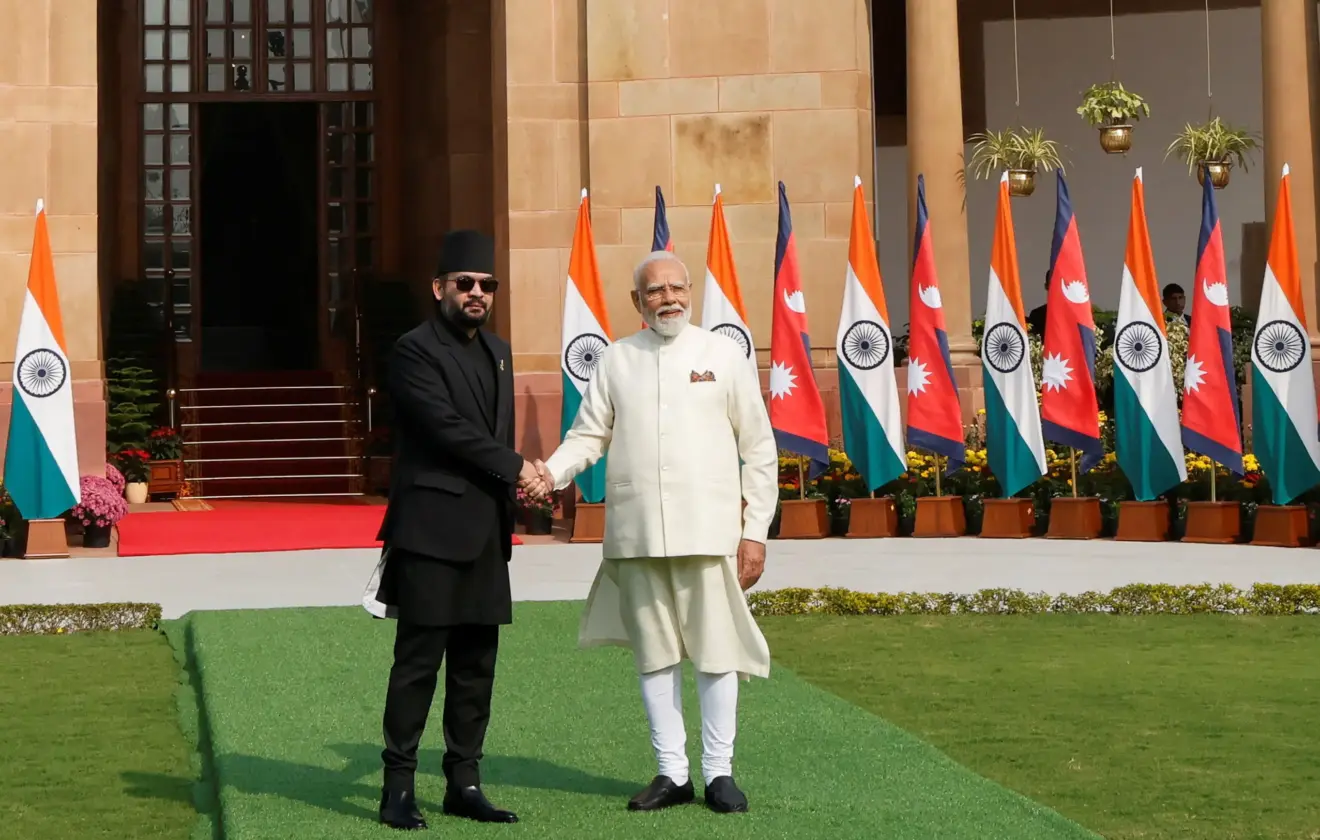
NEW DELHI, Nov 23 – India will give Nepal an economic package worth 240 billion Nepalese rupees, or about $1.62 billion, Prime Minister Narendra Modi said on Monday after talks in New Delhi with Nepal’s new leader, Balendra Shah.
The money comes as Nepal tries to rebuild after floods in August that tore through the Himalayan country. Some 1,500 people were killed, and about 5,200 more are missing and presumed dead.
Shah, 36, is a rapper who went into politics. He is on a two-day visit to India. It’s his first official trip abroad since his Rastriya Swatantra Party swept to power in March.
That win came six months after a youth-led uprising against corruption and favoritism brought down the government of K.P. Sharma Oli.
The visit marks the first high-level meeting between Nepal’s and India’s new generation of leaders.
Modi did not provide a full breakdown of the package on Monday. But the need is substantial: Shah’s government says rebuilding after the floods will cost nearly $5 billion, while aid pledged by other countries so far has fallen short of Nepal’s hopes.
Shah had promised not to travel abroad in his first year in office. The floods changed that.
The talks were also expected to cover trade, energy, new air routes and aid for rebuilding, the BBC reported.
India and Nepal are close in many ways. They share ties of family, faith, culture and trade, and a border that runs for more than 1,750 kilometers.
Families live on both sides. People cross it every day.
Trade between them tops $9 billion a year. But it’s heavily tilted in India’s favor, and that has long caused resentment in Kathmandu. India is also Nepal’s main source of fuel and of several foods, and most of Nepal’s trade with the rest of the world passes through India.
Energy is a big part of the tie. India has approved deals to buy up to 1,200 megawatts of power from Nepal’s hydropower plants, and it wants more.
Nepal sits between India and China. Both giants want a say in Kathmandu, and both have faced claims that they meddle in Nepal’s affairs.
Nepal’s communist parties, which led many past governments, were often seen as closer to Beijing. They also criticized New Delhi over deals they saw as unfair.
Balendra Shah has not visited China in person. But before his trip to India, his party sent 20 lawmakers on an 11-day visit to China that began on Nov. 15. Many saw the move as an effort to balance relations with both neighbors.
Some in India see a chance for a fresh start.
Ranjit Rae, a former Indian ambassador to Nepal, told the BBC that the new leaders say they don’t carry the baggage of the past. He said they want to focus on growth, diplomacy and trade, and seem more practical and less driven by ideology.
“I personally feel it’s an optimistic moment,” Rae said.
But old disputes remain.
In 2019, India published a map showing land claimed by Nepal in a western border area near China as part of India. Nepal reacted angrily and later released its own map incorporating the same territory.
Kanak Mani Dixit, a veteran political analyst in Nepal, told the BBC he hoped Shah would raise the border with Modi. A solution may not come soon, he said, but talks should start.
Nepal has also long asked India to open more air routes. It wants large planes to be able to fly in from the west to its new airports at Bhairahawa, near the Buddhist holy site of Lumbini, and at Pokhara, a major tourist town.
Using Indian airspace would make flights shorter and cheaper, and help the airports pay their way.
Some in Nepal think New Delhi is wary of the two airports because of China’s role. The airport at Bhairahawa was built by a Chinese firm, and the one in Pokhara was built with Chinese money.
At home, Shah faces criticism.
His government removed the police chief, Dan Bahadur, who reportedly refused to follow orders from the prime minister’s office. Police were also sent to some news outlets to detain journalists over their reports, which led to claims that press freedom is being curbed.
Dixit said Shah and his advisers are new to power. “They do lack experience,” he said.
India has often been among the first to help Nepal in a disaster. It sent aid after the 2015 earthquake and again after this year’s floods.
Shah’s visit to India ends on Tuesday.