Myanmar Committed Genocide Against Rohingya Muslims, UN Court Rules
The International Court of Justice has found that Myanmar committed genocide against the Rohingya Muslim minority. Refugees in Bangladesh cheered, but how the ruling will be enforced is unclear.
THE HAGUE, Nov 20 – The United Nations’ top court ruled on Thursday that Myanmar committed genocide against its Rohingya Muslim minority during a military crackdown in 2017. It is the first time the court has ever found a state responsible for genocide.
The International Court of Justice said the killings, rapes and burning of villages carried out by Myanmar’s security forces were acts of genocide by the state.
The ruling brings to an end a legal fight that lasted seven years. Gambia, a small and mostly Muslim country in West Africa, brought the case on behalf of the Rohingya. Only three times before, since the Holocaust, has an international court found that the high legal bar for genocide was met.
Court president Yuji Iwasawa read out the decision in the packed Great Hall of Justice in The Hague. It took him more than two hours.
Nine of the court’s 15 judges backed the verdict, he said.
The court found that “the Republic of the Union of Myanmar has committed genocide against the Rohingya,” Iwasawa said.
He said Myanmar’s forces killed thousands of Rohingya civilians, carried out widespread sexual violence and extreme violence against children, and attacked people as they tried to flee. The evidence showed that Myanmar’s forces killed at least 10,000 Rohingya, Iwasawa said. That matches the estimate made by a United Nations fact-finding mission in 2018.
At least 700,000 Rohingya were forced out of Buddhist-majority Myanmar and into neighboring Bangladesh.
The written judgment runs to 191 pages. It found that the military carried out mass killings of men and boys, raped Rohingya women on a wide scale and burned or razed hundreds of villages.
There can be no appeal. The ruling is final.
Genocide is hard to prove. Under the 1948 Genocide Convention, which was drawn up after the Holocaust, there must be proof of a specific intent to destroy, in whole or in part, a national, ethnic, racial or religious group. That bar is higher than for war crimes.
But the court said it was fully convinced that Myanmar had that intent.
The only reasonable way to explain Myanmar’s actions, the judgment said, was an intention to destroy a large part of the Rohingya population in northern Rakhine State.
Myanmar has always denied genocide. It says its forces were fighting a violent insurgency.
The judges rejected that. They did not accept that the crackdown was mainly about fighting terrorism. Nor did they accept that the aim was only to punish people or drive them out, without trying to destroy the group.
The court also looked closely at sexual violence. Under the convention, genocide can include steps meant to stop births within a group.
Judges said the military used rape to damage the ability and willingness of Rohingya women to have children. They pointed to the stigma that survivors of rape face in their community. The court also said Myanmar had used other means to limit births, such as a cap of two children per Rohingya family.
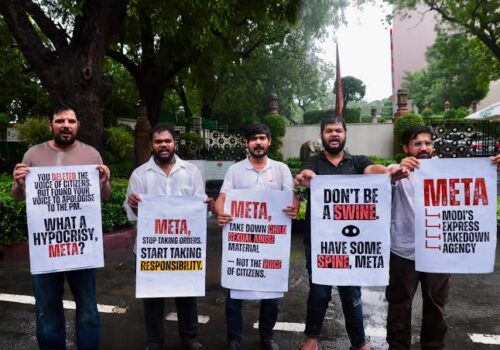
The judgment said Myanmar’s military spread hate speech against the Rohingya on Facebook, which was then the most popular social media platform in the country. Meta, which owns Facebook, has said it worked to block hate speech and helped United Nations investigators.
The court also cited a Reuters investigation into the killing of 10 Rohingya men in the village of Inn Din on September 7, 2017. Two Reuters reporters who worked on that story were arrested and held for more than 500 days.
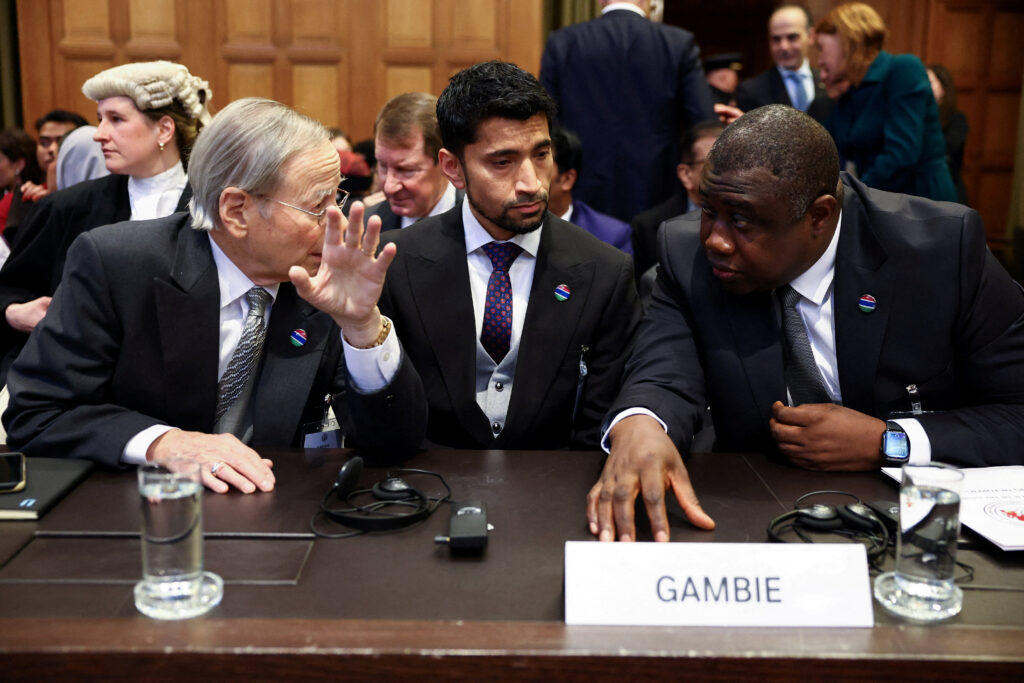
Gambia’s Justice Minister and Attorney General Dawda Jallow on the day the International Court of Justice (ICJ) in The Hague, November 19, 2026. REUTERS
And the ruling did something Myanmar has refused to do for decades. It formally recognized the Rohingya as a distinct ethnic group under international law. Myanmar calls them Bengalis, implying they are migrants from Bangladesh.
The court ordered Myanmar to make amends.
It said Myanmar must pay compensation to the Rohingya, with the amount to be set later. It must allow the safe and dignified return of displaced Rohingya to their homes, and help families reunite. It must return or replace lost property and provide physical and mental care for survivors. And it must guarantee the abuses will not happen again.
Myanmar’s government did not immediately respond to the ruling.
The crackdown began in August 2017. Fighters from the Arakan Rohingya Salvation Army attacked police posts in Rakhine State, and the military answered with what it called clearance operations.
Refugees who reached Bangladesh told of mass killings of adults and children, gang rapes and villages set on fire.
One of the worst attacks hit the village of Tula Toli. Survivors said soldiers shot civilians, dug mass graves and drowned children in a river. Satellite images later showed the village burned to the ground. It no longer exists.
Gambia filed the case on November 11, 2019, with the backing of the Organisation of Islamic Cooperation. It argued that hateful statements and a clear pattern of conduct showed a plan to destroy the group, including shooting people as they fled and blocking their return.
A month later, in December 2019, Aung San Suu Kyi, then Myanmar’s civilian leader, came to The Hague in person to lead her country’s defense. She rejected the genocide charges. Once seen around the world as a hero of democracy, she left many Rohingya bitterly disappointed with her appearance.
In January this year, the court held closed hearings with survivors who had traveled from the camps in Bangladesh.
Gambia’s justice minister, Dawda Jallow, told the court during the hearings that the case was about people, not legal theory. “It is about real people, real stories,” Jallow said. He said the Rohingya had been targeted for destruction.
After the verdict, Gambia’s government called it a historic day for international justice.
In Bangladesh, the news set off celebrations.
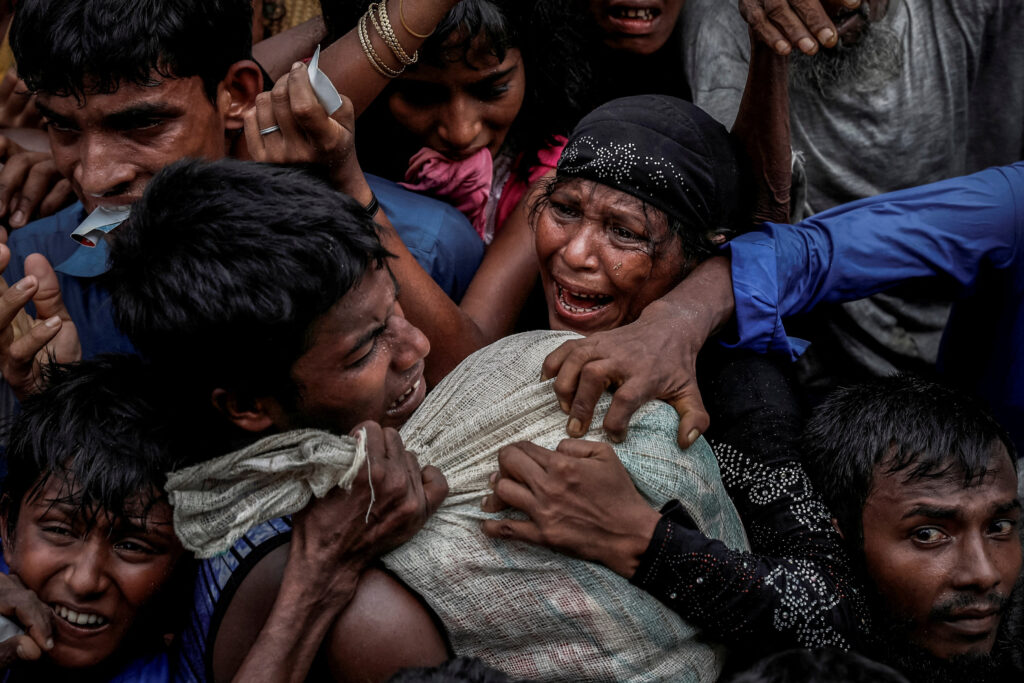
Rohingya refugees scramble for aid at a camp in Cox’s Bazar, Bangladesh September 24, 2017. REUTERS
About 1.2 million Rohingya live in the camps of Cox’s Bazar, the largest refugee settlement in the world. Fewer than 600,000 are thought to still live in Myanmar.
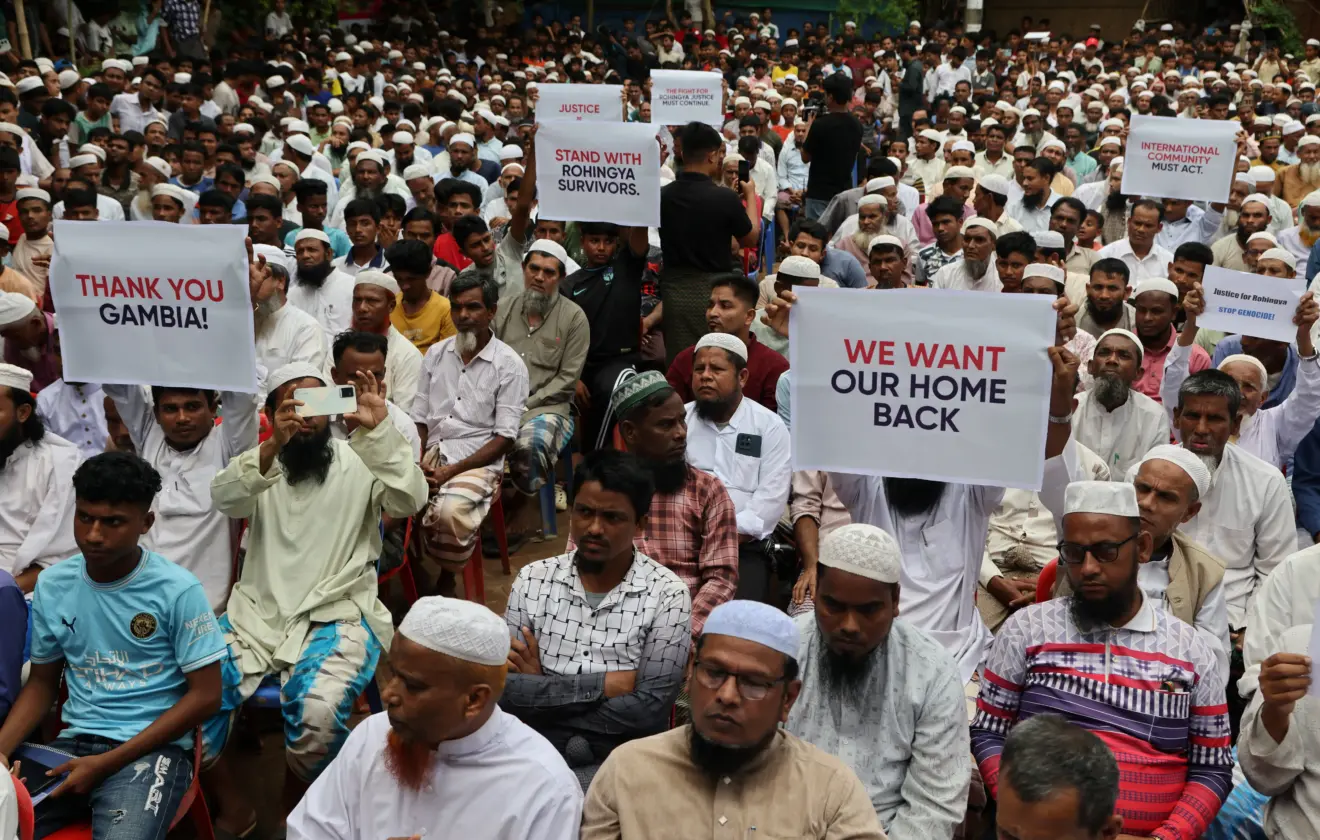
More than 1,000 people gathered around to watch the ruling. The verdict was translated into the Rohingya language. When it came, the crowd jumped up, cheering and clapping. Many held signs that read “Thank You Gambia” and “Justice = Safe Return.”
Wai Wai Nu, a former political prisoner who leads the Women’s Peace Network, said the ruling was a moment of truth for her people.
“For decades, the Burmese military tried to erase our identity,” she said. She said the court had shattered the state’s denial for good.
In The Hague, there were tears. One Rohingya community leader gave a big thumbs up as he walked out of the courtroom. Others pulled out their phones to call family in the camps.
Yousuf Ali, a survivor who traveled to the court, said the ruling gives hope to the next generation.
“Today, we have finally been heard, and it is a profound relief,” he said. But he said the fight is not over.
Salma, 30, lost family members in 2017. She said she didn’t know how to express what she felt: “Everyone worked hard and struggled for this justice”.
Another Rohingya in the courtroom, who asked not to be named for safety reasons, said governments must now act, since the court has declared it a genocide.
Gambia’s lead lawyer, Arsalan Suleman, said the courtroom was full of emotion. He said the court had recognized the Rohingya’s long history of discrimination and the horrific violence they suffered.
“We felt the weight of the court’s judgment,” Suleman said.
Still, many refugees doubt they will go home soon.
Enforcing it won’t be easy. The court’s rulings are binding, but it has very limited means to enforce them. That power lies with the United Nations Security Council.
Britain, Myanmar’s former colonial ruler, moved fast. Foreign Minister Ed Miliband said Britain was expelling Myanmar’s defense attaché. He also called for an urgent meeting of the Security Council. Two British lawmakers urged the government to push for a resolution there to force action.
The US declared that it would examine the reasoning behind the ruling to understand it. The State Department said the correct reading of the convention matters greatly, and so does keeping politics out of the court. It said it shares grave concerns about abuses against Rohingya Muslims.
The administration of former President Joe Biden formally called the Rohingya crisis a genocide. President Donald Trump’s administration has taken a tough line on international legal bodies. It has put sanctions on officials of the separate International Criminal Court and vowed to dismantle it.
There is no announced plan to sanction the judges of the International Court of Justice over Thursday’s ruling.
The ruling is expected to matter well beyond Myanmar.
Legal experts will study it closely for clues about South Africa’s case at the same court, filed in 2023, which accuses Israel of genocide in Gaza. Israel, like Myanmar, denies genocide. Both say their forces responded lawfully to attacks by armed groups.
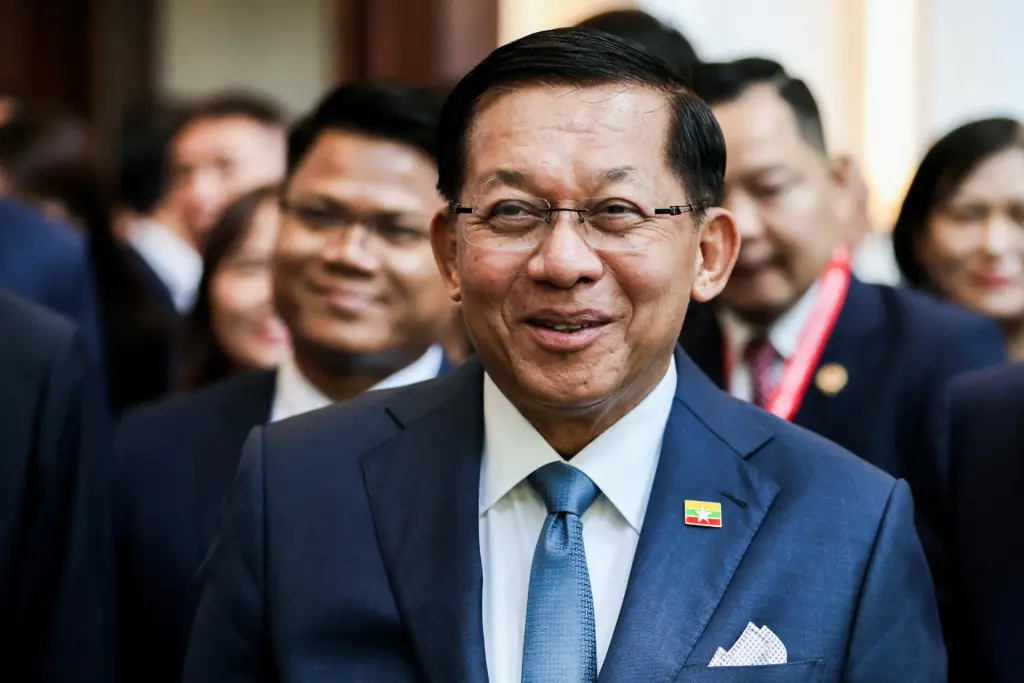
Myanmar’s current leader, Min Aung Hlaing, led the military during the 2017 crackdown.
On November 27, 2024, the prosecutor of the International Criminal Court, which tries individuals rather than states, asked the court’s judges to issue an arrest warrant for him. The request covers crimes against humanity, over the deportation and persecution of the Rohingya. It is still pending.
Separately, a federal court in Argentina issued an international arrest warrant for him in February 2025, under the principle of universal jurisdiction.
Min Aung Hlaing led the 2021 coup that toppled Aung San Suu Kyi’s elected government. The coup set off a civil war that has killed tens of thousands of people. He was sworn in as president in April, after elections that were widely dismissed as a sham.
Before Thursday, international courts had found genocide only three times since the Holocaust. Those were in Rwanda in 1994, at Srebrenica in Bosnia in 1995, and under Cambodia’s Khmer Rouge in the late 1970s.
In earlier cases on the Balkan wars, the International Court of Justice stopped short of holding states directly responsible for genocide. It found Serbia responsible only for failing to prevent or punish the killings at Srebrenica.