Japan’s position on Taiwan unchanged, Takaichi says
Sanae Takaichi says Japan still holds the stance on Taiwan it set out in 1972. Relations with China have been frozen since her remarks on the island last year.
SHENZHEN, Nov 19 – Japanese Prime Minister Sanae Takaichi said on Thursday that Japan’s position on Taiwan has not changed since 1972, as relations between Tokyo and Beijing remain frozen over her remarks on the island last year.
Takaichi spoke at a press conference on the sidelines of the Asia-Pacific Economic Cooperation summit in Shenzhen, in southern China.
She said Japan’s stance is still the one set out in the 1972 joint statement between Japan and China, which restored diplomatic ties between the two countries.
In that statement, Japan said it “fully understands and respects” Beijing’s position that Taiwan is part of China.
“There has been absolutely no change to this position,” Takaichi said.
The comments come a year after a row that sent relations into a deep freeze.
In November 2025, Takaichi told Japanese lawmakers that a Chinese attack on Taiwan could lead to a military response from Tokyo if the conflict threatened Japan’s survival.
Until then, Japanese leaders had avoided naming Taiwan when talking publicly about such scenarios. They kept a policy of deliberate vagueness.
China reacted angrily. It demanded that Takaichi take back what it called her egregious remarks. It warned that otherwise Japan “must bear all consequences.”
Beijing then took a series of steps against Japan. It limited exports of critical minerals, banned imports of Japanese seafood and told its citizens not to travel to Japan. Exchanges between ordinary people were also called off, and the release of Japanese films in China was put on hold.
In January, two giant pandas left Tokyo’s Ueno Zoo and returned to China. That left Japan without a panda for the first time since 1972.
China claims Taiwan, a self-governing democracy, as its own territory. It has not ruled out using force to take control of the island. Taiwan’s government rejects Beijing’s claims.
Japan’s westernmost island, Yonaguni, lies just 100 kilometers from Taiwan.
The chill was clear at the summit.
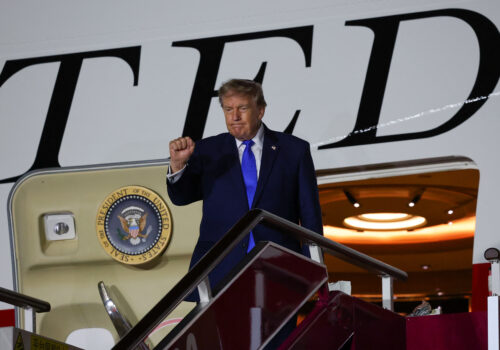
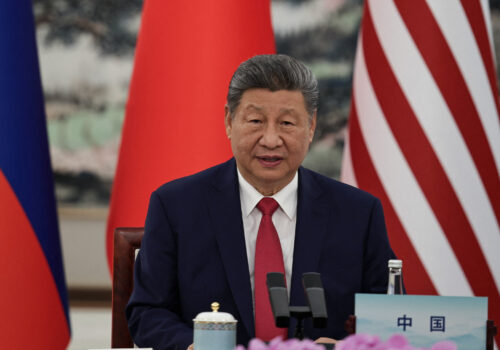
Unlike other leaders, including President Donald Trump, Takaichi did not hold a formal meeting with Chinese President Xi Jinping in Shenzhen.
She said she thanked Xi for the invitation during one of their brief greetings. She described China as an important neighbor that Japan needs to engage and talk with.
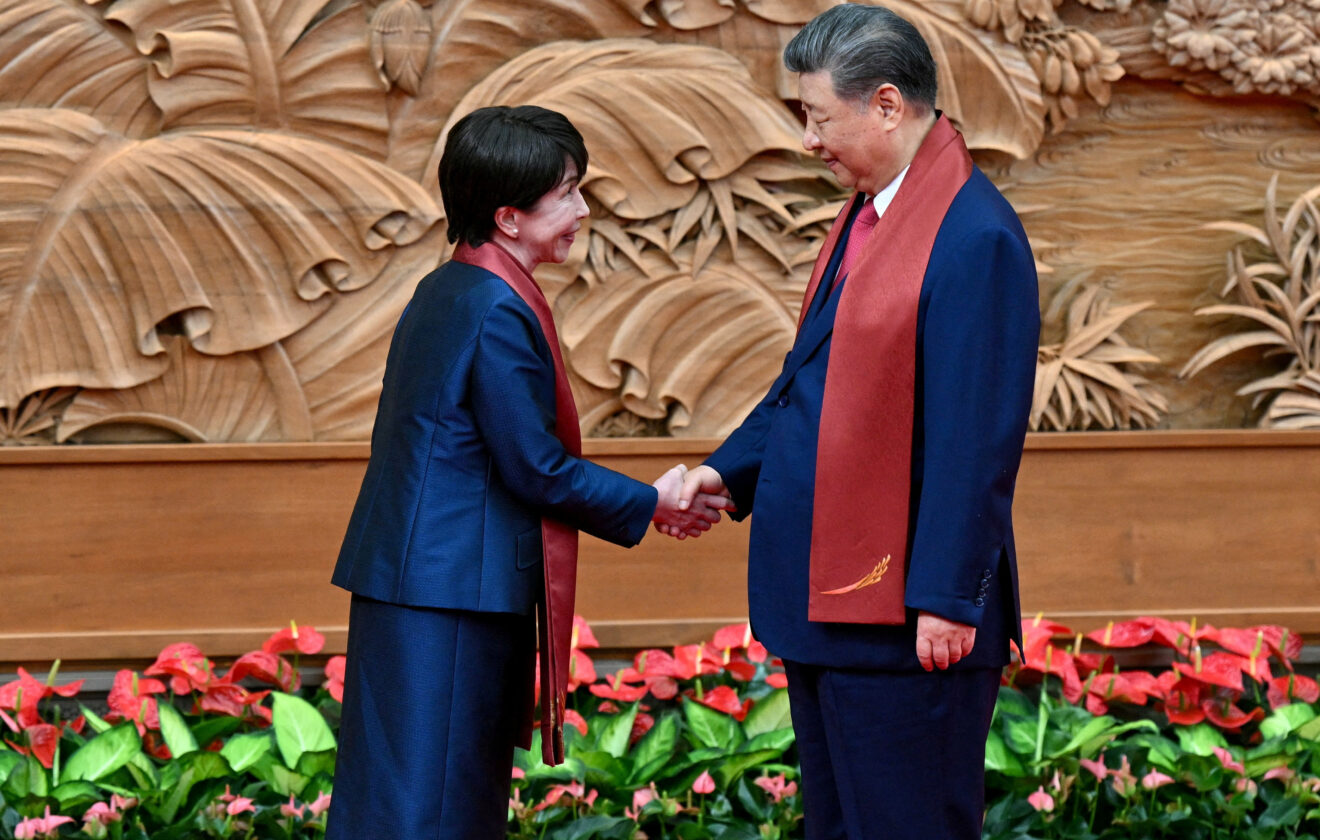
At the welcome banquet on Wednesday night, the two managed only a polite handshake and a few words.
Takaichi also received a cool welcome when she landed in Shenzhen. While Xi personally met Trump at the airport, Takaichi was greeted by Zhang Qiyue, China’s former ambassador to Greece, a much lower-ranking official. She had only a modest honor guard.
It was her first visit to China since she took office just over a year ago.
Takaichi did hold talks with Russian President Vladimir Putin on Wednesday evening, the first meeting between the leaders of Japan and Russia since 2019. She urged him to free a Japanese journalist held in Russia on spying claims.
The meeting came a day after Japan scrambled fighter jets when Russian military aircraft entered its airspace. The planes, including strategic bombers, later flew past Taiwan and landed in Vietnam.
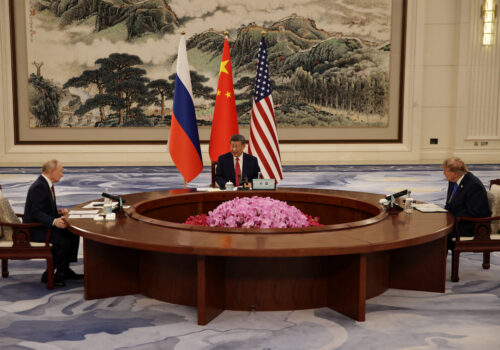
Taiwan said this week that it is in close contact with the United States ahead of Thursday’s three-way talks between Trump, Xi and Putin. Last week, Xi said unification with Taiwan could not be stopped.
Trump is due to hold the talks with Xi and Putin later on Thursday. Taiwan has not been confirmed as a topic.
The summit ends on Thursday.