Air traffic control funding request rises to $50 billion After US Flight Halt
The White House now wants $50 billion to rebuild the air traffic system, after a communications failure stopped flights across the country on Friday.
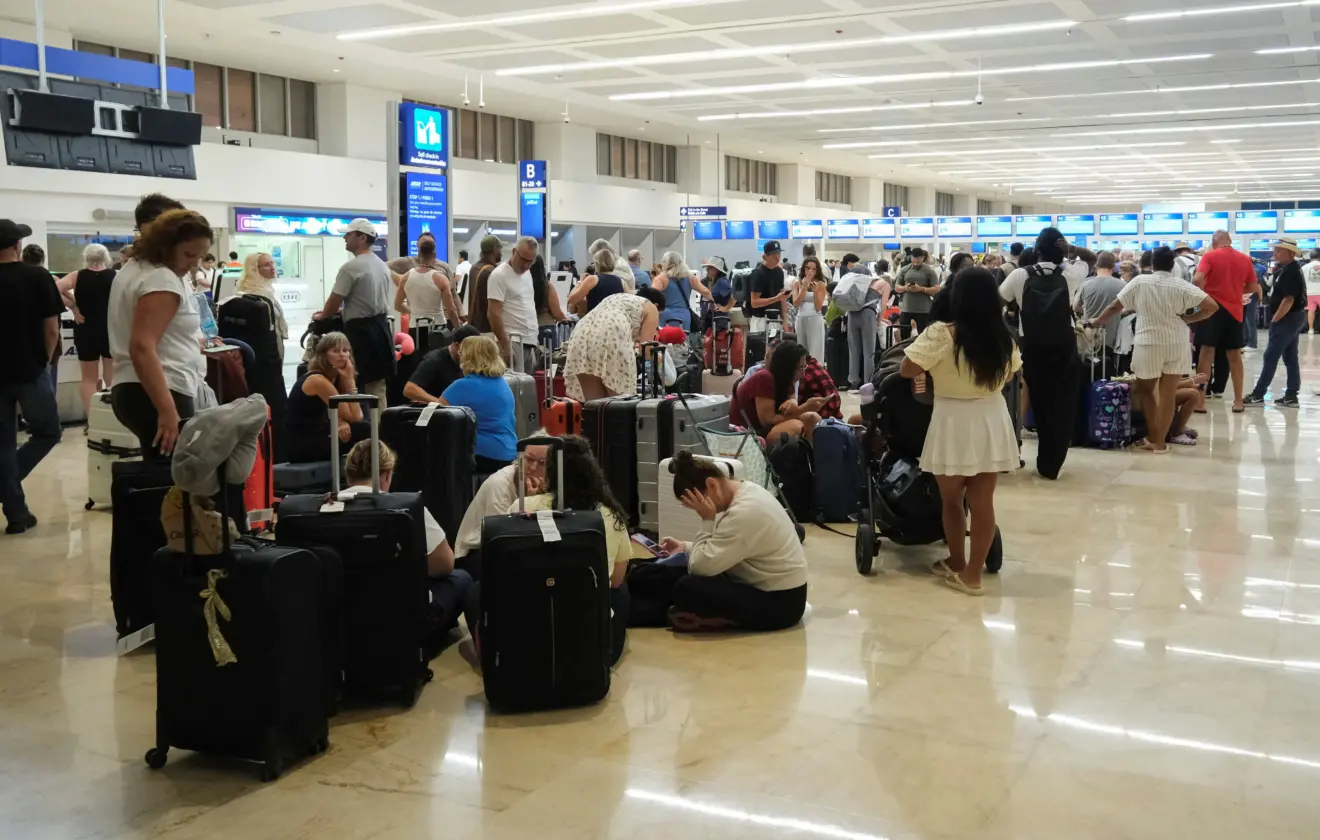
WASHINGTON, Nov 14 – The Trump administration has raised its request for air traffic control funding to $50 billion, hours after a communications failure forced the United States to halt flights nationwide on Friday.
Transportation Secretary Sean Duffy and the White House had asked Congress for $30.1 billion earlier in the day. They raised the figure late on Friday night, after the outage left thousands of travelers stranded.
“This is an emergency,” Duffy said.
The failure hit the Federal Aviation Administration’s en route centers, which manage planes as they fly between airports. The agency stopped all departures across the country for four to five hours, according to different accounts, before lifting the order in the evening.
Some 11,000 flights carrying more than 1.5 million passengers had been scheduled to leave United States airports after 4 in the afternoon, Eastern Time. Thousands of those flights were canceled or delayed, and the final count is still being tallied.
Duffy said more than 3,500 planes were in the air when the order was issued. Homeland Security Secretary Markwayne Mullin told reporters that no one was in danger and that more than 3,000 flights landed safely.
At least 827 flights were diverted, according to the aviation data company Cirium. Most of them, 670 in total, returned to the airports they had left, while the rest landed somewhere else.
Officials said new equipment added to the network had overloaded older parts of the system. Mullin said there was no sign of a cyberattack and that the problem appeared to be mechanical, though officials were still looking for the exact cause.
Duffy said the failure came from old equipment, and that all the new equipment the agency had installed kept working. He also said the agency’s new artificial intelligence tool, which is meant to predict problems in the sky, was not connected to what went wrong.
But Duffy did not promise that it would not happen again. He told reporters that the agency had found the fault and restarted the system, but warned that more outages are likely.
He also blamed Congress for not moving faster. Duffy said lawmakers who fail to act are adding more risk to the system.
The $30.1 billion request was sent to lawmakers in a letter from Duffy and Russell Vought, director of the White House Office of Management and Budget. It includes $10.1 billion to modernize air traffic control, with $7.2 billion for a common automation platform and controller workstations and $2 billion for cloud computing.
The letter also asks for $2 billion to replace and improve control towers. A further $18 billion would go to airport projects, including $10 billion to modernize or replace aging terminals.
Duffy and Vought said the money is needed to finish the overhaul of the national airspace. In the letter, they said the agency has already replaced 68% of its old copper telecommunications network with fiber lines.
American Airlines, Delta Air Lines, United Airlines and Southwest Airlines have all said they support the request.
The Republican-led Senate Commerce Committee, however, said the outage shows that the en route centers should take priority over other projects. The committee noted that Congress has already approved $1.9 billion to replace the outdated centers.
Congress approved $12.5 billion over five years in July 2025 to upgrade air traffic control and hire more controllers. That money followed months of complaints about crowded airports, flight delays and technology problems.
The administration wants the current Congress to pass the new air traffic control funding before the end of the year. Democrats are set to take control of Congress in January.
The agency still relies on decades-old computers and has purchased some replacement parts through auction websites. Last week, it said it would replace the floppy disks used for weather and other critical data at more than 400 facilities by the end of 2028.
Friday’s halt follows several other failures in recent months. In September, a failed circuit at a Philadelphia facility and a fiber cable cut by a construction crew in New Jersey led to about 9,500 flights being delayed or canceled.
In September 2025, a data outage at a radar facility in Dallas forced ground stops at two airports and delayed more than 1,800 flights. The agency later said its contractor, L3Harris, had failed to make sure backups were in place, while L3Harris blamed a lack of government investment.
Steve Arroyo, an aviation safety expert and former United Airlines pilot, said the difference on Friday was the scale of the problem. He said controllers across the country could not reliably talk to pilots, so planes had to be kept on the ground.
It was the first nationwide halt of its kind since January 2023, when a malfunction in the system that delivers safety notices to pilots disrupted flights across the country.
A limited number of domestic flights began departing late on Friday, but airlines are expected to take several days to recover fully. Duffy said he expects flights to return to normal before the Thanksgiving travel rush.