Brazil Runoff Explained as Lula Faces Flavio Bolsonaro in a Tight Race
Brazilians vote on Sunday to choose between a veteran leftist president and the son of a jailed former leader, in a campaign dominated by prices, corruption and personal attacks.
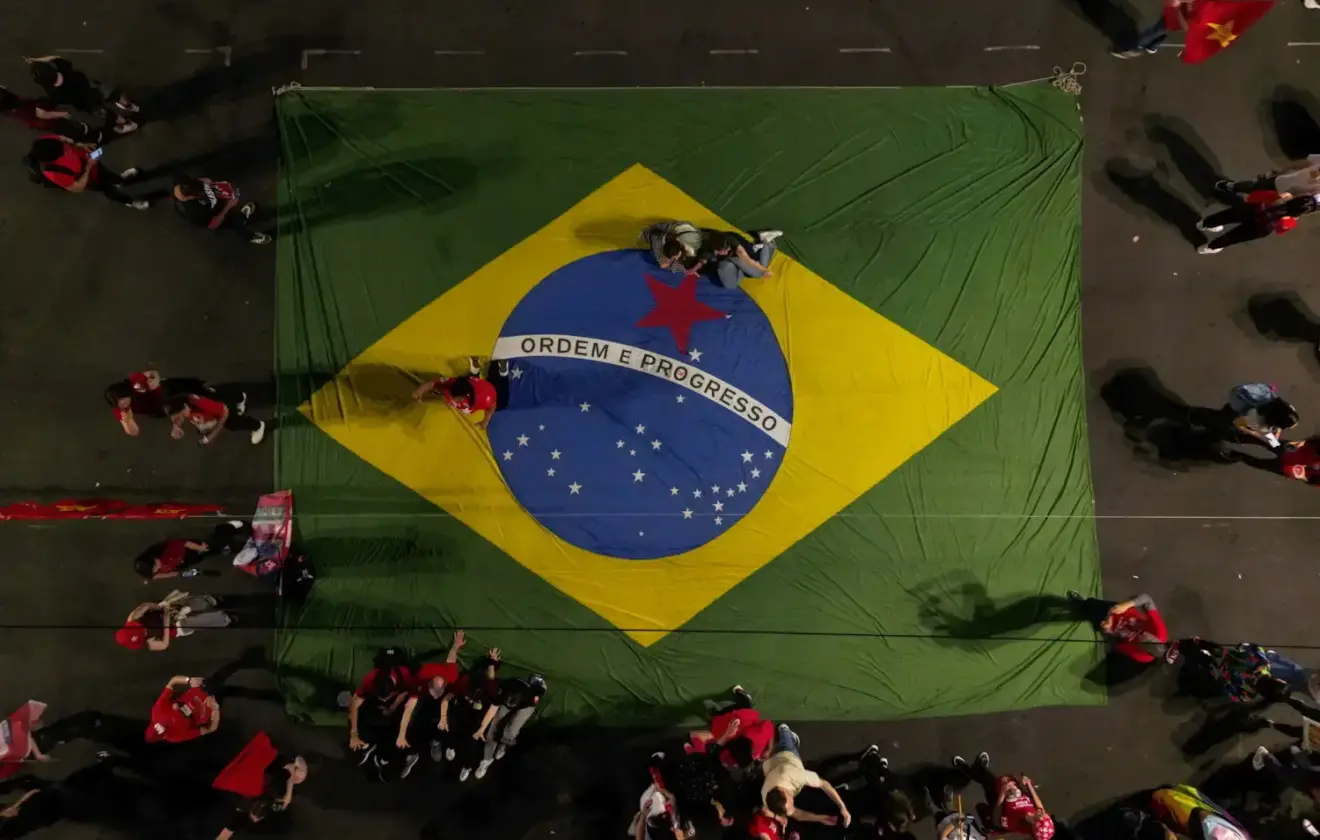
The Brazil runoff on Sunday, October 25, pits President Luiz Inacio Lula da Silva against Senator Flavio Bolsonaro. It is one of the closest presidential races the country has seen in years. Polls show the two men roughly level. Nobody can say who will win.
How the vote works
Brazil uses a two-round presidential voting system. To win outright in the first round, a candidate must receive more than half of all valid votes. No candidate reached that threshold in the first round on October 4, so the election moved to a runoff between the two leading candidates.
Flavio Bolsonaro finished first with 47.03 percent of the vote, while President Luiz Inacio Lula da Silva came second with 45.16 percent. The result surprised many observers, as most opinion polls before the vote had placed Lula slightly ahead.
The remaining votes were divided among several other candidates, most of whom were from conservative or right-wing parties. Their supporters now represent an important group of voters in the runoff, and both Lula and Bolsonaro have been trying to win them over ahead of Sunday’s decisive vote.
The winner of the runoff will serve a four-year term as Brazil’s president. Because the gap between the two candidates is so narrow, turnout, regional voting patterns and the preferences of undecided voters could play a decisive role in determining the final result.
The two candidates
Luiz Inacio Lula da Silva is 80. He is the current president and leads the leftist Workers’ Party. He served from 2003 to 2010 and won again in 2022. A win on Sunday would give him a fourth term. It would not be consecutive, and no Brazilian has done it before.
Flavio Bolsonaro is a senator and the son of Jair Bolsonaro, the far-right former president. Jair lost narrowly to Lula in 2022. He was later convicted of plotting a coup to reverse that result and sentenced to 27 years. Flavio promises tougher security, lower taxes, a smaller state and closer ties to the United States.
The race is a rematch of sorts. A veteran of the left faces the heir of his biggest rival. The divide between their camps has only grown since 2022.
Where the race stands
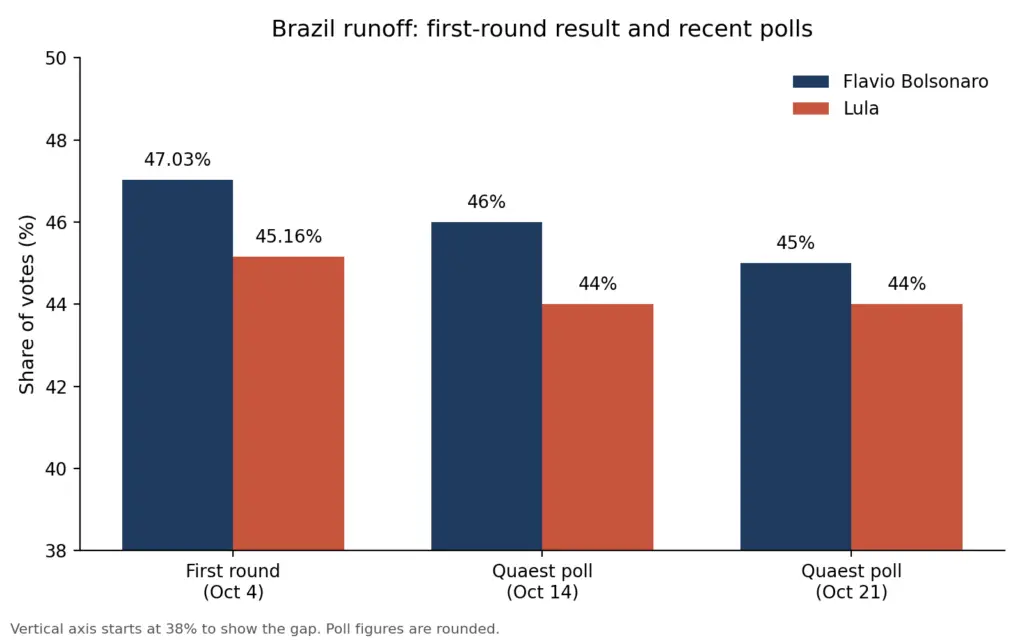
The chart file, brazil-runoff-first-round-and-polls, shows the first-round result and the two latest polls of the quest. The table has the same numbers.
| Measure | Flavio Bolsonaro | Lula |
|---|---|---|
| First round, October 4 | 47.03% | 45.16% |
| Quaest poll, October 14 | 46% | 44% |
| Quaest poll, October 21 | 45% | 44% |
Bolsonaro still leads, but his lead has shrunk. It sits inside the margin of error. About one voter in ten says they could still change their mind.
Turnout may matter just as much. Around 33 million Brazilians skipped the first round. That is about one in five eligible voters, and the highest first-round abstention since 1998. Both camps want those people. They also want the supporters of the candidates who were knocked out.
The debates
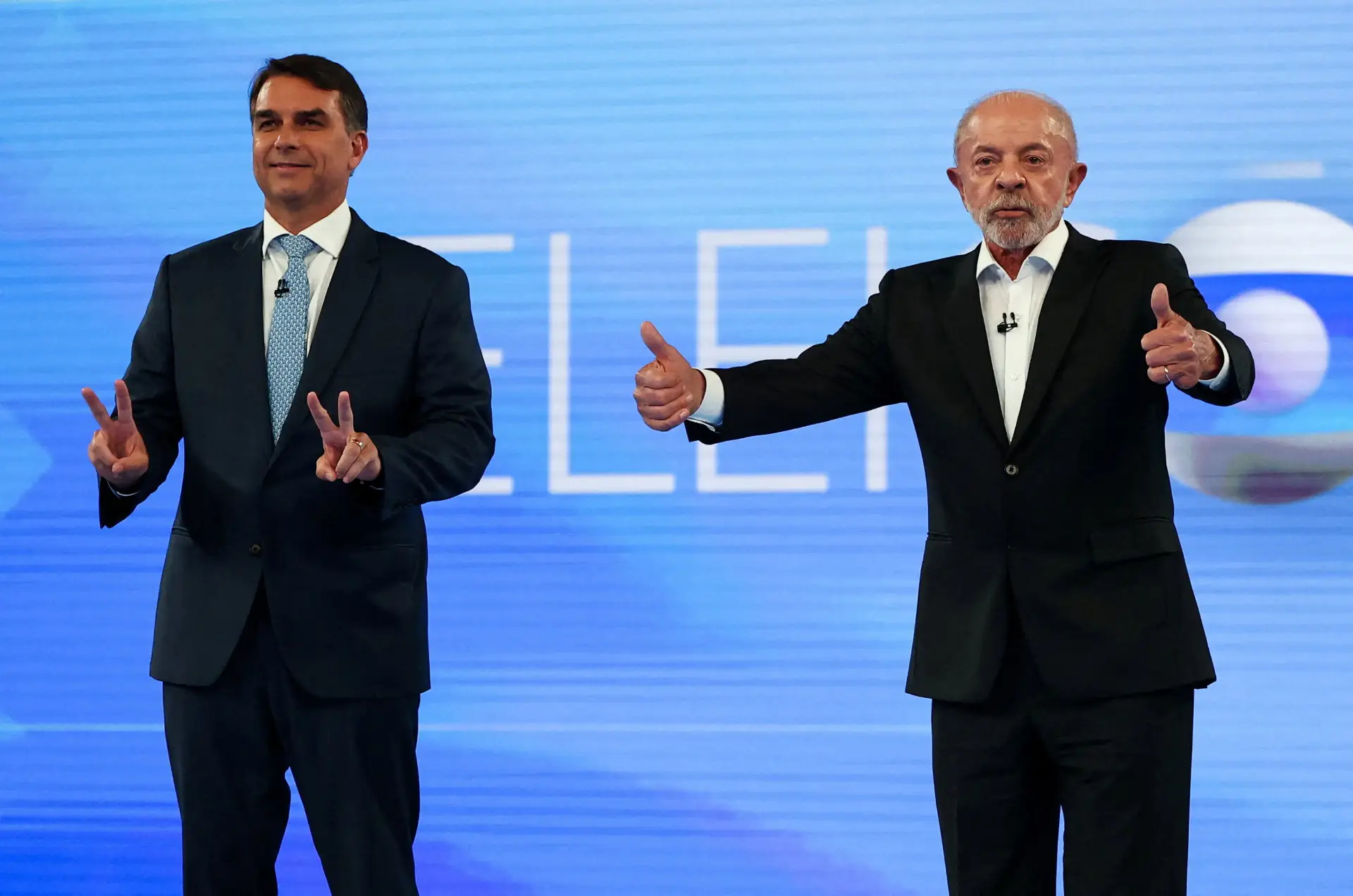
Brazilian right-wing presidential candidate Flavio Bolsonaro of the Liberal Party (PL) and leftist President Luiz Inacio Lula da Silva of the Workers’ Party (PT), who is seeking reelection, attend a televised debate ahead of the presidential election runoff in Rio de Janeiro, Brazil, October 23, 2026, via Reuters.
The two men met on television twice. The first debate was on October 18, a week before the vote. Both had turned down earlier offers. The second came on Friday, October 23, on the broadcaster Globo. It ran for more than two hours. The topics were the economy, welfare, security and corruption.
The first part was calm. Then the candidates were allowed to question each other directly, and the mood changed. Each tried to paint the other as corrupt or unfit.
One moment stood out. Bolsonaro apologized for calling Lula “nine fingers,” a joke about the finger Lula lost in a factory accident. “Lula, if I offended you by calling you ‘nine fingers,’ then I sincerely apologize,” he said. Then he asked if Lula would apologize to Brazilians who feel unsafe and are deep in debt. Lula refused. “I will not accept some rich guy, with a highly questionable political practice, calling me ‘nine fingers,'” he said.
Prices and the economy
Food, housing and basic services cost more, and many families feel it. Lula points to minimum wage raises that beat inflation. He says millions of Brazilians no longer go hungry. Bolsonaro says food got more expensive on Lula’s watch.
Bolsonaro also attacks a new tax reform. He says it will raise what consumers pay.
The latest figures give both sides something to use. The IPCA-15 index, a mid-month price gauge, rose 0.32 percent, down from 0.70 percent the month before. Prices are up 4.62 percent over the year. The central bank aims for 3 percent, give or take 1.5 points.
Corruption
Banco Master has become central to the corruption accusations in the campaign. The bank collapsed in a fraud case worth billions of dollars, and its jailed owner, Daniel Vorcaro, helped finance a film about former President Jair Bolsonaro.
Police are investigating Flavio Bolsonaro over his alleged links to Vorcaro. He has denied any wrongdoing.
Lula’s camp has also faced scrutiny. An allegation involving the president’s son and a pension fraud case has emerged, though his supporters reject the claims.
Crime, welfare and the United States
Bolsonaro favours a tougher approach to crime, while Lula argues that reducing poverty and inequality is the long-term solution, even if it takes time.
On foreign policy, Lula has accused the Trump administration of interfering in Brazilian affairs through tariffs and other measures. He presents himself as a defender of Brazil’s independence. Bolsonaro, by contrast, views Trump as an ally and says relations with Washington would improve if he wins the election.
What comes next
Campaign advertising on radio and television ends on Saturday, the day before the runoff, under Brazil’s electoral rules. However, candidates may continue holding rallies and public events until the final hours before voting closes on Sunday.
If Lula wins, the left will retain control of the presidency, and he will secure a fourth non-consecutive term. That would allow his government to continue its focus on social welfare programmes, higher minimum wages and policies aimed at reducing poverty and inequality.
If Bolsonaro wins, the right will return to power after Lula’s 2022 victory. His presidency could bring significant changes to economic policy, public security and foreign affairs, including a possible shift toward closer ties with the United States.
The result is expected to be decided by a combination of voter turnout, regional voting patterns and the choices of undecided voters. With opinion polls showing the two candidates roughly level, even a small shift in support could determine who wins the presidency.
The Brazil runoff gives voters two clear choices. Lula offers social programs and a strong state. Flavio Bolsonaro offers a smaller state, tougher policing and ties to Washington. It is also a verdict on prices, corruption and a family name that has split the country for years.