France Protests Today: Tens of Thousands Set to Rally Over High Prices
Unions and demonstrators across the country plan marches against the rising cost of living.
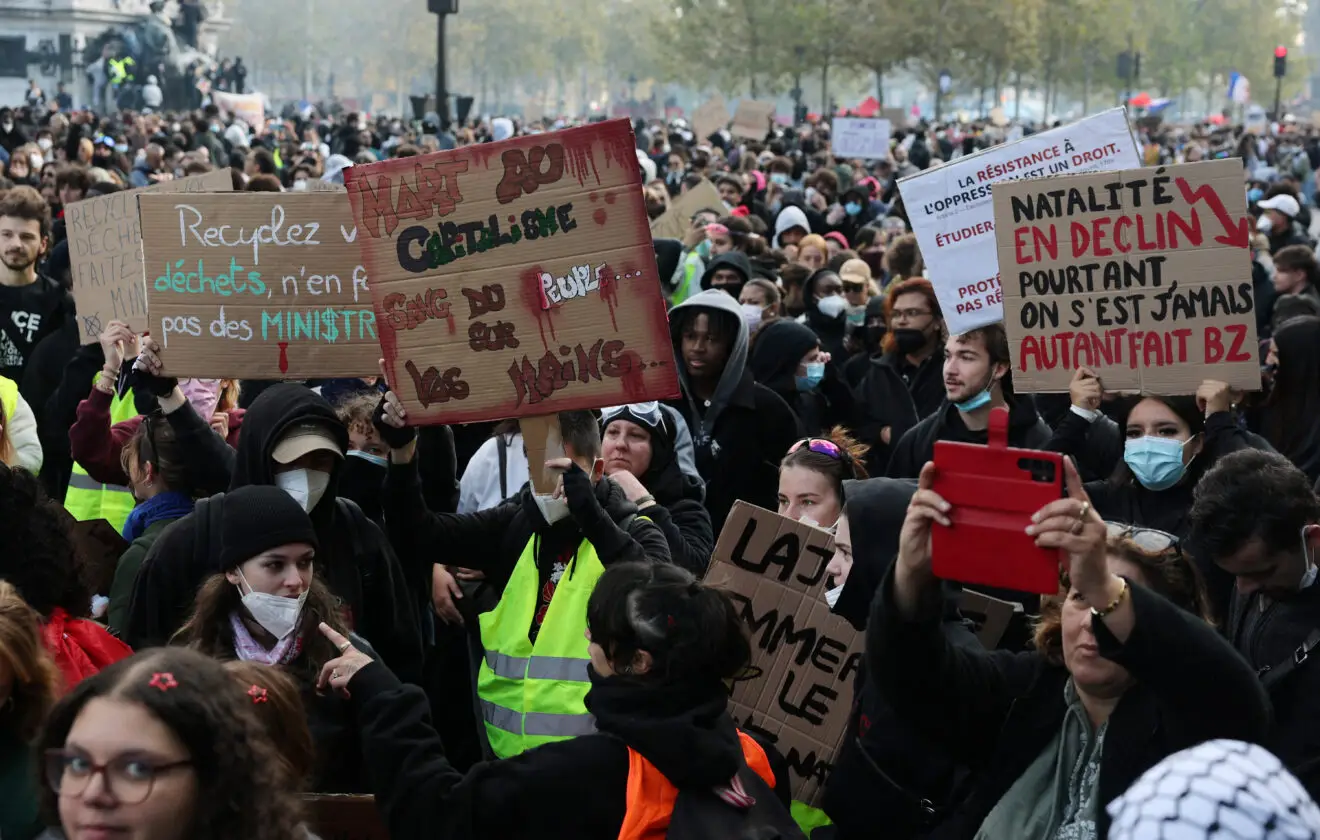
Demonstrators gathered in cities and towns across France on Saturday in what is expected to become a major nationwide protest against rising living costs and the weakening of a social model intended to guarantee basic opportunity and security.
The movement began last month at high schools in the poor northern suburbs of Paris, where anger over teacher absences and run-down facilities quickly grew into a nationwide campaign against inequality, weak public spending and declining standards. Students have called for more teachers, better school conditions and shorter days.
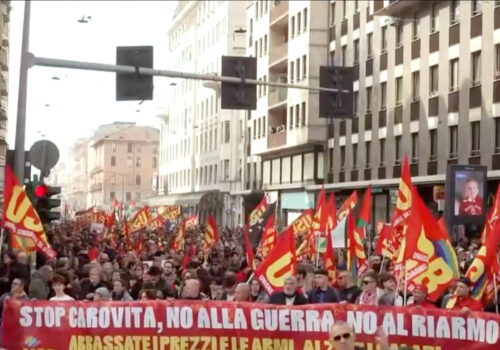
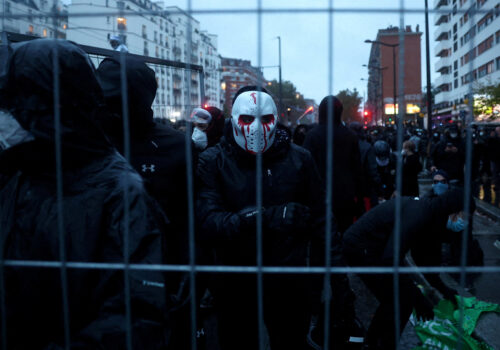
Police maintained a heavy presence in central Paris, particularly around the Champs-Élysées and the Arc de Triomphe, which were excluded from the routes of the two official marches. Hundreds of other protests were planned across the country, with tens of thousands of people expected to take part. In some places, demonstrators in high-visibility vests blocked streets, recalling the unrest that marked President Emmanuel Macron’s previous term. In Marseille, protesters set trash cans on fire.
A 19-year-old protester in Paris, who gave her name as Lola, said she was marching because the cost of living and fuel prices are too high, and because high school students are being attacked and injured across the country for asking for more teachers and decent learning conditions.
Macron is entering the final stretch of his presidency, leaving behind a polarized electorate and a deeply fragmented political landscape. He is barred from seeking a third consecutive term, and the protests have become a prominent issue in the campaign to succeed him next spring. Investors, unconvinced by efforts to curb rising public debt, are selling French bonds, pushing borrowing costs to their highest levels in more than two decades.
Prime Minister Sébastien Lecornu said on Thursday that authorities fear unrest during the protests. He said the movement no longer looks like a student movement, that violence has increased in recent days, and that he senses deep exhaustion in the country. The government accuses the hard-left France Unbowed party, led by presidential contender Jean-Luc Mélenchon, of inflaming the protests. The party denies the accusation, and Mélenchon has accused the government of repressing students.
Police responded to earlier demonstrations with hundreds of arrests, and violent clashes took place in Paris, Lyon and Strasbourg on Tuesday. The police response has drawn criticism because of a long list of injuries among demonstrators, including an adolescent whose hand was blown off after he picked up a stun grenade. Lecornu said more than 900 police officers were also injured. The internal police watchdog is investigating at least two dozen cases of alleged police violence.
France suspended the use of stun grenades for the student demonstrations, but Interior Minister Laurent Nuñez said they could be used on Saturday. He said all types of intermediate weapons could be deployed if clashes occur.
Earlier this month, amid an energy crisis affecting many countries, Lecornu said France would make 10 million barrels of diesel from its reserves available to distributors for three months.
Calls on social media for veterans of past protest movements to join the demonstrations appear to have worked, suggesting the protests could grow significantly. The Yellow Vest movement began in 2018 as a protest against diesel taxes before widening into a broader outpouring of anger over living costs and income inequality. It has been largely quiet since Macron agreed to billions of euros in tax cuts.
Yannick Maillou, a teacher from La Crèche in western France who joined the Yellow Vests in 2018 and remains involved, said there were several meeting points for protesters near him on Saturday and that unions were also urging people to take part.